


SDF Dissolves After Merging With Syrian Army, Marking End of Kurdish Force
The CSR Journal Magazine

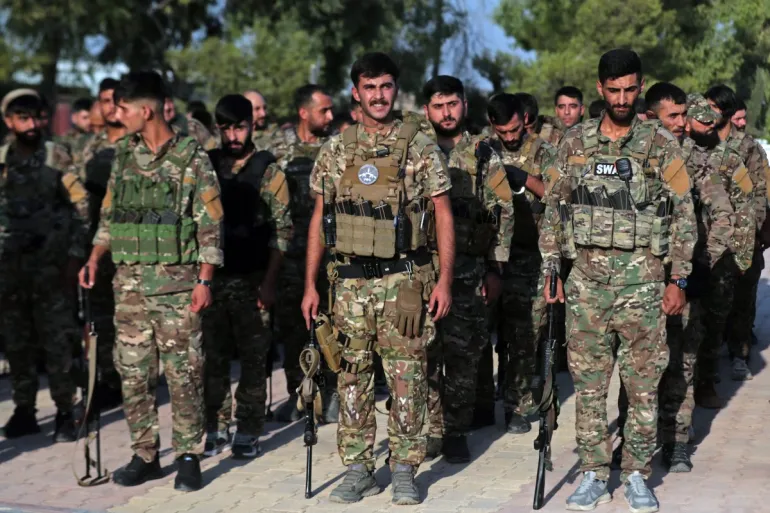
The Kurdish-led Syrian Democratic Forces (SDF) officially dissolved on Tuesday, signalling the conclusion of a significant military faction in northeast Syria. The announcement was made by commander Mazloum Abdi during a press conference held at the presidential palace in Damascus. Abdi stated that the SDF had completed its integration with the Syrian army and would function no longer as an independent entity.

Transformation of Political Landscape

This merger comes in the wake of substantial changes in Syria’s political and military environment. Earlier this year, a government offensive resulted in the SDF losing most of its territory in the region. Subsequently, the group signed an agreement to merge with the Syrian military, shifting its role dramatically. Once a principal ally of the United States in the battle against the Islamic State, the SDF’s influence diminished after the ousting of former President Bashar Assad in December 2024, which fostered closer ties between Washington and the interim Syrian government led by Ahmad al-Sharaa.

In his remarks, Abdi expressed that the SDF had borne a significant burden during one of the most challenging periods in the nation’s history. He noted that circumstances had evolved and Syria had entered a new phase focused on peace and collaboration in constructing a new governmental framework.

Syria’s contentious history includes a 50-year period of rule by the Assad dynasty, during which the Kurdish population faced marginalisation and citizenship denial. Public observance of Nowruz, a festival marking the arrival of spring, was prohibited. Following the uprising against the Assad regime that began in 2011, Kurdish forces stepped in to fill the void left by the withdrawal of government troops from significant portions of northeast Syria, at one point occupying approximately 25 per cent of the country.

The Kurdish Response and Future Concerns

Despite their previous autonomy, Kurds expressed hesitance regarding the new Sunni Arab-led government and its willingness to provide genuine representation. Their concerns regarding the new political structure were compounded by the presence of insurgent groups previously allied with Turkey, which has identified the SDF as a terrorist organisation due to its connections to the Kurdistan Workers’ Party (PKK).

Negotiations for peace are currently in progress. The Kurdish community remains uncertain about their role in the new governance structures being formed. In January, during ceasefire discussions with the SDF, al-Sharaa announced a decree aimed at bolstering Kurdish rights alongside his efforts to gain their support.

This decree elevated Kurdish to an official language alongside Arabic, recognised Nowruz as a national holiday, and reinstated the citizenship of thousands of Kurds whose rights had been revoked during a 1962 census. Abdi communicated that al-Sharaa promised the Kurdish population would have educational rights in their native language, a significant concern for many in the community.

Conclusion of a Chapter in Syrian History

The dissolution of the SDF and its merger with the Syrian army marks the closure of an important chapter in Syria’s protracted conflict. It underscores the evolving role of the Kurdish people in the emerging political landscape of the country. With this integration, the SDF transitions from a military force to part of a larger national structure, reflecting the significant transformations occurring within Syria.

Long or Short, get news the way you like. No ads. No redirections. Download Newspin and Stay Alert, The CSR Journal Mobile app, for fast, crisp, clean updates!

App Store –  https://apps.apple.com/in/app/newspin/id6746449540 

Google Play Store – https://play.google.com/store/apps/details?id=com.inventifweb.newspin&pcampaignid=web_share

Latest News

Popular Videos
