


RSS Chief Bhagwat Highlights Four Pillars of Dharma for National Progress
The CSR Journal Magazine

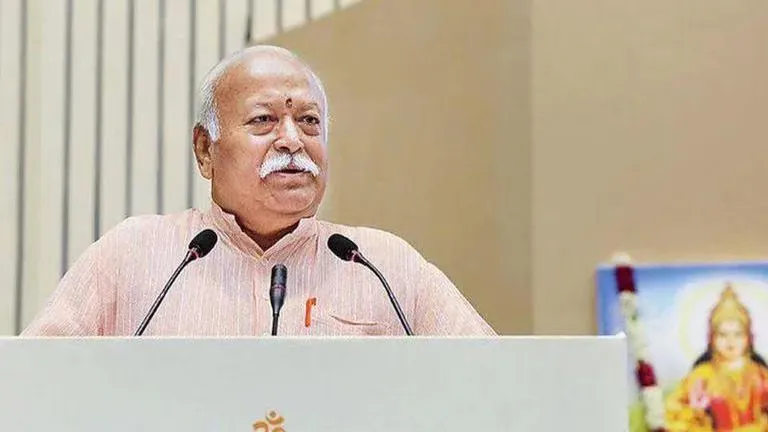
RSS chief Mohan Bhagwat stated that Dharma encompasses more than just rituals, worship, or dietary practices, insisting it is grounded in four essential pillars. These pillars are identified as Truth (Satya), Compassion (Karuna), Penance (Tapascharya), and Purity (Antarbahya Pavitrata). This perspective was shared during a speech celebrating Pandit Deendayal Upadhyaya Jayanti in Yavatmal, Maharashtra, on September 29.

Bhagwat’s remarks highlighted the significance of these principles as the foundation of sustainable national development. He referenced the philosophy of Integral Humanism, suggesting that these values are integral to advancing a society that prioritises the well-being of all its members, particularly those who are less fortunate.

Emphasis on Antyodaya and Social Welfare

During his address, Bhagwat urged that genuine social welfare should focus on uplifting the most vulnerable members of society through the principle of Antyodaya. He argued that true societal progress requires attention to these individuals rather than just relying on conventional economic metrics.

According to Bhagwat, each component of Dharma has a crucial role in fostering the collective good. He explained that individual sacrifice plays a pivotal role in enhancing the welfare of the community. By prioritising the needs of others over personal gain, individuals can contribute significantly to society’s overall happiness.

Bhagwat articulated this point by drawing a comparison to a chain, suggesting that the strength of a nation is determined by its weakest citizens. He posited that if the most vulnerable are supported and made happy, it enhances the happiness of the country as a whole.

A Holistic Approach to Development

In his address, Bhagwat rejected limited definitions of economic growth that focus primarily on monetary success. He argued for a broader approach to development that considers the welfare of all living beings and the surrounding environment.

Modern development metrics, which typically aim for the “maximum good of the maximum number,” were challenged by Bhagwat. He suggested that this definition is insufficient, advocating instead for the well-being of all entities, including humans, animals, and nature. His view promotes inclusiveness in development efforts to ensure a balance that does not compromise environmental integrity.

Bhagwat concluded by calling for a change in how society perceives progress. He stressed the need for comprehensive growth strategies that include support for all forms of life and maintain ecological balance. This, he asserted, is vital in realising true development that upholds the principles of Dharma.

Long or Short, get news the way you like. No ads. No redirections. Download Newspin and Stay Alert, The CSR Journal Mobile app, for fast, crisp, clean updates!

App Store –  https://apps.apple.com/in/app/newspin/id6746449540 

Google Play Store – https://play.google.com/store/apps/details?id=com.inventifweb.newspin&pcampaignid=web_share

Latest News

Popular Videos
