


Peloponnesian War Reshaped Greece, Triggering Major Socio-Political Upheaval
The CSR Journal Magazine

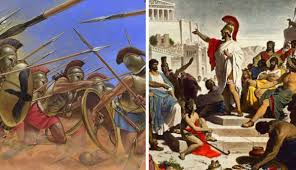
The Peloponnesian War, which lasted from 431 to 404 BC, marked a pivotal period in ancient Greek history. This protracted conflict primarily involved two leading city-states, Athens and Sparta, along with their respective allies. It was characterized by intense military engagements and shifting political alliances that ultimately led to the downfall of both powers.

The Primary Players in the War

Athens, known for its naval supremacy and cultural achievements, opposed Sparta, recognized for its military discipline and land forces. The rivalry stemmed from ideological differences, with Athens promoting democracy while Sparta adhered to a more oligarchic system. Their competition for dominance over the Greek world laid the groundwork for a catastrophic struggle that would change the landscape of the region.

Key Events of the Conflict

The conflict unfolded in two main phases: the Archidamian War, which lasted from 431 to 421 BC, and the Sicilian Expedition, culminating in 413 BC. The Archidamian War was marked by Spartan invasions of Athenian territory and the Athenian strategy of using its navy to raid Peloponnesian coasts. The treaty of Nicias in 421 BC attempted to restore peace, but hostilities resumed shortly thereafter, escalating tensions further.

The Athenian attempt at an ambitious Sicilian Expedition in 415 BC aimed to expand their influence but ended in disaster. The loss of a large fleet and thousands of soldiers weakened Athens significantly. As the war progressed, Sparta received financial and military support from Persia, tipping the balance of power in favor of the Peloponnesian League.

Consequences of the War

The consequences of the Peloponnesian War were profound. The eventual defeat of Athens in 404 BC led to the dismantling of its empire and the establishment of a brief oligarchic rule known as the Thirty Tyrants. Sparta emerged victorious, yet its power was also significantly weakened. The constant warfare exhausted the Greek city-states, leading to widespread economic and social upheaval.

The extensive losses in manpower, resources, and infrastructure instigated a long period of instability and vulnerability among the Greek states. The war not only decimated the populations of Athens and Sparta but also disrupted alliances and trade networks that had sustained the region for generations.

Long-term Impacts on Greek Culture and Society

The long-term impacts of the Peloponnesian War reshaped Greek culture and society. The destructive nature of the conflict fostered a shift in philosophical thought, with figures such as Socrates emerging during this tumultuous period. The war exposed the fragility of democratic ideals, leading to a sense of disillusionment among the populace.

Furthermore, the resulting political instability paved the way for the rise of Macedon under Philip II, marking the end of the classical city-state era. This shift laid the groundwork for a unified Greek state, which would later facilitate the expansion of Hellenistic culture across the Mediterranean.

Reflections on Ancient Greek Warfare

The Peloponnesian War remains a critical study in military strategy, political ambition, and human nature. The conflict illustrates the potential for self-destructive tendencies in societies fueled by rivalry and the quest for power. As historians continue to analyze its multifaceted aspects, the lessons drawn from this era provide vital insights into the dynamics of conflict that continue to resonate throughout human history.

Long or Short, get news the way you like. No ads. No redirections. Download Newspin and Stay Alert, The CSR Journal Mobile app, for fast, crisp, clean updates!

App Store –  https://apps.apple.com/in/app/newspin/id6746449540 

Google Play Store – https://play.google.com/store/apps/details?id=com.inventifweb.newspin&pcampaignid=web_share

Latest News

Popular Videos
