


Nepal Battles Misinformation Amid Ongoing Flood Relief Efforts
The CSR Journal Magazine

Nepal is currently grappling with an alarming increase in misinformation circulating on social media platforms, despite ongoing rescue and relief operations following the devastating flash floods that struck the nation. In response to the situation, the government has ordered 72 social media users to eliminate inappropriate content that has surfaced in recent days, including deceptive visuals generated by artificial intelligence.

In an effort to counter the spread of false information, the Nepal Press Council has launched a dedicated portal called “Special Complaints on the Bhotekoshi Incident.” This platform allows the public to report misleading information and graphic materials related to the disaster, as confirmed by a report from The Kathmandu Post. This initiative takes place amid families’ desperate searches for missing loved ones and ongoing evaluations of the extensive damage caused by the floods.

Challenges Posed by Misinformation

The flood of misinformation has resulted in a chaotic information environment, complicating the already difficult task of managing public perception during this crisis. Some social media users seem to be utilising the tragedy to garner views and increase virality, leading to concerns among authorities, journalists, and fact-checkers about the ethical implications of their actions.

Umesh Shrestha, Chairman of the Nepal Press Council, stated that of the 72 users flagged, most were posting from personal accounts. By 5 pm on Saturday, the council had received 101 complaints, which included numerous grievances against personal accounts that disseminated graphic visuals. He noted that while some online news portals were also targeted, mainstream media outlets had largely refrained from publishing misleading content, indicating a positive trend.

Among the misinformation circulating online was a widely shared video that purportedly showed Home Minister Sudan Gurung engaged in rescue efforts. However, investigations revealed that the footage was sourced from an unrelated tunnel rescue operation in Uttarakhand, India, originally posted on August 14 by the Fire Service Uttarakhand Police.

Effect of Artificial Intelligence on Misinformation

As authorities combat false images and videos, some content has been identified as entirely fabricated by AI. For instance, one video reportedly resembling a catastrophic flood amassed over seven million views but was assessed by Hive Moderation, an AI detection platform, as having a 97.2 per cent likelihood of being AI-generated. Another clip depicting a bridge collapse during the floods was also branded as fake.

The issue extends to other misinformation, including false claims regarding glacial lake outburst floods. A report from Nepal Fact Check traced one misleading video to an Alberta glacier incident in the United States rather than the Rasuwa region in Nepal. Similarly, fabricated “before and after” photographs claiming to depict the flood’s impact on Rasuwa settlements were debunked by the Australian Associated Press fact-checking unit.

The rise of AI in creating misleading content has added a new layer to the existing challenges of recycled disaster footage and false attribution. The government’s Social Media Regulation and Management Committee is currently engaged in discussions with social media platforms to address issues concerning graphic content, AI-generated falsehoods, fake QR codes, and other forms of online deception.

Impact of the Floods on Nepal

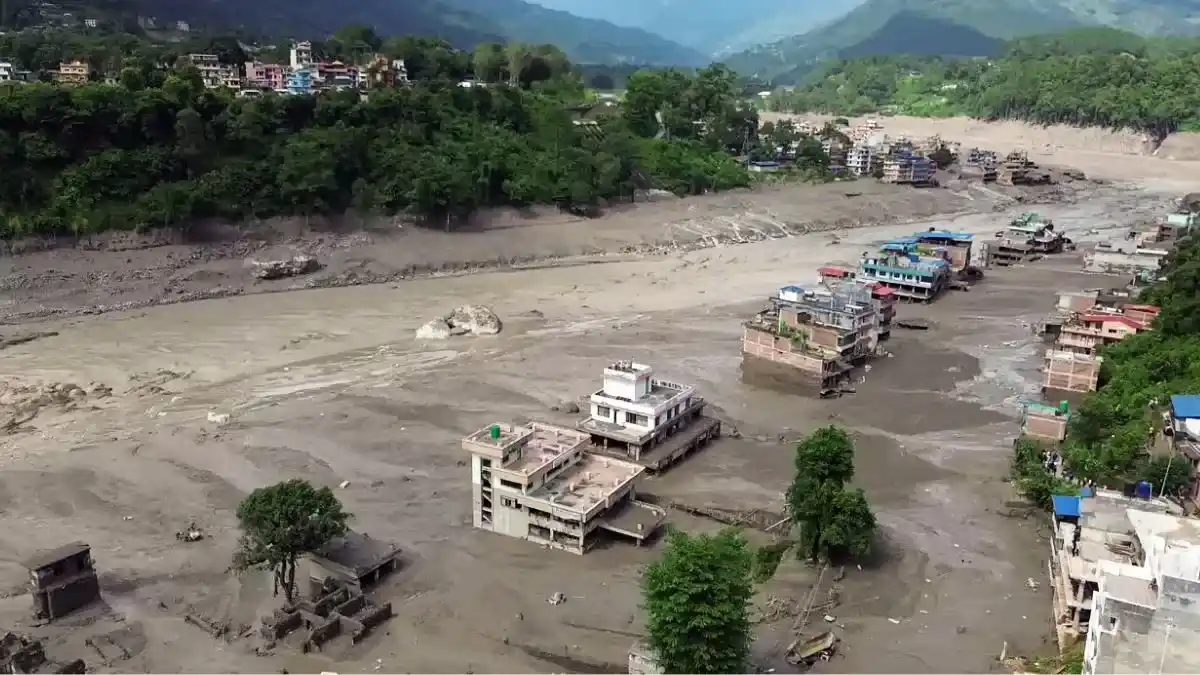
The flash floods, believed to have been triggered by an ice and rock collapse near the Nepal-Tibet border, have taken a heavy toll on communities across northern and central Nepal. According to authorities, the disaster, which struck on August 26, has resulted in over 900 fatalities, with more than 4,245 individuals still reported missing.

The swift and destructive waters of the Bhotekoshi River obliterated homes, vehicles, roads, and bridges, severely impairing hydropower projects in the region. As the country continues to recover from this calamity, it is also tasked with managing the fallout from the misinformation rapidly circulating online.

Long or Short, get news the way you like. No ads. No redirections. Download Newspin and Stay Alert, The CSR Journal Mobile app, for fast, crisp, clean updates!

App Store –  https://apps.apple.com/in/app/newspin/id6746449540 

Google Play Store – https://play.google.com/store/apps/details?id=com.inventifweb.newspin&pcampaignid=web_share

Latest News

Popular Videos
