


app-store-logo
play-store-logo
March 10, 2026

NASA Expects 1,300-Pound Satellite to Reenter Earth’s Atmosphere on March 10
The CSR Journal Magazine

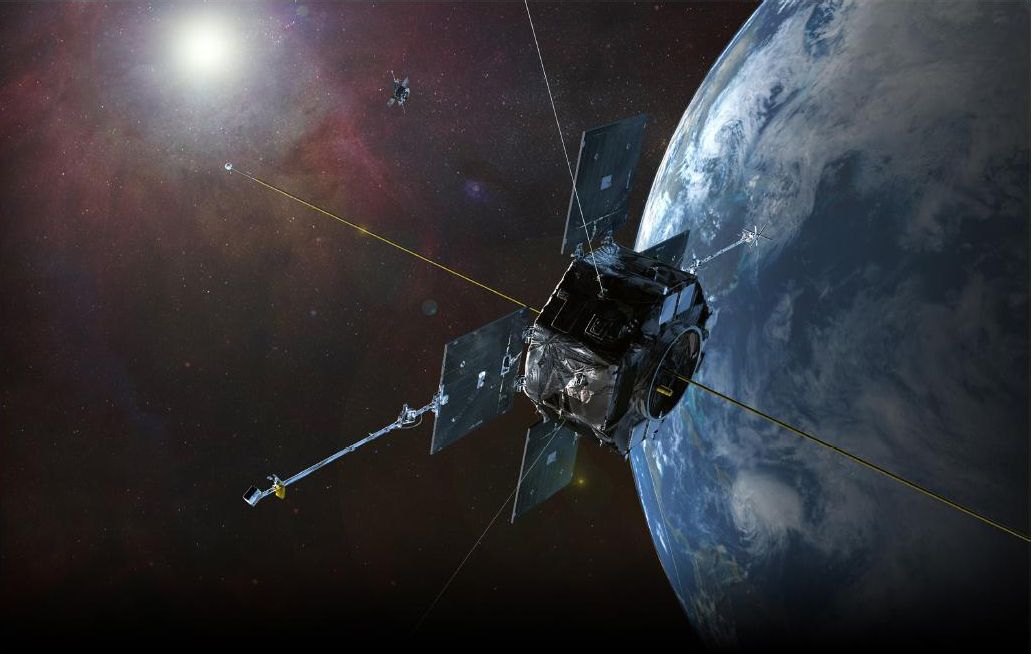
A NASA satellite, designated Van Allen Probe A, is projected to reenter Earth’s atmosphere on March 10, after nearly 14 years of operation in space. Weighing approximately 1,323 pounds (600 kilograms), this spacecraft was launched alongside its twin, Van Allen Probe B, in August 2012 to examine the radiation belts that envelop the planet. Following its deactivation in 2019, the satellite is now near the end of its operational lifespan. Experts estimate the risk of injury to individuals on the ground as quite low, approximately 1 in 4,200.

Reentry Timing and Predictions

The U.S. Space Force has predicted that the satellite’s reentry will occur around 7:45 PM EDT on March 10, with potential adjustments of up to 24 hours based on improved tracking data. Although NASA anticipates that the majority of the satellite will disintegrate upon reentry, it is possible that some fragments may survive the descent. Most of these remnants are likely to land in the ocean, which constitutes nearly 70 percent of Earth’s surface, further minimizing the risk to populated areas.

Mission Overview of the Van Allen Probes

The Van Allen Probes, originally known as the Radiation Belt Storm Probes, were designed to orbit Earth in a highly elliptical trajectory, extending from roughly 384 miles (618 kilometers) to 18,900 miles (30,415 kilometers) from the planet’s surface. The initial mission was projected to last two years; however, both probes significantly exceeded this timeframe. Probe A continued its operations until October 2019, while Probe B was functional until July 2019. Recent solar activities have contributed to alterations in Earth’s atmosphere, increasing frictional drag on satellites, which has likely accelerated Probe A’s descent.

Scientific Contributions of the Van Allen Probes

Throughout their operational tenure, the Van Allen Probes collected critical data regarding the radiation belts surrounding Earth. This information aids scientists in understanding the effects of solar activities on satellites, astronauts, and Earth’s infrastructure, including communication networks, GPS systems, and power grids. By analyzing these environments, the mission’s findings have enhanced the accuracy of forecasts for space weather events that can disrupt electronic systems on the surface. Furthermore, these data contribute to planning future space missions and offer insights into potential hazards arising from solar storms.

Satellite Debris Risk and Reentry Management

NASA has assured that the majority of the satellite will incinerate during atmospheric reentry. Nevertheless, specific components may endure, potentially landing in the ocean, which keeps the risk to humans exceedingly minimal. The probability of injury has been estimated to be about 0.02 percent. While the situation remains an intriguing subject for observation, experts have stated there’s no cause for public concern. The Space Force will provide real-time updates on reentry developments as the event approaches, allowing for more precise timing predictions.

Future of the Second Van Allen Probe

Van Allen Probe B is not anticipated to reenter Earth’s atmosphere until approximately 2030. Unlike its counterpart, it appears to be less influenced by recent solar activities. Although both satellites have been deactivated, they continue to orbit and serve as valuable references for scientists researching space weather and its implications. Monitoring their descent enhances our understanding of orbital decay and atmospheric effects, valuable information for the operation of other active satellites.

Long or Short, get news the way you like. No ads. No redirections. Download Newspin and Stay Alert, The CSR Journal Mobile app, for fast, crisp, clean updates!

App Store –  https://apps.apple.com/in/app/newspin/id6746449540 

Google Play Store – https://play.google.com/store/apps/details?id=com.inventifweb.newspin&pcampaignid=web_share

Latest News

Popular Videos
