


app-store-logo
play-store-logo
February 22, 2026

NASA Delays Artemis 2 to April Over SLS Helium Flow Issue
The CSR Journal Magazine

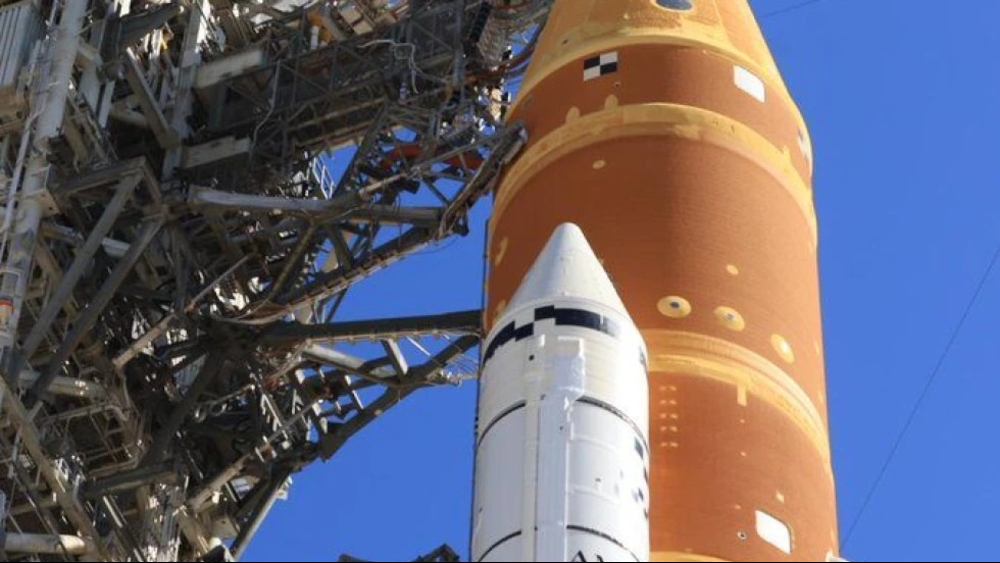
NASA’s Artemis 2 mission, intended as a crewed flyby to the moon, will not take place in March as initially planned, according to NASA chief Jared Isaacman. The delay comes after technicians identified a problem with the helium flow to the Space Launch System (SLS) rocket, which is crucial for engine purging and fuel tank pressurization. Isaacman confirmed that this issue has ruled out the March launch window, expressing understanding of the disappointment felt by the team and the public.

Next Potential Launch Opportunities Remain in April

The space agency’s next chance for launching Artemis 2 is estimated to be at either the beginning or the end of April. The Artemis program aims to return humans to the lunar surface, particularly as China progresses towards its own lunar mission slated for 2030.

China’s Lunar Ambitions and NASA’s Competitive Landscape

As part of its space ambitions, China is preparing to launch the uncrewed Chang’e 7 mission in 2026, which will explore the Moon’s south pole. Additionally, China is set to conduct tests on its crewed spacecraft, Mengzhou, this year. NASA had previously indicated that the Artemis 2 flight could occur as early as February, a timeline that was accelerated under the previous administration’s intention to outpace China’s lunar exploration efforts.

Previous Delays in the Artemis Program

The Artemis program has faced numerous obstacles, including delays associated with the uncrewed Artemis 1 mission, which was completed in November 2022 after several postponements and two unsuccessful launch attempts. More recent technical setbacks, such as a liquid hydrogen leak during early February’s wet dress rehearsal, have further complicated the timeline for Artemis 2. The rehearsal, which took place at Cape Canaveral in Florida, involved testing the rocket under actual launch conditions, confirming critical maneuvers needed for an eventual launch.

Investigation and Repairs Underway

Following the announcement regarding the delayed launch, the SLS rocket and Orion spacecraft will be transported back to the Vehicle Assembly Building at the Kennedy Space Center. An investigation will be conducted to determine the cause of the helium flow issue, which could be due to a faulty filter, valve, or connection plate. Isaacman mentioned that a detailed briefing is expected to follow shortly.

Mission Objectives and Crew Details

The Artemis 2 mission is designed to be a 10-day flight that will orbit the moon and return, emphasizing goals such as scientific exploration, economic benefits, and laying groundwork for potential human missions to Mars. The mission’s crew is set to consist of three astronauts from the United States—Reid Wiseman, Victor Glover, and Christina Koch—alongside Canadian astronaut Jeremy Hansen. This flight aims to achieve the record for the farthest human journey into space and marks the first manned moon mission since NASA’s Apollo program over fifty years ago.

Future of the Artemis Program

Artemis 2 serves as a stepping stone towards NASA’s broader objectives, including the anticipated Artemis 3 mission, which aims for a lunar landing in 2028. As technical challenges continue to emerge, NASA remains focused on its commitment to advance human space exploration initiatives.

Long or Short, get news the way you like. No ads. No redirections. Download Newspin and Stay Alert, The CSR Journal Mobile app, for fast, crisp, clean updates!

App Store –  https://apps.apple.com/in/app/newspin/id6746449540 

Google Play Store – https://play.google.com/store/apps/details?id=com.inventifweb.newspin&pcampaignid=web_share

Latest News

Popular Videos
