


Kishtwar’s Terrain Allegedly Supports Terrorist Activities
The CSR Journal Magazine

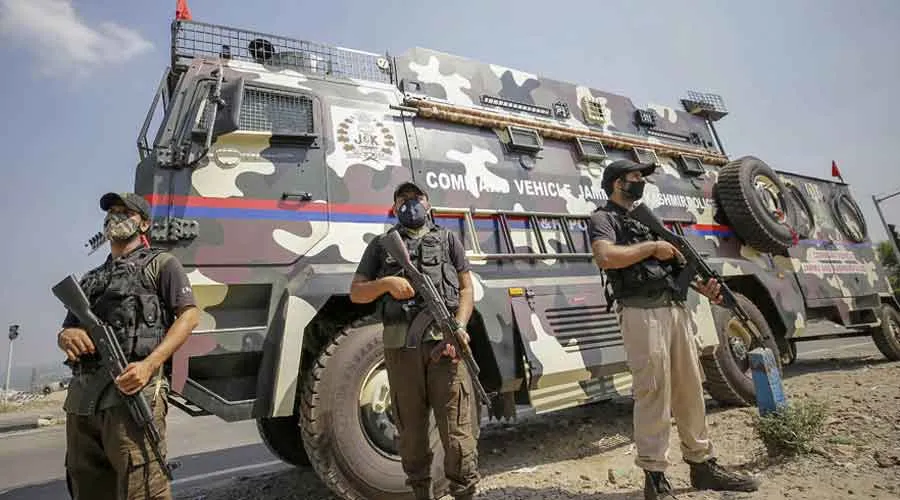
The recent killing of two special police officers (SPOs), Rashpal Kumar, aged 45, and Babbi Chand, aged 57, has drawn attention to the Marwah-Dachhan region in Kishtwar district. This area, characterised by its rugged mountainous terrain, dense forests, and limited connectivity, has long been considered a refuge for terrorists. The tragic incident has prompted renewed scrutiny of the security situation in this part of Jammu and Kashmir.

Intelligence reports suggest that Jahangir Saroori, the longest-surviving commander of the Hizbul Mujahideen, is reportedly hiding in the upper reaches of Kishtwar along with two associates, Riaz Ahmed, alias Hazari, and Mudassir Hussain. Saroori, whose real name is Mohammad Amin Butt, has been involved in militancy since 1992 and is believed to play a significant role in the resurgence of terrorism in the Chenab Valley.

Active in Kishtwar, Doda, Ramban, and Bhaderwah before a period of dormancy, Saroori allegedly orchestrated the murders of BJP state secretary Anil Parihar and his brother Ajit in November 2018, as well as the April 2019 assassination of RSS functionary Chandrakant Sharma and his security officer. In response to his activities, Jammu and Kashmir Police issued “wanted dead or alive” posters in October 2018, offering a reward of ₹30 lakh for information leading to his capture.

Current Terrorist Presence and Challenges

According to security sources, there are currently between 10 to 12 terrorists operating in Kishtwar, including Saroori, Ahmed, and Hussain. These individuals are allegedly supported by a network of overground workers (OGWs) who facilitate their activities. The presence of such a network complicates the efforts of security forces to maintain order in the region.

In the wake of the SPOs’ killings, former Jammu and Kashmir Director General of Police (DGP) SP Vaid has called for immediate action against the perpetrators and highlighted what he termed an intelligence failure. He emphasised the need for local assistance in tracking down those responsible for the ambush, questioning why the local police station lacked prior intelligence about the terrorists’ presence in the area.

Vaid also pointed out the operational difficulties faced by security forces in the Dachhan-Marwah belt, noting the challenging topography and the absence of a reliable communication network. The need for foot patrols through dense forests and across rivers adds to the complexity of counter-terrorism operations in this region.

Increased Counter-Terrorism Operations

This year has seen a surge in counter-terrorism activities in Kishtwar. In January, the army initiated ‘Operation Trashi-1’ in the Chatroo area, which resulted in the death of Special Forces commando Havildar Gajendra Singh from Uttarakhand. Following this, security forces intensified their efforts, reportedly killing one terrorist on February 4 and three more on February 22.

The ongoing operations reflect a concerted effort to address the security challenges posed by the presence of terrorists in the region. However, the combination of difficult terrain and a well-established support network for militants continues to pose significant obstacles for law enforcement agencies.

As authorities work to enhance security measures, the situation in Kishtwar remains precarious, with both local and national implications. The need for effective intelligence gathering and community cooperation is paramount in the fight against terrorism in this sensitive area.

Long or Short, get news the way you like. No ads. No redirections. Download Newspin and Stay Alert, The CSR Journal Mobile app, for fast, crisp, clean updates!

App Store – https://apps.apple.com/in/app/newspin/id6746449540

Google Play Store – https://play.google.com/store/apps/details?id=com.inventifweb.newspin&pcampaignid=web_share

Latest News

Popular Videos
