


Khalistani Groups Target Hindu Temples in Canada Following Anti-Hate Bill Passage
The CSR Journal Magazine

On April 5, 2026, two Hindu temples in Canada were reportedly targeted by members of the banned Khalistani group, Sikhs for Justice (SFJ). This action took place shortly after the Canadian House of Commons passed Bill C-9, aimed at prohibiting demonstrations outside places of worship and combatting hate speech.

The legislation, which passed on March 25, 2025, sought to criminalise acts that intimidate or obstruct access to places of worship, as well as the promotion of hate through specific symbols associated with terrorism. The bill is expected to undergo further scrutiny in Canada’s Senate before receiving royal assent to become law.

Hindu organisations have welcomed this bill, viewing it as a protective measure against disruptive protests. However, the demonstrations conducted by SFJ have been interpreted as a reaction against this newly proposed law.

Details of Protests

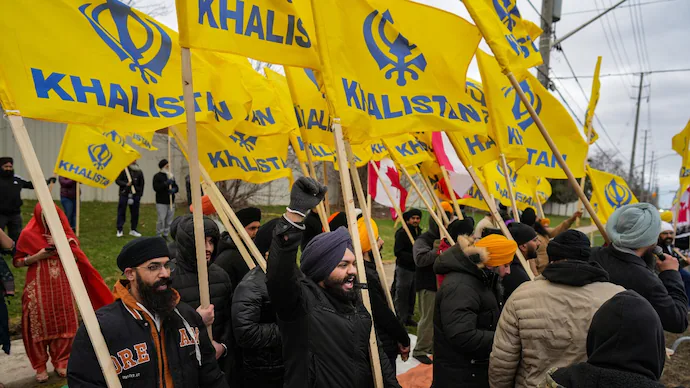
The SFJ organised rallies under the slogan “Khalistan Zindabad” outside Triveni Mandir in Brampton and Lakshmi Narayan Mandir in Surrey. The group framed its protests as opposition to the Hindu Canadian Foundation (HCF) allegedly leveraging Bill C-9 against them.

In a social media post, SFJ accused HCF of distorting the intent of the bill to intimidate Canadian Sikhs. Reports noted that during the protests, local law enforcement took measures to prevent demonstrators from approaching the temples, with videos emerging of police engaging with protestors to maintain order.

On Chinguacousy Road near the Triveni Mandir, dozens gathered to display yellow flags emblazoned with the word “Khalistan”. Reports indicate that amid the protests, temple authorities played music to counteract the chanting of pro-Khalistani slogans from demonstrators.

Context of Diplomatic Relations and Community Reactions

The protests have unfolded against a backdrop of strained diplomatic relations between India and Canada. Tensions escalated following comments from former Canadian Prime Minister Justin Trudeau about alleged Indian involvement in the death of Khalistani separatist Hardeep Singh Nijjar in 2023. However, subsequent statements from the Royal Canadian Mounted Police (RCMP) indicated no links had been established between the Indian government and criminal activities in this context.

Inderjeet Singh Gosal, who succeeded Nijjar as the referenda coordinator for SFJ, emphasised the need for justice regarding Nijjar’s death. He stated that as a Canadian citizen, he expected the Canadian government to prioritise the safety of its citizens in relation to these events.

Gosal has a controversial history, including previous charges stemming from violent confrontations during temple protests. Past SFJ protests at Hindu places of worship in Canada have occasionally turned violent, leading to physical altercations between members of the groups involved.

In light of these recent protests, various Hindu organisations have urged local law enforcement to ensure safe access to places of worship, asserting that such spaces should be free from political intimidation. They expressed hope that Bill C-9 will help prevent future incidents of unrest.

In addition, new regulations have been implemented, including a safety bylaw in Brampton mandating protestors maintain a distance of 100 metres from temples and a court order issued in Surrey to restrict gatherings in similar precincts. Peel Regional Police reiterated their support for lawful assembly but underscored their intolerance for any unlawful behaviour during these events.

Long or Short, get news the way you like. No ads. No redirections. Download Newspin and Stay Alert, The CSR Journal Mobile app, for fast, crisp, clean updates!

App Store –  https://apps.apple.com/in/app/newspin/id6746449540 

Google Play Store – https://play.google.com/store/apps/details?id=com.inventifweb.newspin&pcampaignid=web_share

Latest News

Popular Videos
