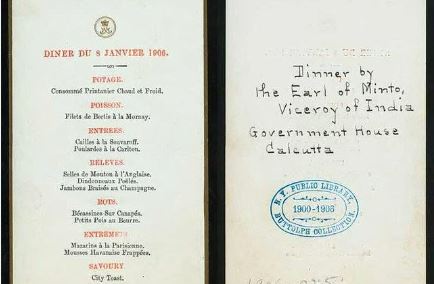
On January 31, 1897, a meal in Baroda transformed an ordinary evening into a notable display of power, diplomacy, and culinary sophistication. The dinner was hosted by the Maharaja of Baroda and included the Maharaja Scindia of Gwalior as the esteemed guest. At a time when the British Empire dominated India, Indian royals still cultivated a unique language of prestige, prominently expressed through their dining experiences. Recently, a preserved menu from this dinner surfaced in an American archive, thanks to Neha Vermani, a historian specialising in Mughal-era South Asia. Vermani discovered the menu during her research and shared it on social media, leading to a significant resurgence of interest.
Culinary Offerings Reflecting Global Influences
This historic menu is remarkable not for its opulence but for the diverse array of dishes that it showcased. The meal commenced with almond custard, followed by fish in mayonnaise sauce and chicken soup accented with truffles. Italian-style mutton cutlets and roasted partridges with peas were also featured, alongside artichokes garnished with demi-glace. Even the vegetable rice curry bore a French name, while dessert was a delightful combination of cream-filled apples and pistachio ice cream. This array did not conform to a purely Mughal-style feast; rather, it presented a blend designed to signify a broader narrative.
Cultural Intersections in Indian Princely States
By the late 19th century, many Indian princely states were intricately linked to global cultural networks. French chefs contributed to royal kitchens, while English dining customs influenced how meals were served. The colonial trade routes introduced new ingredients, and menus were often printed in both English and French on embossed paper. Consequently, cuisine emerged as a form of diplomacy that could effectively communicate with both European officials and Indian dignitaries.
Similar culinary trends can be traced across princely courts in Hyderabad, Mysore, and Travancore, where dishes like clear soups, cutlets, puddings, and ice creams appeared alongside traditional Indian fare. The adoption of European table settings and continental meal structures was prevalent. However, the intention behind these choices transcended mere imitation.
A Signal of Sovereignty and Sophisticated Identity
The dinner in Baroda not only highlighted the convergence of Indian royalty under British rule, but also emphasized their engagement with a larger global community. Culinary expertise was not simply about food; it signified education, modernity, and social standing. By hosting such sophisticated meals, Indian kings were not merely preserving their heritage but reaffirming their roles as cosmopolitan leaders.
This historic menu encapsulates a significant transformation in royal identity. While earlier royal courts communicated power through traditional rituals, by the 1890s, the emphasis had shifted toward demonstrating cultural fluency. The palace kitchen emerged as a critical space, intertwining aspirations of empire, identity, and self-presentation.
Reevaluating Colonial Narratives
Understanding the implications of such documents is crucial, as they provide a more nuanced view of colonial history. They reveal that Indian rulers were not merely passive observers but proactive participants in cultural exchanges. They made deliberate choices about which elements to adopt and which to maintain, thereby actively negotiating their cultural landscapes.
This menu from 1897 stands as a testament to an era where sovereignty was expressed through hospitality and carefully curated experiences. It underscores the importance of culinary choices in defining royal identities, even amidst significant external changes. The legacy of that royal dining experience continues to resonate in contemporary discussions around culture and identity.