


app-store-logo
play-store-logo
February 21, 2026

Gaza Farmers Face Dangers as They Seek to Revive Their Lands
The CSR Journal Magazine

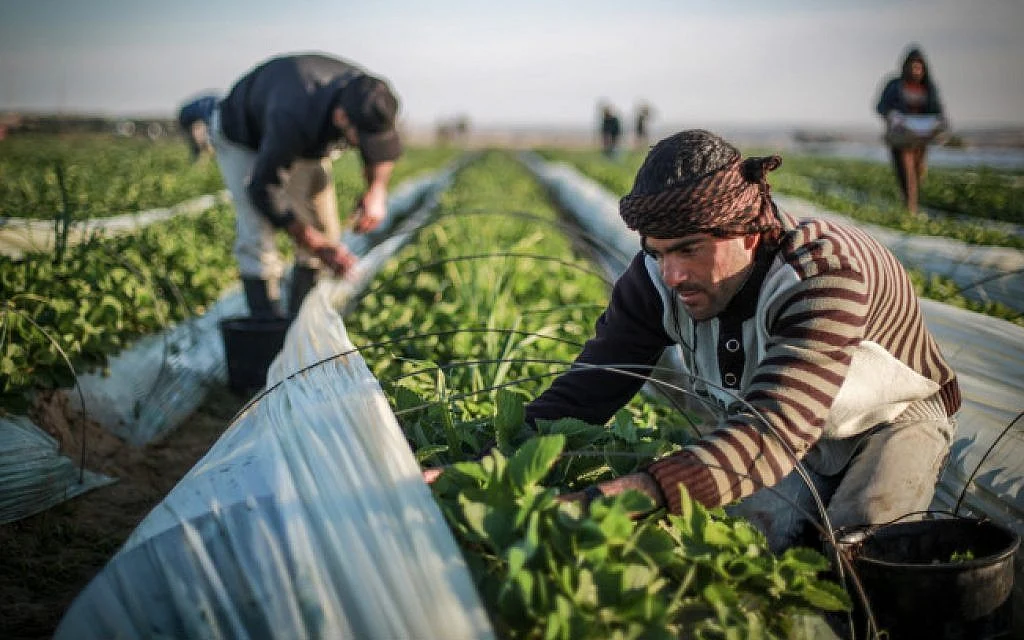
The Gaza Strip has witnessed significant risks for farmers like Mohammed al-Slakhy, who are striving to restore their agricultural operations. Following a ceasefire that began in October, many Palestinians have ventured back to their fields, seeking to rebuild after years of conflict. Al-Slakhy and his family returned to their farm in the Zeitoun area of Gaza City, determined to clear debris and revitalize what remains of their greenhouses, which were severely damaged in the recent hostilities.

Equipped with limited resources, the family has managed to prepare the land and has begun planting courgettes, hoping to harvest them by early spring. However, this endeavor entails considerable risks, as al-Slakhy recounts. Israeli tanks are positioned just a few hundred meters away, and the sound of gunfire is an all too familiar occurrence, making agricultural work life-threatening.

Widespread Destruction of Agricultural Assets

Al-Slakhy’s farm, which once produced a variety of vegetables, has suffered extensive damage. He noted that more than three hectares of greenhouses were destroyed, including vital infrastructure like irrigation networks, wells, solar power systems, and desalination plants. A United Nations Food and Agriculture Organization assessment from July 2025 indicated that over 80 percent of cropland in Gaza has been harmed, rendering less than 5 percent cultivable.

Despite the ceasefire, ongoing Israeli expansion of buffer zones exacerbates the situation. Many farmers fear that these zones may permanently confiscate their agricultural land. Currently, Israel controls approximately 58 percent of the Gaza Strip, designating substantial areas as security buffer zones that largely encroach upon Palestinian farmland.

Access Challenges and Local Tragedies

Al-Slakhy has regained access to only one hectare of the more than 22 hectares his family once cultivated. The remaining land remains inaccessible due to the Israeli buffer zone. This solitary hectare is perilously close to the border with the buffer zone, exposing al-Slakhy to frequent danger from nearby Israeli military actions. On February 12, for instance, Israeli tanks opened fire on local residents, resulting in two fatalities and several injuries, adding to the prevailing climate of fear.

Concerns are also echoed by Eid al-Taaban, a 75-year-old farmer from Deir el-Balah, whose fields lie only about 300 meters from the buffer zone. Al-Taaban spoke of the inability to harvest his eggplant crops due to the security situation. The persistent noise of heavy machinegun fire causes him to worry for his sons’ safety whenever they venture out to irrigate their crops. His neighbor, Khaled Baraka, lost his life while working in his fields, underscoring the dangers that farmers face daily.

Impacts of the Blockade on Farming

The blockade on Gaza presents a substantial obstacle to farmers’ recovery efforts. Since October 2023, Israel has severely restricted the entry of critical agricultural supplies, including seeds and fertilizers. The limited availability of these materials has led to soaring prices and instances of damage, further complicating the situation. Farmers like al-Taaban have experienced difficulties not only in obtaining necessary resources but also in yielding profitable crops.

Despite these setbacks, farmers remain committed to their lands. Al-Taaban recounted the challenges he faced with his tomato crop, which was lost due to ineffective pest control measures. The deteriorating economic conditions in Gaza have made it increasingly challenging to find markets for their products although local farmers often provide higher quality than imported options.

Resilience Amidst Adversity

Local produce faces additional challenges due to competition from imported goods that flood the market and are priced lower, putting further pressure on Palestinian farmers. Al-Slakhy lamented that he often has to sell his produce at a loss due to this competitive environment. Yet, amidst these hardships, the farmers’ resolve to reclaim their agricultural heritage remains strong. For many such as al-Slakhy and al-Taaban, agriculture is not only a means of livelihood but also a critical part of their identity and history.

As generations of families pass down their agricultural knowledge, the farmers persist in their efforts despite the looming threats. Al-Taaban, carrying on the legacy of his ancestors, remains devoted to the land as part of his identity, emphasizing the unwavering connection his family has with farming, unaffected by external pressures or destruction.

Long or Short, get news the way you like. No ads. No redirections. Download Newspin and Stay Alert, The CSR Journal Mobile app, for fast, crisp, clean updates!

App Store –  https://apps.apple.com/in/app/newspin/id6746449540 

Google Play Store – https://play.google.com/store/apps/details?id=com.inventifweb.newspin&pcampaignid=web_share

Latest News

Popular Videos
