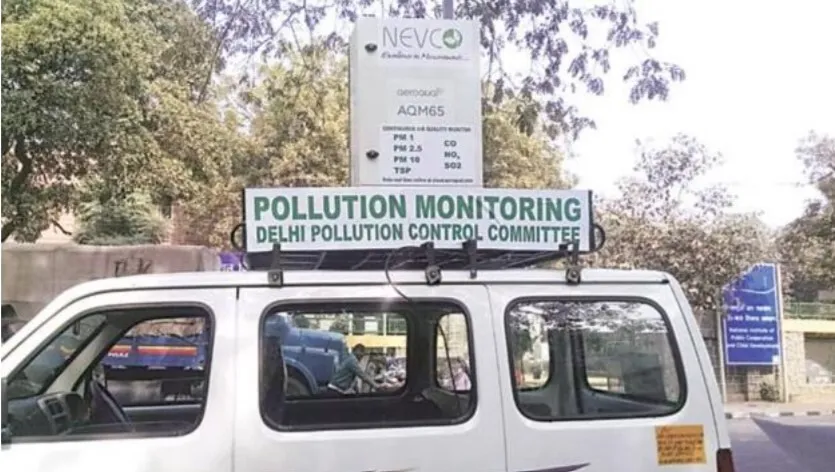
Delhi Chief Minister Rekha Gupta highlighted the need for continuous and year-round action to combat pollution during the inauguration of six new Continuous Ambient Air Quality Monitoring System (CAAQMS) stations. The new installations aim to enhance real-time tracking of air quality throughout the capital. Gupta also launched 100 ‘Vayu Rakshak’ vehicles designed to improve monitoring and enforcement of pollution control measures.
Addressing attendees at the event held at the Delhi Secretariat, Gupta emphasized the government’s commitment to establishing a comprehensive monitoring system and implementing long-term policies aimed at addressing pollution at its origin. She stated, “Our objective is to ensure that there is at least one air quality monitoring station for every 25 square kilometers in Delhi, enabling us to obtain complete and accurate data on pollution levels and their sources.”
Locations of New Monitoring Stations
The newly inaugurated monitoring stations, established by the Commission for Air Quality Management (CAQM), are situated in several key locations, including Jawaharlal Nehru University, Indira Gandhi National Open University, Netaji Subhas University of Technology West Campus in Dwarka, CWD Akshardham, Sarvodaya Bal Vidyalaya in Delhi Cantonment, and the Dr. Syama Prasad Mookerjee Swimming Pool Complex at Talkatora Garden. Gupta pointed out that Delhi currently operates 46 air quality monitoring stations, with plans to install an additional 14 stations in the upcoming phase. This expansion aims to ensure comprehensive coverage of residential areas, industrial zones, traffic corridors, and green spaces.
Year-Round Supervision and Enhanced Infrastructure
The Chief Minister stressed that pollution should not be viewed as a seasonal issue, but rather one requiring continuous care and oversight throughout the year. She noted the deployment of air safety officers tasked with ongoing supervision and enforcement. Gupta asserted the government’s commitment to strengthening pollution controls across multiple sectors, including transportation, waste management, and urban greening initiatives.
Highlighting the city’s achievements, she remarked that Delhi has the highest number of electric buses in India, with 4,200 currently operational. The goal is to increase this number to 14,000 by 2028, which is expected to significantly reduce vehicular emissions. Gupta elaborated on plans to upgrade pollution monitoring infrastructure, including the development of automated vehicle testing stations, along with a newly formulated electric vehicle policy for private vehicles.
Historical Steps Toward Environmental Health
The Chief Minister described the classification of large areas within the Delhi Ridge as forest land as a historic measure, underscoring the importance of protecting green spaces to enhance Delhi’s environmental health and achieve sustainable development. She criticized previous government strategies for treating pollution as a temporary issue, calling earlier interventions such as smoke towers and the odd-even vehicle scheme “cosmetic solutions” that did not tackle the root causes of pollution.
Delhi’s Environment Minister Manjinder Singh Sirsa, who also spoke at the event, provided additional insights into the government’s initiatives for fortifying pollution control measures. “The 100 ‘Vayu Rakshak’ vehicles will cover various sectors to oversee industrial, vehicular, hotel, and institutional pollution,” Sirsa announced. He also noted that 100 permanent surveyors will be assigned for year-round inspections.
Sirsa spoke about the strengthened coordination among relevant bodies, including the Delhi Pollution Control Committee (DPCC), the CAQM, and the central government, leading to systematic monitoring and data-driven policy making. He also highlighted the progress made in waste management, noting that approximately 85 percent of Delhi’s daily waste generation of about 12,500 metric tonnes is being processed for energy production.
Regarding legacy waste challenges, Sirsa stated that the current administration has successfully cleared about 45 acres of land from garbage and is focused on reducing the height of the remaining dumps. He criticized previous administrations for failing to adequately address pollution’s fundamental causes, asserting that little action was taken despite widespread acknowledgment of the issues, including road dust and vehicular emissions.