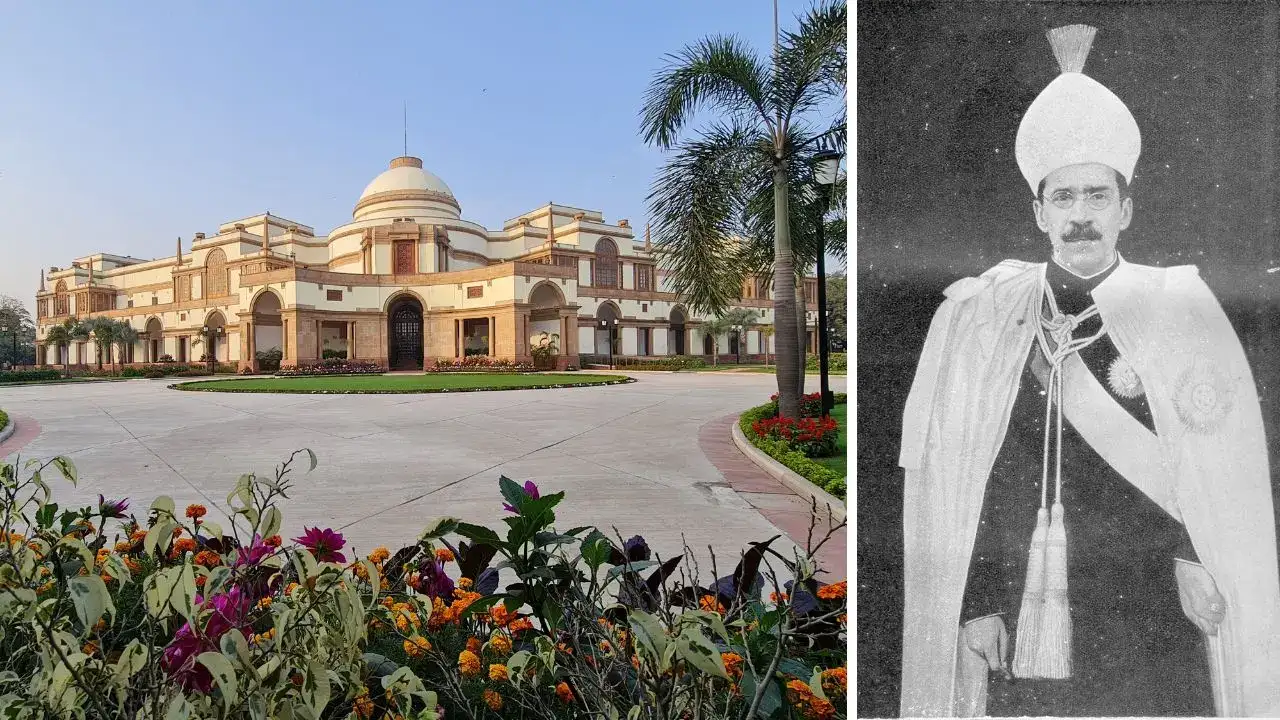
When visiting leaders arrive in New Delhi, there is one building where India conducts many of its most delicate conversations Hyderabad House. The domed structure at 1, Ashok Road, now a cornerstone of India’s foreign-policy theatre, was never intended for global diplomacy. It began as an extravagant personal residence commissioned by Mir Osman Ali Khan, the last Nizam of Hyderabad and once considered the world’s richest man.
From Princely Aspirations to an Imperial Capital
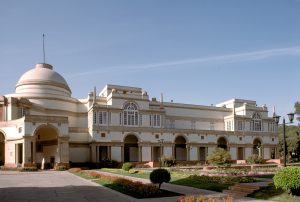
More than a century ago, as the British shifted the capital of India from Calcutta to Delhi, princely states hurried to mark their presence in the freshly planned city. The Nizam, already famous for wealth that sparked stories of pearl-filled pools and jewel-studded estates, wanted nothing short of a plot near the Viceroy’s House itself. The request was dismissed as far too bold.
Instead, five states Hyderabad, Baroda, Patiala, Jaipur and Bikaner were allotted land roughly three kilometres from the centre of imperial power, around the statue of King George V. Among them, only Hyderabad and Baroda turned to the celebrated architect Edwin Lutyens for designs.
Lutyens’ Challenge: Build Grandly, but Not Too Grand
Although the Nizam enjoyed an unusual “exalted” status in British India and the honour of a 21-gun salute, the colonial government made one rule clear: princely residences required official approval and could not imitate the Viceroy’s House.
Lutyens complied by retaining just one echo of the Viceroy’s design a central dome and invented an entirely distinct plan for the Hyderabad ruler. His solution was bold: a sweeping butterfly-shaped mansion, an idea he had explored earlier in Papillon Hall in England.
A Palace That Announced the Nizam’s Wealth
Construction began in the 1920s, costing £200,000, a sum equivalent to roughly Rs 170 crore today. Spread over 8.2 acres, the residence was crafted to be the grandest princely home in the capital overshadowed only by the Viceroy’s own residence.
The palace had 36 rooms, long colonnaded corridors, broad staircases, fireplaces, fountains and a mix of European and Mughal elements. Inside, the entrance foyer and the first-floor passage displayed striking rhombic marble patterns. Arches drew inspiration from the Pantheon in Rome, while the window design on the first floor nodded to the Uffizi overlooking the Arno in Florence. A dining hall capable of seating 500 guests further underlined the Nizam’s taste for scale.
A Glimpse Into the Zenana
Hidden away from the public rooms was the zenana, the women’s section. It formed a circular courtyard lined with small rooms. When Lord Hardinge toured the space, he left an unusually vivid record:
He observed that each room was “the size of an ordinary horsebox with only one window close to the roof.” He also described tiled bathrooms with taps for hot and cold water and famously noted: “There seemed to be no means of mixing the hot and cold water, as it pours on to the ladies!”
Irony of Grandeur: A Palace Rarely Visited
Despite its splendour, the Nizam hardly spent time in the Delhi residence. Yet the building itself symbolised both his loyalty to the British Raj and his enormous personal fortune including wealth drawn from Hyderabad’s diamond mines and jewels such as the Jacob Diamond.
After Independence: A New Life for the Mansion
The end of British rule brought a dramatic turn. Hyderabad resisted joining India until Operation Polo (1948) forced its integration. The Nizam’s influence faded, and Hyderabad House drifted into occasional use before eventually passing into the hands of the Indian government, likely through transfer or donation. Formal documentation has never been publicly detailed.
By the early 1970s, India’s diplomatic footprint was expanding and the mansion found a new purpose. In 1974, the Ministry of External Affairs assumed control, designating it as a venue for official banquets and high-level meetings. The India Tourism Development Corporation (ITDC) oversaw hospitality, preserving the building while adapting it for global standards.
Today: India’s Premier Stage for World Diplomacy
Over the decades, Hyderabad House has hosted a parade of global leaders Bill Clinton, George W. Bush, Gordon Brown, Vladimir Putin, and many others. Its central location, proximity to key ministries, and its ability to manage sensitive VVIP events have made it indispensable to India’s foreign-policy machinery.
As President Vladimir Putin arrives once again, the building steps back into the global spotlight. What began as the seasonal residence of a ruler famed for his unimaginable wealth now frames the conversations that shape India’s ties with the world.