


Canada To Announce Fresh Tariffs On US As Trade War Escalates
The CSR Journal Magazine

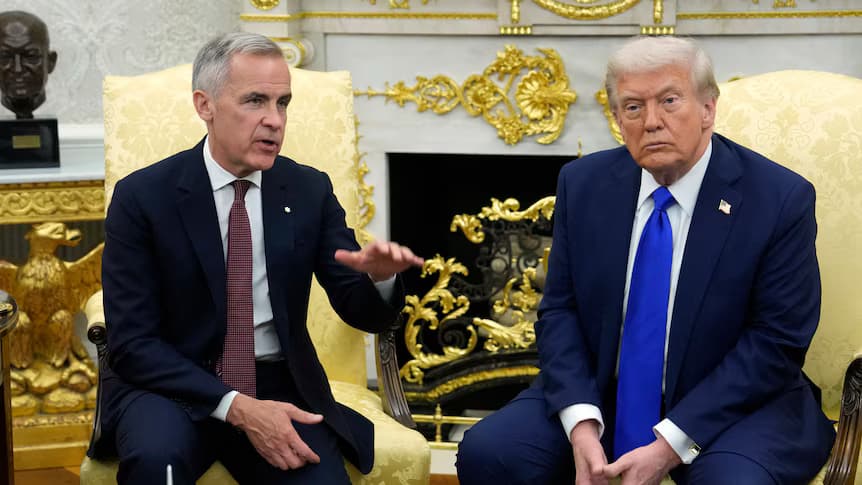
Canada is preparing to announce retaliatory tariffs against the United States on Tuesday, escalating a trade dispute that has deepened since Prime Minister Mark Carney’s government broke off negotiations with the Trump administration. An official familiar with the plans said Ottawa was preparing new measures, while Carney indicated Canada may move away from matching US tariffs dollar for dollar and instead target specific sectors to shield Canadian workers and businesses.

US President Donald Trump further intensified the confrontation on Monday, warning Canadian leaders to “fall in line” or face consequences “far WORSE” than the tariffs already imposed. Trump also threatened 50 per cent tariffs on Canadian vehicles, auto parts and steel, prompting Carney to accuse Washington of seeking to subordinate Canada and undermine key Canadian industries.

Canada Prepares New Retaliatory Measures

The Canadian official who disclosed the tariff plans spoke on condition of anonymity because they were not authorised to discuss the measures publicly. The latest escalation came after Carney’s decision late on Friday to abandon trade negotiations with the Trump administration.

Trump responded the following day by threatening 50 per cent tariffs on roughly USD 20 billion worth of Canadian goods. Carney has since indicated that Canada’s response could be more selective rather than simply mirroring American tariffs.

Carney said Canada would not accept an approach in which Washington treated Ottawa as subordinate during negotiations. “An attitude at the negotiation table that Canada is a subsidiary of the United States” is “not something we’re going to accept”, he said.

Speaking in French, Carney was more direct in describing the disagreement. “We learned during the negotiations that the Americans want to destroy our major industries, including autos, steel and aluminium. That was one of the main reasons we said no. It was a bad deal.”

The Canadian prime minister also questioned the reliability of the United States as a trading partner, saying Canada was finding reliable partners “everywhere in the world, except in the United States. Except in the United States. And Russia.”

Trump Targets Canadian Auto Industry

Trump renewed his criticism of Canada on Monday, warning that additional tariffs would target the country’s auto industry from next year. In a social media post, he accused Canada of having “been ripping off the United States of America for years” and criticised what he described as Canada’s “ridiculously high tariffs” on American farmers.

Carney rejected Washington’s proposed approach to the automotive sector, arguing that it would gradually dismantle Canadian vehicle production. He defended the deeply integrated cross-border industry, saying, “This is the most successful automotive partnership in history.”

Ontario Premier Doug Ford has also taken a confrontational position in the dispute. In an interview with The Associated Press, Ford said Trump had underestimated Canadians’ willingness to accept economic hardship rather than concede to American demands.

“We’re all in,” Ford said. “Up here, we’re at a fever pitch; everyone’s in for an economic war. They know they’re going to have to sacrifice.”

Trump has repeatedly attacked Ford personally, describing him as “the less charismatic, intelligent, and overall unimpressive brother of the late, great, Rob Ford” and again referring to Carney as “Governor Carney”. Ford responded: “If you think an insult from him hurts me? Well, bring it on, buddy, I’m ready.”

Despite belonging to different political parties, with Ford a Progressive Conservative and Carney a Liberal, the two leaders have emphasised broad political unity in Canada in response to the US trade measures.

Ontario Puts Electricity And Critical Minerals On Table

Ford has warned that Ontario could take further measures if the confrontation intensifies. He said “everything is on the table”, including potentially restricting electricity and critical minerals supplied to the United States.

He also said Canada should consider stronger retaliation if Washington continues targeting Canadian industries such as oil and potash. Ontario could increase electricity prices for US customers or halt power exports altogether, he said.

“We power 1.5 million homes and businesses,” Ford said. “Everything’s on the table. I’ll do whatever it takes.”

Critical minerals have assumed greater importance for US national security and manufacturing, with the Pentagon seeking more secure supplies for military aircraft, missiles, munitions and electronics as Washington attempts to reduce its dependence on China.

Ford has previously used electricity exports as a negotiating tool. During an earlier stage of the dispute, Ontario imposed a 25 per cent surcharge on electricity sent to Michigan, Minnesota and New York before both sides subsequently stepped back from the measures.

Auto Sector Emerges As Central Battleground

The automotive industry has become one of the most important areas of conflict between the two countries. Ford accused Trump of seeking not merely better trade terms but of weakening Canadian industries and moving production to the United States.

“He wants to bleed out every single sector and bring them down to the US,” Ford said, arguing that Trump wanted to turn Canada into a vassal state.

Ontario’s automotive sector is closely integrated with factories and suppliers across the US border, particularly in Michigan. Vehicle components can cross the border multiple times during the manufacturing process. Automakers including Ford, General Motors and Stellantis operate major assembly plants in Ontario, while the wider supply chain supports tens of thousands of jobs.

US Trade Representative Jamieson Greer defended the American position on Monday, saying “the only reason Canada has auto production in the first place” was the 1960s Auto Pact. Under that agreement, Canada used access to its domestic market to encourage vehicle production in the country.

Ford also said he had opposed the preliminary agreement that Carney had been considering before Ottawa ended the negotiations. He said he was unwilling to restore American liquor to Ontario shop shelves as part of a deal.

“I wasn’t going to put the booze back on the shelves,” Ford said. “I was ready to go out there and call a press conference … and say I’m not buckling over.”

Dispute Extends Beyond Tariffs

Ford said he understood that Washington had sought language during the final stages of negotiations that would have restricted Canada’s ability to enter trade agreements with other countries without US approval. Carney has described such a demand as unacceptable and linked it to Canada’s sovereignty.

The Canadian prime minister has also argued that the negotiations exposed a wider disagreement over language and culture. Protections for French and Canadian culture may be viewed by Washington as trade-related irritants, he said, but are regarded in Canada as fundamental rights.

With Ottawa preparing new tariffs and Washington threatening further duties, the dispute has expanded beyond the immediate question of trade barriers to encompass Canada’s industrial policy, sovereignty and political resolve.

Reflecting the increasingly defiant mood in Ontario, Ford summed up his position towards Trump by asking: “Who does he think he is? You gotta be kidding.”

Long or Short, get news the way you like. No ads. No redirections. Download Newspin and Stay Alert, The CSR Journal Mobile app, for fast, crisp, clean updates!

App Store –  https://apps.apple.com/in/app/newspin/id6746449540 

Google Play Store – https://play.google.com/store/apps/details?id=com.inventifweb.newspin&pcampaignid=web_share

Latest News

Popular Videos
