


app-store-logo
play-store-logo
January 21, 2026

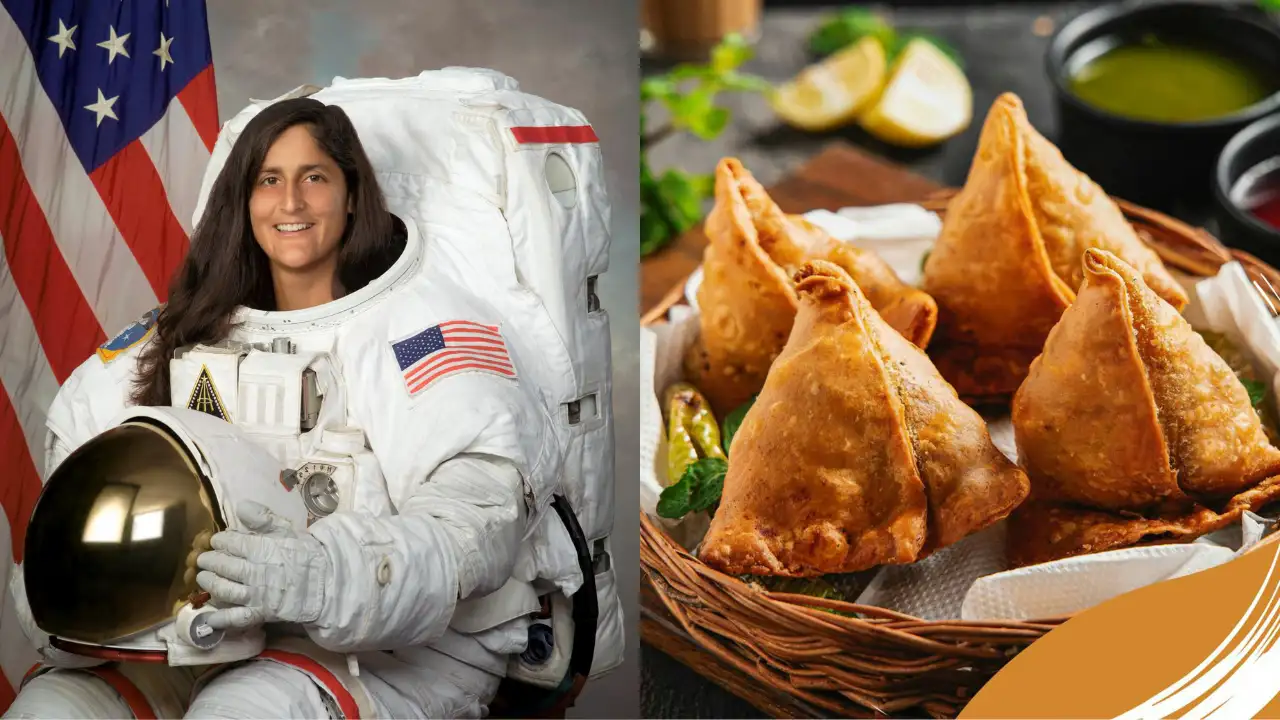
The astronaut who took Bhagavad Gita and samosas to space! What is Sunita Williams’ India connection?

The CSR Journal Magazine

Indian-origin NASA astronaut Sunita Williams has retired from the US space agency with effect from December 27. Her retirement announced on January 21, 2026 marks the end of her distinguished 27-year career marked by three missions to the International Space Station (ISS), leadership roles in orbit and multiple human spaceflight records.

Sunita Williams, who retired from NASA on January 21, after a 27-year career, maintains a deep personal and cultural connection to India through her family heritage. She is of Indian-American descent. Her father, Dr. Deepak Pandya, was a neuroanatomist originally from the Jhulasan village in the Mehsana district of Gujarat, India.

Born in Ohio, USA, to Deepak Pandya and Slovenian descent Ursuline Bonnie Pandya, Sunita is often affectionately referred to in India as the country’s “adopted daughter”. She has visited her ancestral village multiple times, including trips in 1972, 2007, and 2013. She is currently on a visit to India in January 2026 to share her space experiences and thank the people for their prayers during her extended 9-month mission that ended in 2025.

In 2008, the Government of India honoured her with the Padma Bhushan, India’s third-highest civilian award. Williams is a major role model in India, particularly for women in STEM, and has frequently engaged with Indian students and scientists from ISRO to discuss future space exploration. She maintained a close friendship with fellow astronaut Kalpana Chawla and recently held an emotional reunion with Chawla’s family in Delhi during her ongoing visit to India.

Sunita Williams known as the ‘samosa-eating astronaut’!

Sunita Williams is known for frequently carrying elements of Indian culture into her space missions. She has carried an idol of Lord Ganesha, a copy of the Bhagavad Gita, and the Upanishads on her various missions to the International Space Station (ISS).

Known as the “samosa-eating astronaut,” she has brought Indian snacks like samosas and sweets like Kaju Katli into orbit. She has also celebrated festivals like Diwali while aboard the ISS.

“I really appreciate my Indian heritage and was glad I could bring part of it with me to space,” Williams said during a 2013 news conference at the National Science Centre in Delhi. “Ganesh has always been in my house. Everywhere I’ve lived, I’ve had Ganesh, and so he had to come with me to space, of course. And Indian food — you can never get enough of Indian food … so I had to make sure I had some samosas in space with me. Other types of Indian food we definitely had up there as well.”

Sunita Williams logged 608 days in space, second-highest cumulative time by a NASA astronaut

NASA selected Williams as an astronaut in 1998. She has spent a total of 322 days and performed seven spacewalks across her two extended missions in space. She once held the record for total cumulative spacewalk time by a female astronaut.

Over her career, Williams logged 608 days in space, the second-highest cumulative time by a NASA astronaut. She ranks sixth among Americans for the longest single spaceflight, tied with astronaut Butch Wilmore, with both spending 286 days in orbit during NASA’s Boeing Starliner and SpaceX Crew-9 missions.

She completed nine spacewalks totalling 62 hours and 6 minutes, the most by a woman and the fourth-highest cumulative spacewalk time overall. She was also the first person to run a marathon in space.

Williams spent over eight months aboard the ISS and returned to the Earth in March 2025 aboard the SpaceX, along with her crewmate, Butch Wilmore. The pair was launched to the space station in 2024, the first people to fly Boeing’s new Starliner crew capsule. Their mission, meant to last for a week, stretched to over nine months because of Starliner trouble.

Praising her contributions, NASA Administrator Jared Isaacman said, “Suni Williams has been a trailblazer in human spaceflight, shaping the future of exploration through her leadership aboard the space station and paving the way for commercial missions to low Earth orbit.”

“Her work advancing science and technology has laid the foundation for Artemis missions to the Moon and advancing toward Mars, and her extraordinary achievements will continue to inspire generations to dream big and push the boundaries of what’s possible. Congratulations on your well-deserved retirement, and thank you for your service to NASA and our nation.”

Long or Short, get news the way you like. No ads. No redirections. Download Newspin and Stay Alert, The CSR Journal Mobile app, for fast, crisp, clean updates!

App Store – https://apps.apple.com/in/app/newspin/id6746449540

Google Play Store – https://play.google.com/store/apps/details?id=com.inventifweb.newspin&pcampaignid=web_share

Latest News

Popular Videos