


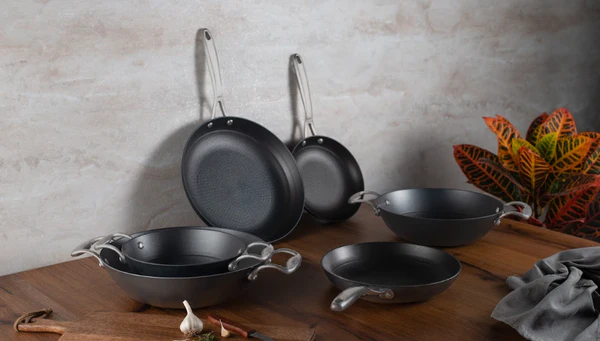

Non-stick pans are widely used in households, primarily due to their convenience in cooking. These kitchen essentials are favored for their ability to simplify meal preparation, especially for individuals under time constraints who may not have the luxury of seasoning traditional cast-iron skillets. Additionally, non-stick cookware typically requires less oil for cooking, which makes it a healthier choice.
Economically, this type of cookware is often more affordable than newer options like triple-ply or cast iron, which are recognized for their durability and health benefits. However, recent dialogue has emerged regarding the potential health implications associated with non-stick pans. This article aims to clarify common misconceptions surrounding this cookware.
Health Concerns Related to Non-Stick Cookware
It is well-known that non-stick cookware is primarily made of Teflon, a well-recognized brand name for polytetrafluoroethylene (PTFE). PTFE is a polymer, composed of carbon and fluorine, valued for its non-stick qualities and resistance to heat. This substance is also found in various everyday products, including floor mats, packaging materials, toys, and various types of machinery. A common concern regarding the use of PTFE in cookware is whether it poses any danger.
While PTFE is generally stable, it can release harmful fumes if subjected to temperatures exceeding 260°C. Experts agree that this temperature is rarely reached in home cooking, as oils begin to smoke at lower heat levels. Typical kitchen appliances, including air fryers and ovens, often have maximum settings around 400°F to 450°F, reinforcing the assertion that home cooking temperatures are usually safe.
Condition of Cookware and Its Implications
The potential risk associated with PTFE arises particularly when cookware is damaged or scratched. Experts advise against using chipped or worn cookware despite the inert nature of Teflon, as any flakes are not absorbed by the body and should safely pass through the digestive system. However, caution is advised regarding damaged non-stick pans, and it is recommended to replace them if noticeable wear occurs. Another area of concern involves perfluorooctanoic acid (PFOA), a chemical once used in the production of Teflon. Due to its associated health risks, PFOA has largely been eliminated from manufacturing processes.
Customers concerned about possibly encountering PFOA in products should select brands that are forthright about being “PFAS-Free.”