


Amit Shah Confirms Talks with Key Maoist Leader, Slams Congress Over Alleged Links
The CSR Journal Magazine

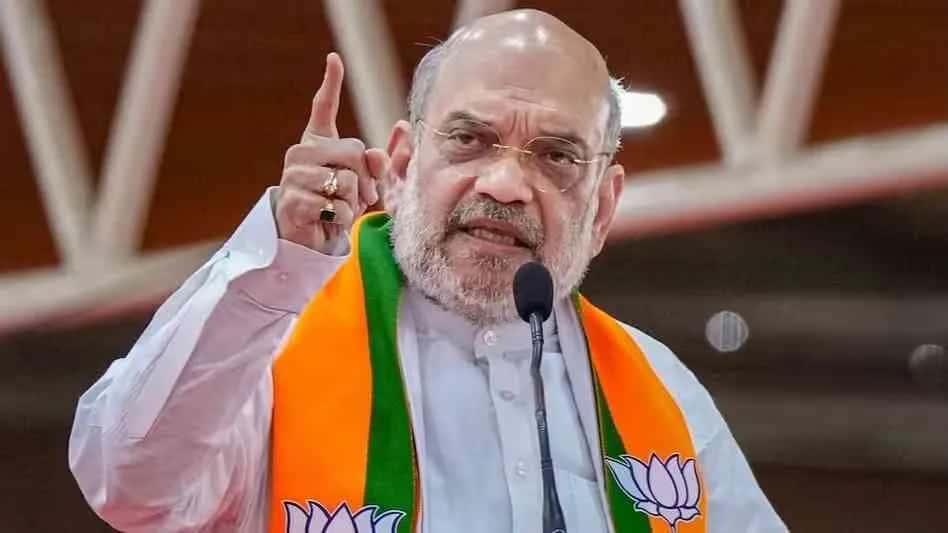
In a statement issued on Monday, Union Home Minister Amit Shah revealed that discussions are currently underway with the only active member of the CPI (Maoist) central committee. Although Shah did not specify the individual’s name, he appeared to refer to Mihir Besra, who operates in the Jharkhand region. The surrender of this key figure would significantly advance the government’s objective of eliminating Maoism from India. As the deadline set by the Centre for the eradication of Naxalism approaches, Shah proclaimed that India is on the verge of becoming “Naxal-mukt,” touting this as a significant achievement of the Modi administration. He accused the Congress party of maintaining close ties with Maoist sympathizers.

Shah challenged the notion that Naxalism stemmed from a quest for justice for tribal communities or from underdevelopment in those areas. Instead, he asserted that the actions of Naxalites themselves have hindered development. While participating in a Lok Sabha discussion focused on combating Left-wing extremism, Shah commended the bravery of state police forces and the CoBRA unit of the Central Reserve Police Force for their efforts against Naxalism. He also emphasized what he termed as the political resolve of the Modi government, implying that the shift from the United Progressive Alliance (UPA) government marked a pivotal change.

The Home Minister criticized Rahul Gandhi, the leader of the opposition in the Lok Sabha, for reportedly sharing public platforms with Naxal supporters and claimed that supporters of Naxal groups had participated in Gandhi’s Bharat Jodo Yatra. Shah recounted an incident where pro-Naxal slogans were raised during a protest at India Gate, alleging that Gandhi had shared a video of the event on social media. He accused the national advisory council under Sonia Gandhi during the UPA era of including individuals linked to Naxalites and pointed to former Congress minister Jairam Ramesh’s efforts to advocate for the release of Mahest Raut, a PM rural development fellow arrested for connections to Naxalism.

Shah highlighted Binayak Sen’s inclusion in the Planning Commission during the UPA period, labeling him as “pro-Naxal.” He continued by asserting that the recent successes in combating Naxalism in Chhattisgarh can be attributed to the electoral defeat of the Congress-led Bhupesh Baghel government. He mentioned the Grey Hounds, an anti-Naxal unit in Congress-ruled Telangana, which allegedly refused to collaborate with central forces while offering limited assistance in capturing Naxal operatives in the plains.

The Minister recalled the tragic death of 76 police officers at the hands of Naxalites during the UPA era, suggesting that students at JNU had shown a lack of respect by celebrating those fatalities. He referred to as “urban Naxals” a group of intellectuals advocating for dialogue with Maoist groups, arguing that the plight of Maoist victims has been largely ignored in academic discussions. Shah also revisited the Salwa Judum, an anti-Naxal movement initially started by Congress leader Mahendra Karma, and criticized the judicial decision that led to its disbandment.

Labeling Naxalism an ideological armed struggle against democracy, Shah remarked that its foundational principle is that “power flows from the barrel of the gun.” He asserted that Leftist parties in India are ideologically influenced by foreign Communist revolutions and pointed out that many other regions also face challenges of underdevelopment without experiencing Naxalism. He indicated that the government is employing a policy of “bullet for bullet” against those who do not surrender, while efforts are being made to deliver developmental benefits in regions affected by Naxal activity. He cited statistics indicating the deaths of 20,000 youths due to Naxal violence and underlined that the former Prime Minister, Manmohan Singh, identified Naxalism as the largest internal security threat.

In his remarks, Shah included the eradication of Naxalism among other major achievements of the Modi government, paralleling it with issues such as the abrogation of Article 370 and the establishment of the Ram Temple. He concluded his statement by highlighting that the reach of the government was initially limited in the so-called “red corridor,” where Naxalites falsely led tribal communities.

Long or Short, get news the way you like. No ads. No redirections. Download Newspin and Stay Alert, The CSR Journal Mobile app, for fast, crisp, clean updates!

App Store –  https://apps.apple.com/in/app/newspin/id6746449540 

Google Play Store – https://play.google.com/store/apps/details?id=com.inventifweb.newspin&pcampaignid=web_share

Latest News

Popular Videos
