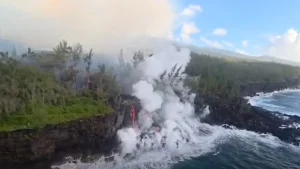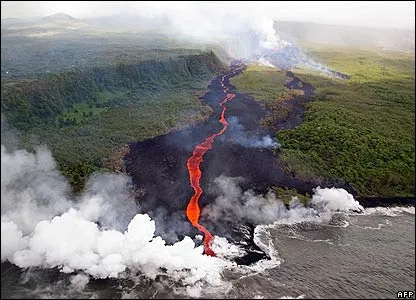

Recent developments on Reunion Island have seen thick streams of molten rock from the Piton de la Fournaise volcano moving towards the Indian Ocean. This volcanic activity has led to the lava covering parts of Route Nationale 2, one of the major highways on the island. Eyewitness footage captures the bright orange lava behaving like a river of fire, resulting in smoke clouds as it consumes vegetation and infrastructure.
Authorities have issued warnings, urging residents and visitors to maintain a safe distance from the eruption site. The encroachment of lava poses serious risks, and the ongoing volcanic activity is being closely monitored by experts to ensure public safety.
Characteristics of Piton de la Fournaise
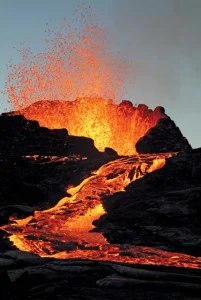
Piton de la Fournaise, known locally as the “Peak of the Furnace,” is a shield volcano situated approximately 700 kilometres east of Madagascar. This natural phenomenon has a rich history, having been active for over 500,000 years. Its frequent eruptions, recorded since the 1600s, number more than 150, showcasing its status as one of the most active volcanoes globally. Most eruptions tend to be short-lived, yet occasionally, one extends over a longer duration and disperses larger volumes of lava.
This volcano is particularly noteworthy for its location within a vast crater, allowing it to significantly alter the landscape of the island over time. Scientists monitor its behaviour attentively, as fluctuations in volcanic activity can lead to major geological changes.
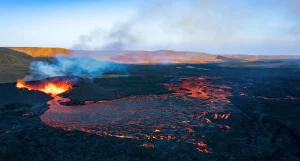
The most recent eruption commenced on February 13, 2026, and has thus far shown a prolonged duration with increased lava output compared to earlier eruptions. Such activity underscores the volcano’s ongoing volatility and potential for impact on nearby communities.
Environmental Impact and Safety Precautions
The lava from this eruption reached the Indian Ocean last month, resulting in new geological formations as it cooled and solidified upon contact with seawater. This process not only extends the coastline but also generates thick clouds of steam and gases, creating hazardous conditions that can irritate eyes and impede breathing.
As of now, there have been no injuries reported, but authorities have closed the affected area and advised tourists to steer clear of potential danger zones. The extension of the lava flows raises concerns regarding the impact on the local ecosystem, particularly the lush forests and coral reefs that could be threatened if the flows continue unabated.
The ongoing display of natural power serves as a reminder of the dynamic processes that shape our planet. While the visual allure of the erupting volcano captivates many, the safety of residents remains a priority for local officials and emergency services.