


China Implements Stringent Measures Following Foot-and-Mouth Disease Outbreak
The CSR Journal Magazine

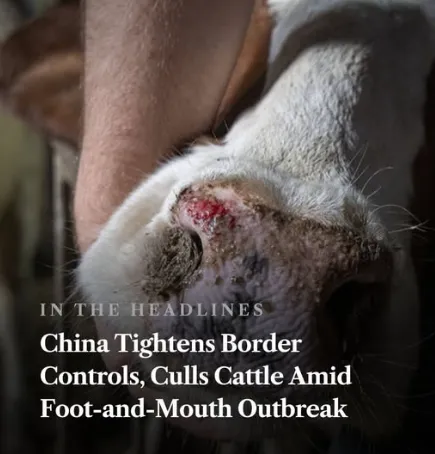
China has taken decisive actions to address a recent outbreak of foot-and-mouth disease, which reportedly originated from abroad. The Ministry of Agriculture announced the culling of affected cattle and the disinfection of impacted areas last weekend in response to the situation that has emerged in Gansu province and the Xinjiang Uyghur Autonomous Region. The total number of cattle affected has been reported at 6,229.

This outbreak marks the first detection of the SAT-1 serotype within China, a variant of foot-and-mouth disease that is typically found in Africa. Domestic vaccines, designed for the more prevalent O and A serotypes, have been found ineffective against SAT-1, prompting immediate health concerns. Measures have been expedited to develop targeted vaccines and reinforce biosecurity protocols in farming areas.

Authorities have issued directives for increased patrols in border provinces to mitigate the risk of the disease entering through illegal transport activities. The mountainous region where the outbreak has occurred shares borders with Kazakhstan, Mongolia, and Russia, complicating containment efforts.

International Implications and Disease Surveillance

The occurrence of foot-and-mouth disease in China coincides with a significant outbreak in the Novosibirsk region of Russia, which is located approximately 1,200 km from Xinjiang and 2,500 km from Gansu. This raises alarms about cross-border animal disease transmission, which has been a concern for the Chinese authorities. According to a report released by the US Department of Agriculture, the scale of China’s response may suggest an unverified outbreak in Russia, which has officially denied such claims.

In the past, diseases have transferred from Russia to China, as evidenced by outbreaks of African swine fever in 2018, along with instances of foot-and-mouth disease affecting serotype O in 2000 and 2014. Experts are deliberating the potential repercussions on trade, particularly if China opts to impose restrictions on Russian livestock if evidence points to transmission sources from that region.

Even Pay, a director at Trivium China, has highlighted the complexities in addressing this situation, especially if outbreaks remain unreported in neighbouring countries. The ongoing surveillance and reporting of animal health will be critical as authorities navigate these challenges.

Vaccine Development and Economic Considerations

The newly identified SAT-1 strain is reported to have a rapid transmission rate and can lead to grave losses in production, with a mortality rate exceeding fifty per cent in young animals. The strain is primarily shared through direct contact; however, airborne transmission poses an additional risk, reportedly stronger than that from the serotypes predominantly present in China.

This week, China received emergency veterinary drug approvals for two SAT-1 vaccines developed by Zhongnong Weite Biotechnology Co., Ltd. These vaccines are anticipated to be available in the market within a month, providing hope for curtailing the disease’s spread.

The livestock sector in China faces various challenges, including declining meat prices, overcapacity, and diminished consumer demand. Analysts suggest that failure to control the outbreak could lead to initial drops in cattle prices, followed by potential surges as the number of herds diminishes.

Long or Short, get news the way you like. No ads. No redirections. Download Newspin and Stay Alert, The CSR Journal Mobile app, for fast, crisp, clean updates!

App Store –  https://apps.apple.com/in/app/newspin/id6746449540 

Google Play Store – https://play.google.com/store/apps/details?id=com.inventifweb.newspin&pcampaignid=web_share

Latest News

Popular Videos
