


16th-Century French Navy Shipwreck Discovered Deep in Mediterranean Sea
The CSR Journal Magazine

The underwater realm has unveiled a significant find with the identification of a shipwreck controlled by the French Navy, located at a remarkable depth of 2,567 meters near Ramatuelle in the Mediterranean Sea. The vessel, referred to as Camarat 4, marks the deepest known shipwreck within French territorial boundaries. This achievement was documented by the Préfet Maritime de la Méditerranée, highlighting the use of advanced technology in maritime archaeology.

Advanced Technology in Exploration

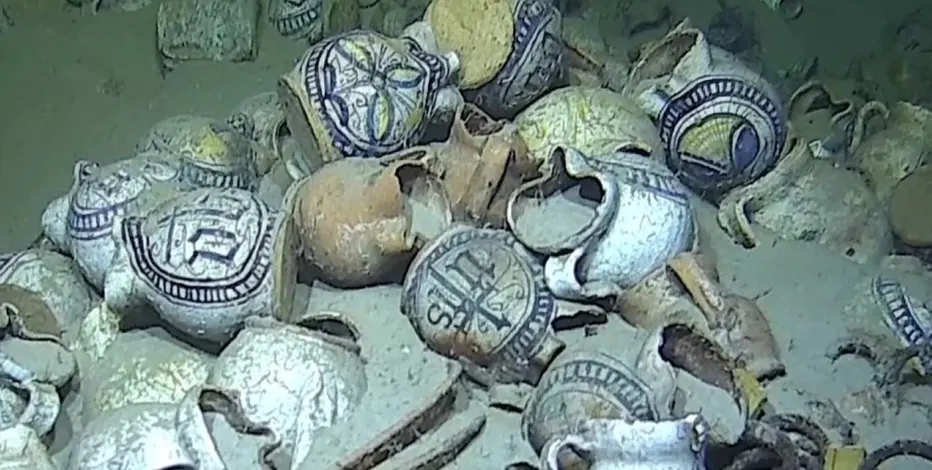
The site was explored using the A6K autonomous underwater drone, which provided detailed imagery of a large merchant ship that still retains much of its original cargo. The research team from the Department of Research into Archaeology of Underwater Shipwrecks (DRASSM) views this discovery as a scientific ‘time capsule’, thanks to the well-preserved artifacts including six cannons and nearly 200 ceramic containers. The extreme conditions at this depth—marked by high pressure and lack of oxygen—have contributed to the state of preservation.

Capabilities of the A6K Underwater Drone

The A6K drone, designed to withstand abyssal zone conditions, played a pivotal role in mapping the ocean floor. It employs side-scan sonar and high-definition cameras to operate effectively in total darkness, enabling the collection of hours of video footage for comprehensive sea bed mapping. As traditional human divers cannot reach such depths, this technology has allowed for unprecedented exploration of shipwrecks dating back to the 16th century.

The Condition of the Camarat 4 Wreck

French officials have emphasized the wreck of Camarat 4 as a scientifically relevant site due to its remarkable condition. The cold temperatures and anoxia prevalent in the Mediterranean depths hinder the survival of xylophagous organisms that typically deteriorate wooden structures. Consequently, the 16th-century wooden components of the ship remain well-preserved, and the cargo—including approximately 200 ceramics and several plate stacks—appears as it did at the time of the ship’s sinking nearly 500 years ago.

Archaeological Insights from the Deep

High-resolution photogrammetric mapping conducted by the French Navy has revealed new insights into the origins of Camarat 4. The ceramics uncovered at the wreck site, displaying IHS monograms (a symbol of Christ), suggest that this merchant vessel may have been engaged in transporting goods for religious organizations. It likely originated from the northern Italian Ligurian coastline, adding depth to our understanding of historical trade routes.

Further Findings at the Shipwreck Site

The merchant vessel was heavily armed, featuring six breech-loading bronze cannons designed for protection against maritime threats during the 16th century. In addition to these armaments, notable items such as a large anchor and two substantial bronze cauldrons intended for cooking were also discovered, all of which remain situated on the ocean floor. This collection of artifacts adds to the historical significance of the wreck and provides clues to the lifestyle and trade practices of that era.

Long or Short, get news the way you like. No ads. No redirections. Download Newspin and Stay Alert, The CSR Journal Mobile app, for fast, crisp, clean updates!

App Store –  https://apps.apple.com/in/app/newspin/id6746449540 

Google Play Store – https://play.google.com/store/apps/details?id=com.inventifweb.newspin&pcampaignid=web_share

Latest News

Popular Videos
