


Zahra Pezeshkian Explores India-Iran Handicraft Relations At BRICS Bazaar
The CSR Journal Magazine

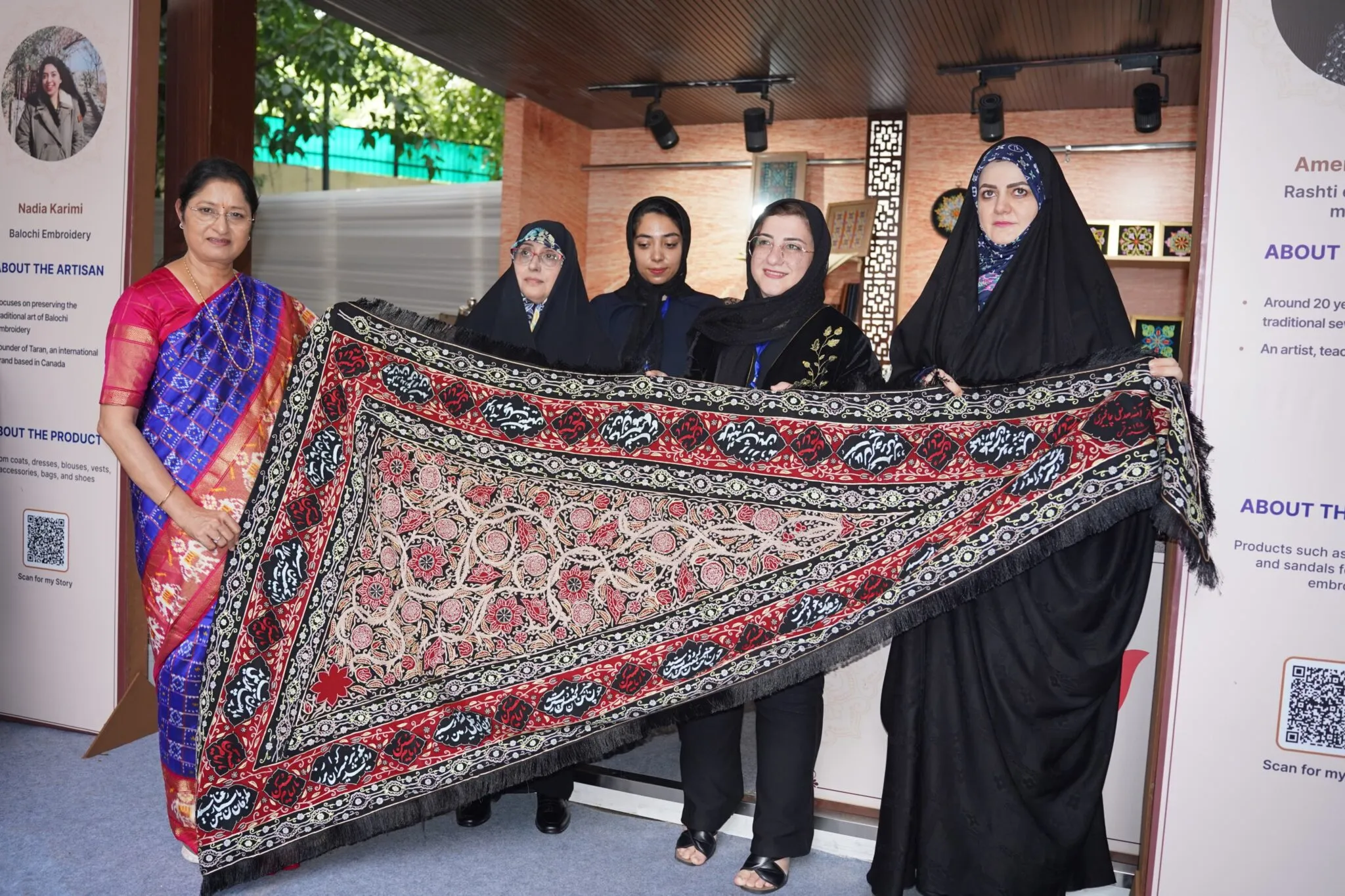
Zahra Pezeshkian, daughter of Iranian President Masoud Pezeshkian, has highlighted the evolving relationship between India and Iran through her recent visit to the BRICS Bazaar in New Delhi. Accompanied by her husband Hassan Majidi, Pezeshkian’s visit underscores the cultural and artistic dimensions of this bilateral relationship, which extends beyond diplomatic and economic ties.

The BRICS Bazaar, taking place from September 10 to 15 at the National Crafts Museum and Hastkala Academy, features traditional art and handicrafts from member countries. Zahra and Majidi were given a guided tour by Union Minister for Women and Child Development, Annapurna Devi, showcasing a variety of crafts that illustrate the rich cultural heritage of participating nations.

This event serves as a platform for artisans and exhibits cultural exchange, bringing forward crafts like South African beadwork and Russian lacquer painting. The intersection of traditional crafts with formal diplomacy illustrates how cultural heritage can forge stronger ties between nations.

Iran’s Diverse Craft Heritage

At the bazaar, Iran’s diverse craft heritage garnered significant attention, particularly its world-renowned Persian carpets. However, Iran’s craftsmanship encompasses much more, including intricate metalwork, woven textiles, woodwork, and embroidery. These crafts reflect centuries of tradition and skill, contributing to Iran’s identity on the global stage.

According to reports from TV BRICS, Iran’s handicraft exports reach approximately $400 million annually. The country has a robust artisan community, with a government-backed initiative aimed at enhancing this sector, including an increase in budget allocations in 2025. The licensing of around 570,000 craftsmen across 300 disciplines emphasises the importance of handicrafts within Iran’s economy.

The BRICS Bazaar provides a significant platform to promote these crafts, serving as a conduit for cultural diplomacy as well as opportunities for trade and tourism. The event illustrates how traditional arts can bolster inter-country relationships and foster economic opportunities.

Commercial Ties Between India and Iran

India has established a long-standing commercial relationship with Iran, particularly regarding the export of handicrafts and cottage industry products. Traditional goods, alongside textiles and other commodities, form a substantial part of bilateral trade, as highlighted in official Indian trade documentation.

Figures indicate that Indian handicraft exports, excluding hand-knotted carpets, achieved Rs 33,122.79 crore ($3.72 billion) in the 2024-25 fiscal year. Key categories included wooden products, embroidered items, and hand-printed textiles, reflecting the market’s demand for handcrafted goods.

Moreover, India’s handicraft sector is evolving beyond conventional marketplaces towards digital platforms and e-commerce. This shift allows artisans to connect with broader consumer bases, an essential development considering there were approximately 64.66 lakh artisans as of August 2025, with many being women. This digital transition may open doors for increased craft exports, particularly as both India and Iran seek to navigate trade challenges in a complex geopolitical climate.

Cultural Exchange As Soft Diplomacy

The timing of the BRICS Bazaar aligns with efforts by India and Iran to strengthen their economic partnership amid regional tensions and trade route disruptions. Recent discussions between Prime Minister Narendra Modi and President Pezeshkian focused on enhancing bilateral ties, addressing regional stability, and ensuring maritime safety.

Zahra Pezeshkian’s participation at the bazaar contrasts these high-level talks by emphasising cultural heritage. This event allowed for direct engagement with crafts that embody the artistic memory and history of their makers, thereby enriching the diplomatic narrative.

Handicrafts serve not only as commercial products but also as vessels of historical and cultural identity, transcending borders. Whether it is a carpet or an intricately crafted piece of metalwork, these items travel with the stories and traditions of their respective communities, facilitating a deeper understanding between nations.

Long or Short, get news the way you like. No ads. No redirections. Download Newspin and Stay Alert, The CSR Journal Mobile app, for fast, crisp, clean updates!

App Store –  https://apps.apple.com/in/app/newspin/id6746449540 

Google Play Store – https://play.google.com/store/apps/details?id=com.inventifweb.newspin&pcampaignid=web_share

Latest News

Popular Videos
