


app-store-logo
play-store-logo
March 1, 2026

Women Voters Outnumber Men in West Bengal, Marking Surge in Female Electoral Participation
The CSR Journal Magazine

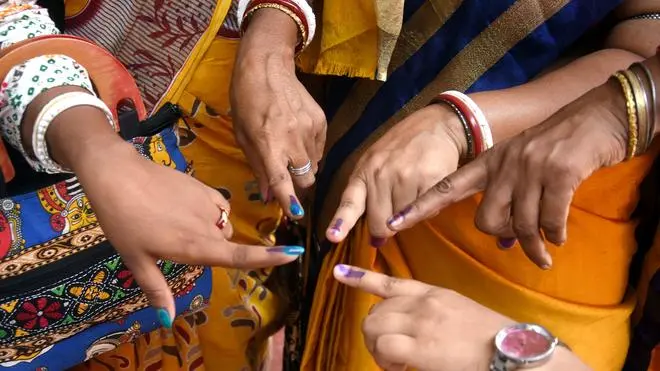
West Bengal has experienced a remarkable increase in women’s participation in elections over the past several years. An analysis of voter turnout across four Assembly elections shows that the gap between male and female voter turnout has gradually diminished. In 2006, the turnout among women was recorded at 80.75 percent across the state’s 294 Assembly constituencies, while male turnout was slightly higher at 82.34 percent. By 2011, the discrepancy had narrowed significantly, with women’s turnout reaching 84.45 percent compared to men’s 84.22 percent. The trend continued in 2016, where women achieved a turnout rate of 94.42 percent, slightly surpassing men at 93.39 percent. In the latest Assembly election of 2021, female turnout was 81.75 percent, marginally exceeding the male turnout of 81.37 percent. This data indicates a consistent pattern: women have either matched or outperformed men in voter turnout in recent elections.

Constituencies with Higher Female Voter Turnout

A closer examination of individual constituencies reveals even more pronounced differences in voting patterns. The 2021 Assembly elections saw several constituencies where female turnout far exceeded that of their male counterparts. The most notable difference was in English Bazar, where women’s voting surpassed men’s by 21 percent. Dum Dum Uttar followed closely, with women’s turnout nearly 19 percent higher. In Daspur, women voted about 18 percent more than men, while Raghunathganj recorded a 17 percent increase in female turnout. Additional constituencies such as Ghatal, where female turnout was 12 percent higher, and Kandi and Goalpokhar, both of which saw nearly 12 percent more women voting, also displayed significant gender disparities. In Lalgola, Khanakul, and Chakulia, the gap was around 10 percent.

Areas with Lower Female Voter Turnout

Despite the overall positive trend for female voters, some constituencies reflected a more traditional voting pattern where men outnumbered women. Sonarpur Dakshin recorded one of the largest gender gaps, with women’s turnout 22 percent lower than that of men. In Metiaburuz, women voted 8 percent less than men, while in Garbeta, the gap was nearly 8 percent. Asansol Uttar saw women’s turnout almost 7 percent lower, and Barabani was close behind with a difference near 7 percent. Additionally, Kashipur-Belgachhia and Jamuria revealed that women were approximately 6.6 percent less likely to vote compared to men. Bhangar, Baranagar, and Maheshtala displayed similar trends, with women’s turnout around 6.5 percent lower.

Gender Voting Patterns Ahead of Future Elections

In several constituencies located within Kolkata, a discernible pattern emerged with women voting at decreased rates in comparison to men. In Rashbehari, the turnout was about 5.6 percent lower for women, while Shyampukur and Maniktala showed a similar gap of around 5.5 percent. Rajarhat New Town recorded women’s turnout as 5.4 percent lower, and Bidhannagar also saw a drop of 5.3 percent. In Dum Dum and Jadavpur, women’s voting was approximately 4.4 percent lower than men’s. As West Bengal approaches the 2026 Assembly elections, understanding these gender voting trends will be crucial. The data from the 2021 elections is clear: female voter participation is on the rise across the state.

Long or Short, get news the way you like. No ads. No redirections. Download Newspin and Stay Alert, The CSR Journal Mobile app, for fast, crisp, clean updates!

App Store –  https://apps.apple.com/in/app/newspin/id6746449540 

Google Play Store – https://play.google.com/store/apps/details?id=com.inventifweb.newspin&pcampaignid=web_share

Latest News

Popular Videos
