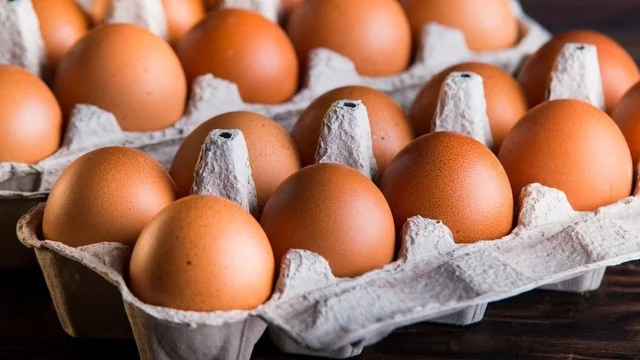
For many Indian households, the humble egg has quietly become a surprise expense this winter. Shoppers across cities from Delhi and Mumbai to Patna, Ranchi and Hyderabad are now paying Rs 8 or more for a single egg, a price point that feels unusually steep for a staple food long associated with affordability.
Vendors say customers frequently pause at the counter, double-checking prices they never expected to question. Eggs, once an everyday purchase without a second thought, have entered what many are calling a phase of “eggflation”.
The rise has been gradual but firm. Compared to late summer, prices in several markets are up by 25–50 per cent. December has intensified the trend, and traders see little chance of a rollback before winter loosens its grip. January, they warn, may still test consumers’ patience.
Winter appetite meets fragile supply
Demand is the most visible force behind the spike. Advocate Nawab Akbar Ali, President of the UP Poultry Association, says colder weather predictably pushes up consumption. Uttar Pradesh alone consumes nearly 5.5 to 6 crore eggs every day, a demand so large that more than half the supply has to be sourced from outside the state.
That pressure is already reflected on the ground. Retail prices in UP hover between Rs 8 and Rs 10 per egg, while wholesale rates have climbed to around Rs 7.5. Transport costs, traders add, continue to push prices higher, and another small increase of 15–20 paise at the wholesale level cannot be ruled out. Eggs selling at Rs 8.5 per piece in January would not come as a surprise, they say.
Cities feel the pinch unevenly
In parts of New Delhi, eggs have touched Rs 10 per piece, while Hyderabad markets report prices around Rs 8. Chennai has been slightly lower, but still well above earlier norms. Online grocery platforms have followed the same upward curve, making even home deliveries more expensive.
According to National Egg Coordination Committee (NECC) data, farm-gate prices have been climbing steadily since August. By November and December, the benchmark crossed Rs 700 per 100 eggs in cities such as Delhi, Mumbai and Kolkata a sharp leap from roughly Rs 550 per 100 eggs just three months earlier.
Farmers say the balance was overdue
Within the poultry industry, the mood is mixed but firm. Ranpal Dhandha, President of the Poultry Federation of India, argues that current prices should not be labelled excessive. For years, he says, farmers absorbed rising feed costs while egg prices barely moved.
Maize and soybean the backbone of poultry feed get more expensive almost every year. Many small farmers shut down operations when returns failed to cover costs, quietly shrinking production. From that perspective, industry leaders believe the present pricing merely restores balance. Even now, they point out, eggs in India remain among the cheapest globally.
Yet not everyone in the supply chain is benefiting equally. “They are getting less than Rs 6.50 an egg (at the farm gate),” said Vangili Subramanian, President of Tamil Nadu Egg Poultry Farmers Marketing Society (TNEPFMS).
Weather, exports, and fewer eggs
Supply issues have also played a role. Heavy and continuous rainfall damaged maize crops in parts of southern India, leading to fungal infections and a 7–10 per cent drop in output. At the same time, winter consumption, festival demand and export commitments have together added an extra 20–30 lakh eggs to daily demand.
Namakkal India’s biggest egg hub tells the story clearly. The region, which produces nearly six crore eggs every day, saw procurement prices touch a record Rs 6.40 per egg on December 23, NECC data shows. Eggs from Namakkal travel across Tamil Nadu, Kerala and North India, and are exported to Muscat, Qatar, the UAE and South Africa.
Exports have gained urgency as well. The US, facing its own egg shortage, has stepped up purchases, while Gulf demand has remained steady.
When will prices cool?
The industry does not expect immediate relief. Suresh Chitturi, Chairman and Managing Director of Srinivasa Farms, said, “This (the high price points) should continue till March and with some correction beyond that too.” He added that Indian egg prices are still low compared to global markets.
Divya Kumar Gulati, Chairman, CLFMA of India, echoed cautious optimism, saying, “Supply conditions are expected to stabilise gradually in the new year as production normalises, which should help moderate prices and support steadier demand.”
For now, consumers may need to adjust expectations. Wholesale markets in Namakkal and Hospet continue to offer the lowest rates at around Rs 640–Rs 645 per 100 eggs, but at the retail end, winter’s bite is far from over. Relief, traders say, will likely arrive only when temperatures and demand begin to rise and fall respectively.