


Padel vs Pickleball: Why Pickleball is Cheaper and More Accessible Than Padel in India
The CSR Journal Magazine

Pickleball and padel have recently gained significant traction in India, captivating the interest of various demographics. Celebrities like Alia Bhatt have helped amplify their popularity, with social media posts showcasing their experiences. Alia Bhatt’s birthday celebration at a padel court is a testament to the sport’s rising visibility among urban audiences. As these sports gain a foothold as status symbols or social activities, questions arise about accessibility and participation levels among different groups.

Understanding the Sports

The emergence of pickleball and padel has led to a lively discussion about their attributes and appeal. These sports often begin as trends among elite circles before filtering down to a broader audience. While pickleball appears to be entering a phase of diminished appeal, padel maintains its status as a trending choice for many. The evolution of popular sports typically follows a cycle of initial enthusiasm, widespread acceptance, and subsequently, potential waning interest.

Fitness Benefits

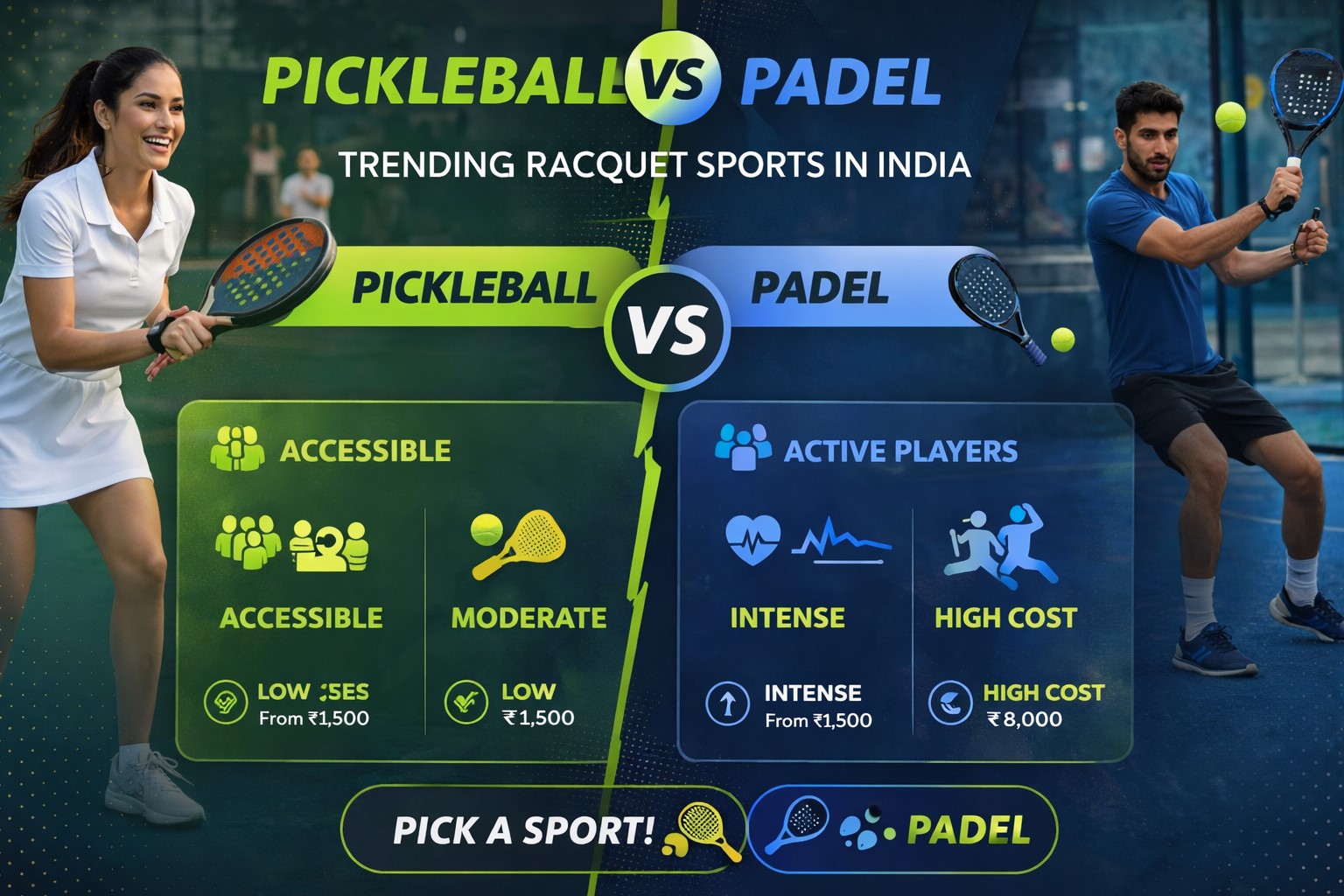
Both pickleball and padel provide substantial physical activity, but the way they engage players differs. Experts emphasize that pickleball is a moderate-intensity option ideal for newcomers and those seeking a lighter workout. It enhances muscle strength, flexibility, and joint mobility while promoting calorie burning, assisting in the management of metabolic conditions such as diabetes.

In contrast, padel offers a more vigorous workout characterized by longer rallies that demand higher endurance and stamina. The sport typically includes quick movements and intensive bursts of activity, contributing to improved reflexes and coordination. While each sport presents unique fitness benefits, both have been acknowledged for their efficacy in promoting a healthy lifestyle.

Who Can Participate?

Pickleball is widely considered accessible for all ages and fitness levels, making it particularly suitable for beginners and older adults. It is effective for those aged 40 to 50, benefiting from its moderate intensity. Padel, conversely, targets individuals who thrive on physical challenges, appealing to a slightly different demographic.

Experts assert that age is not a limiting factor for either sport, as both can be played by a wide range of participants. However, for those who are overweight or new to physical activity, pickleball is generally recommended as a gentler starting point.

Cost Considerations

When evaluating inclusivity, the cost of participating in each sport is a significant factor. Padel generally has a higher financial barrier to entry, with equipment costs ranging from Rs 8,000 to Rs 25,000 for a decent racket. In contrast, pickleball paddles are more affordable, starting at around Rs 1,500 and reaching up to Rs 12,000.

Access to playing facilities also varies considerably. Padel courts in regions like Delhi-NCR can charge upwards of Rs 1,000 per hour, while pickleball courts typically cost between Rs 300 and Rs 600 per hour. These differences highlight the economic aspects of sport accessibility in India.

Concluding Thoughts on Inclusivity

In everyday life, pickleball is often viewed as a more accessible entry point for casual players. Its ease of learning and lower cost make it appealing for social gatherings, fostering connection among friends and family. While padel has its own allure with faster-paced gameplay, pickleball provides a simpler and more inclusive environment for diverse groups looking to engage in recreational sports.

Long or Short, get news the way you like. No ads. No redirections. Download Newspin and Stay Alert, The CSR Journal Mobile app, for fast, crisp, clean updates!

App Store –  https://apps.apple.com/in/app/newspin/id6746449540 

Google Play Store – https://play.google.com/store/apps/details?id=com.inventifweb.newspin&pcampaignid=web_share

Latest News

Popular Videos
