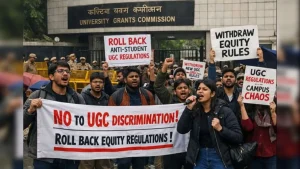

The new UGC anti-discrimination framework was developed with one motive to stop campus discrimination, but it has been taken otherwise and has drawn criticism for both protection expansion and increase in power of enforcement. The new framework has triggered discussion in both political circles as well as across campuses in India. The initial 2012 norms have been tweaked and now Other Backward Classes (OBCs) have been included under anti-discrimination protections along with SCs and STs.
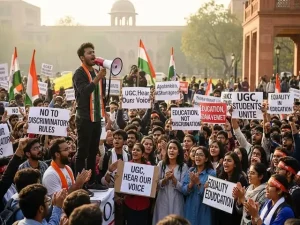
Calling this news regulation chaotic, students from creamy layer called a protest yesterday outside the UGC headquarters in Delhi.
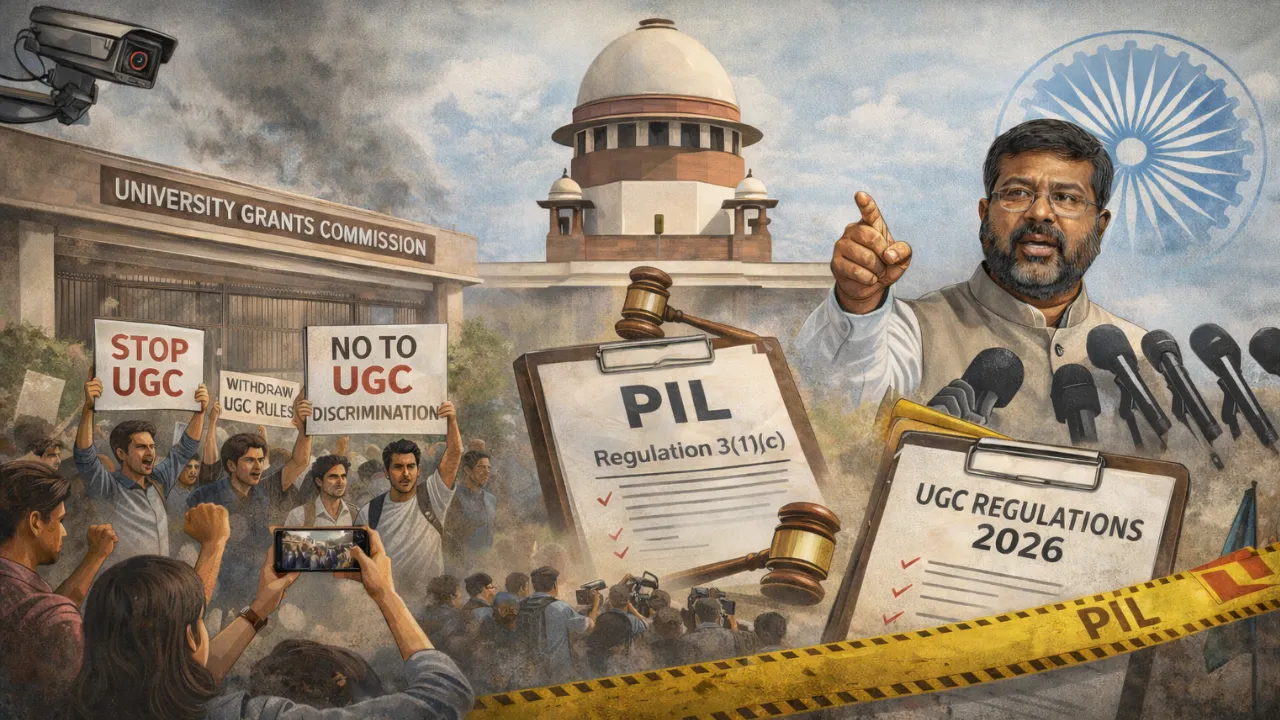
One student from Delhi University called the new regulations by UGC as draconian in nature. He even said that in the new regulation the victim is predetermined and that can be anyone in the college campus. “The new regulations are draconian in nature. The definition of victim is already predetermined. Victim can be anyone on the campus. With the proposed Equity squads, it will be akin to living under constant surveillance inside the campus,” he noted. As the protest continues across campuses in India, a PIL has been filed in the SC against the UGC’s new equity regulations.

What are the new UGS guidelines?
-
Discrimination has been now taken in abroader aspect. Discrimination related to caste, religion, gender, disability, race, place of birth or similar identity factors has been taken in the periphery. Besides, the strict rule includes both direct and indirect discrimination
-
It is now mandatory for colleges and universities to form an Equal Opportunity Centre (EOC). The work of the centre will be to tackle, solve and promote inclusion on campus.
-
The Equal Opportunity Centre will have a committee and that will comprise members from SC, ST, OBC communities, women, and persons with disabilities.
-
A proper system will be developed where cases will be heard and resolved, and regular monitoring and internal reporting will be compulsory.
-
University VC and college principals will ensure that regular reports are being submitted to UGC.
-
The final clause even warns colleges and universities that if they fail to follow the rules then they might have their approvals and recognition canceled.

Why was the new guideline announced?
After receiving several complaints of caste-based discrimination in higher education institutions, UGC initiated these regulations. With the sole purpose to ensure equity, inclusion, and equal opportunity at Indian colleges. However, political leaders as well as student leaders have dismissed the new regulation, and pointed out that it can be misused by anyone. Besides, there are questions whether institutes can implement this fairly.
BJP MP Manan Kumar Mishra says, “The UGC officials made a decision without clear reasoning, which benefits no one. Dividing people on the basis of caste is wrong. There should be equal treatment for everyone in colleges and institutions. If something is banned, it should be banned for all. I believe the government should take note of this, or the UGC should review it itself…”
On the other hand Union Education Minister Dharmendra Pradhan assured students and others that there will be no discrimination and he would ensure no one misuses. At the same time a BJP Mahila Morcha office bearer in Uttar Pradesh resigned from her position, stating that she was hurt by the decision to implement the rules.
On the contrary, NSUI, the Congress student wing, is happy with the decision and called it a historic step to curb discrimination.

FAQs of UGC Equity Guidelines 2026
What is the major change in 2026 rules?
One of the key changes is that from now along with SCs and STs, OBCs are included under anti-discrimination protections. Earlier there were advisory guidelines, but now there will be mandatory compliance.
How is “discrimination” defined?
Under the new rule, discrimination has been broadly defined, now anyone who does discrimination directly, openly or indirectly will be covered. Unfair treatment includes caste, religion, gender, disability, race, or place of birth.
How can complaint be filed?
Complaint can be filed through 24 hours Equity helpline, online, by email, or by writing
What will the committee do?
Once the complaint is filed, the committee will meet within 24 hours and within 15 working days report submitted.