


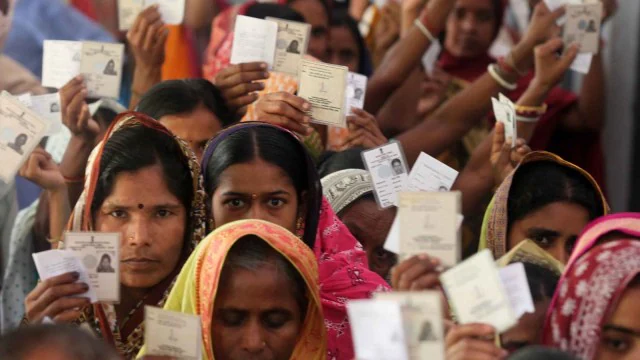

In a significant departure from the recent trend of multi-phase elections, West Bengal is set to conduct its Assembly elections in just two phases this year. This marks the first time in nearly 50 years, specifically since 1977, that the state will see such a condensed polling schedule.
According to the Election Commission’s announcement, the voting will be split across two dates, echoing the historic 1977 elections held on June 11 and 14. Following that election, the Left Front, led by Jyoti Basu, assumed power on June 21, 1977.
Key Highlights of the Schedule:
Phase 1: 152 Constituencies.
Phase 2: 142 Constituencies.
Results: Scheduled for declaration on May 4.
The transition back to a shorter window ends a 20-year cycle of increasingly long election calendars. While Bengal voted in a single phase until 2001, the number of phases surged to five in 2006, eventually peaking at eight phases during the 2021 elections.
The Great Reversal – Why Fewer Phases Matter
The decision to hold the 2026 West Bengal elections in two phases is more than just a logistical update; it is a reversal of a decades-long electoral trend. Since 2006, the Election Commission of India (ECI) had steadily increased the number of phases in Bengal, citing security concerns and the need for massive paramilitary deployment.
1. The Historical Context (1977 vs. 2026)
In 1977, the two-phase election took place in the immediate aftermath of the Emergency. Despite the political volatility of that era, the ECI managed the process with a fraction of the central forces used today. The 2026 move suggests a potential shift in the ECI’s assessment of the state’s current “law and order” vs. “administrative efficiency” balance.
2. The Shift in Political Rhetoric
Interestingly, the demand for polling phases has seen a complete role reversal:
The Past (2006–2021): Opposition parties (led by the TMC in 2006 and later by the BJP/Left-Congress) consistently lobbied for more phases and higher paramilitary presence to curb electoral violence.
The Present: For the first time in years, several political quarters advocated for a reduction in phases, arguing that a drawn-out election disrupts governance and creates an atmosphere of prolonged tension.
3. The Legacy of “Fives and Eights”
The era of multi-phase voting peaked under Chief Election Commissioner B.B. Tandon in 2006, who introduced “Electoral Roll Observers” and strict mandates for those with non-bailable warrants.
What started as a five-phase security measure eventually ballooned into the marathon eight-phase election of 2021.
4. Comparison Table: Election Evolution in Bengal
Election Year Number of Phases Notable Outcome / Context
1977 2 Left Front comes to power.
2001 1 Last single-phase Assembly election.
2006 5 Start of the “multi-phase” era.
2011 6 Change of guard (TMC wins).
2021 8 Highest number of phases in state history.
2026 2 Return to the 1977 model.
By condensing the 2026 vote into two days, the Commission is signaling a move toward “normalizing” Bengal’s electoral process, though the political impact of this brevity remains to be seen.