


app-store-logo
play-store-logo
January 19, 2026

‘Water Too Cold’: Noida Techie Dies After Rescue Delayed in Pit Accident
The CSR Journal Magazine

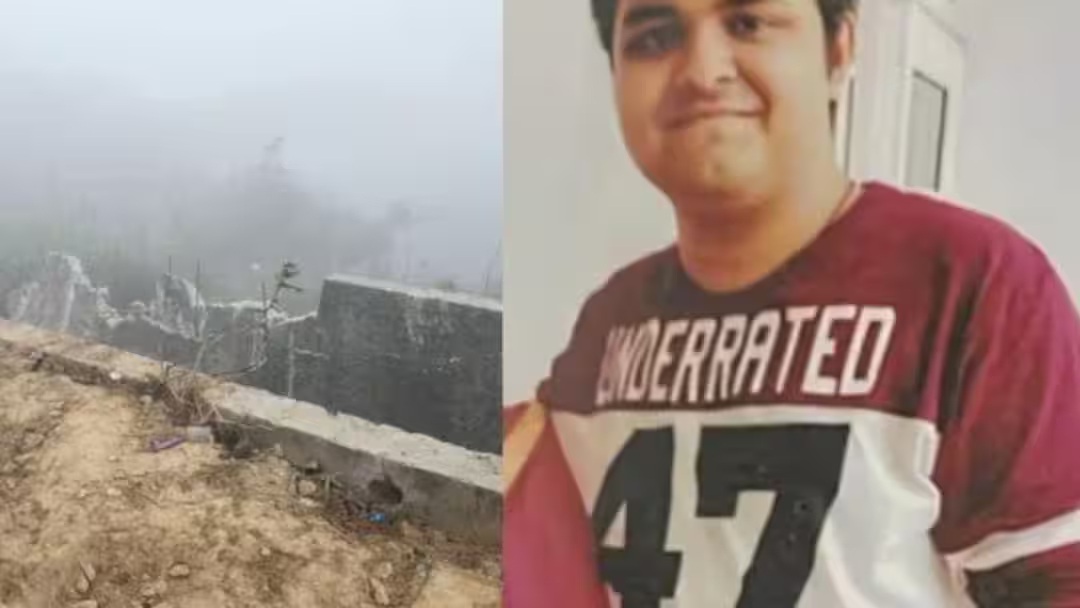
A 27-year-old software engineer died after his car plunged into a water-filled pit in Greater Noida’s Sector 150, triggering serious questions over the preparedness and accountability of local emergency services. The victim’s family has alleged that despite multiple agencies being present at the site for hours, no one entered the pit to attempt a rescue, citing cold water and safety risks.

The deceased, Yuvraj Mehta, was returning home late at night when the accident occurred amid dense fog. His father, Rajkumar Mehta, has accused officials of delaying action during the crucial window when his son was still alive and calling for help. The incident has sparked public outrage and renewed scrutiny of disaster response protocols in urban infrastructure zones.

Family Alleges Critical Delay

According to Rajkumar Mehta, he reached the accident site in the early hours of Saturday after being alerted. Visibility was extremely poor, and he struggled to locate the submerged vehicle. He said repeated phone calls to his son eventually led to a faint sign of life.

“Somehow, when I called him, he switched on the torchlight of his phone inside the car, because of which we could see a faint little light,” he told Aaj Tak. “But it was so difficult for anybody to get inside the water body. Police and other rescue officials tried throwing a rope, but to no avail.”

Despite the presence of the police, the fire department, and the State Disaster Response Force (SDRF), no diver entered the pit during the initial hours. Rajkumar Mehta alleged that officials cited freezing water temperatures and the possibility of iron rods inside the pit as reasons for not attempting a physical rescue.

“If expert divers had gone in, maybe my son could have been saved,” he said, adding that the delay proved fatal.

The family has questioned how nearly 80 personnel from three departments could be present at the scene yet fail to execute a rescue operation. The pit, reportedly part of an under-construction or poorly barricaded site, was filled with water following recent weather conditions.

Eyewitness Recounts Desperate Pleas and Lone Rescue Attempt

An eyewitness and delivery agent, Moninder, supported the family’s allegations and described a prolonged period during which the victim was allegedly alive and pleading for help. He said the accident occurred around midnight and that Yuvraj continued to call out for assistance for nearly two hours.

“The police, SDRF, and the fire brigade were all present, but no one helped him,” Moninder told reporters. “Everyone kept saying, ‘The water is cold, we won’t go in,’ or ‘There are iron rods inside, we won’t go in.’ The government departments are responsible for this boy’s death.”

Moninder said he reached the site later in the night and decided to attempt a rescue himself after seeing the inaction. According to his account, by the time he arrived, the victim had already drowned around ten minutes earlier.

“I told them to step aside, and I would go in,” he said. “I took off my clothes, tied a rope around my waist, and went at least 50 metres into the pit. I searched for the boy for around 30 minutes but couldn’t find him or the car.”

He added that when he left the site at around 5.30 am on Saturday, neither the vehicle nor the body had been recovered. His account has further fuelled criticism of official response mechanisms and raised uncomfortable questions about reliance on protocol over urgency.

FIR Registered

Responding to the incident, Additional Commissioner of Police (Noida), Rajiv Narayan Mishra confirmed that an FIR has been registered based on the family’s complaint. He said the circumstances at the site were extremely challenging and that efforts were made within operational constraints.

“We tried every possible way and made all efforts to save his life. The SDRF was also on site, but visibility was near zero,” Mishra told reporters. “Based on the family’s complaint, an FIR has been registered, and action will be taken against anyone found guilty.”

However, the case has intensified debate over whether India’s emergency response systems are equipped to handle real-world scenarios involving poor visibility, hazardous terrain, and time-sensitive rescues. Experts have long pointed to gaps in urban safety planning, including poorly marked construction zones, inadequate barricading, and limited night-time monitoring.

For Yuvraj Mehta’s family, the questions are painfully simple. Why was no trained diver deployed? Why were safety risks allowed to outweigh the possibility of saving a life? And how many personnel does it take to act decisively in an emergency?

Long or Short, get news the way you like. No ads. No redirections. Download Newspin and Stay Alert, The CSR Journal Mobile app, for fast, crisp, clean updates!

App Store –  https://apps.apple.com/in/app/newspin/id6746449540 

Google Play Store – https://play.google.com/store/apps/details?id=com.inventifweb.newspin&pcampaignid=web_share

Latest News

Popular Videos
