


app-store-logo
play-store-logo
February 24, 2026

Violence Erupts in Mexico Following Killing of Drug Lord El Mencho
The CSR Journal Magazine

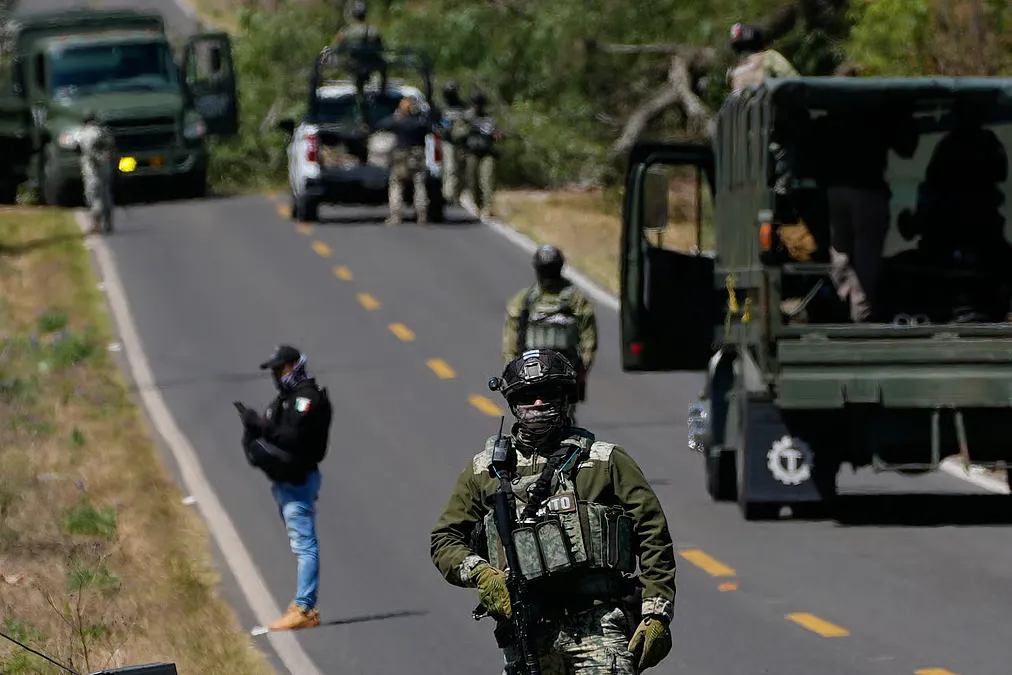
Mexico has experienced a devastating surge of violence in the past 24 hours following the death of notorious drug lord Nemesio Oseguera Cervantes, better known as “El Mencho.” The high-profile cartel leader was killed on Sunday during a military operation in the Jalisco region, resulting in immediate and widespread retaliation from cartel members. Authorities have reported a grim landscape of arson, highway blockades, mass prison breaks, and armed confrontations across multiple states, prompting the federal government to deploy an extensive military presence in an attempt to restore order.

The Operation to Capture El Mencho

According to statements from Mexican defense officials, El Mencho was apprehended through meticulous surveillance of one of his associates. Mexican intelligence services, bolstered by American military intelligence, tracked his movements to a ranch in Tapalpa, Jalisco. In a pre-dawn raid, military personnel faced significant gunfire as they approached. Reports indicate that El Mencho and two of his bodyguards sustained injuries during the raid and later succumbed to their wounds while being transported for medical assistance.

Cartel Retaliation and Widespread Violence

In the hours following confirmation of El Mencho’s death, cartel affiliates orchestrated a series of retaliatory attacks characterized by coordinated violence throughout the country. Federal authorities reported at least 85 instances of road blockades across 20 different states. Numerous businesses, including banks and supermarkets, were set ablaze, illustrating a level of organized resistance not seen in recent times. As the violence unfolded, reports indicated that 27 security forces members, 46 suspected criminals, and one civilian were among the deceased.

Military Response and Civilian Impact

To address the escalating violence, the Mexican government increased its military presence in the affected regions, deploying a total of 10,000 troops since the onset of these conflicts. The President of Mexico, Claudia Sheinbaum, emphasized that no U.S. forces participated in the capture of El Mencho, despite confirmation of American intelligence assistance. Public transportation in various areas of Jalisco was suspended, and travelers were advised to remain indoors as fear spread across the region. Although calm began returning by Monday, tensions remained palpable.

Prison Break and Ongoing Concerns

Additional chaos ensued with a prison break in Jalisco, where gunmen assailed a facility, leading to the escape of at least 23 inmates. This incident raised further concerns regarding the ability of the cartel to operate unhindered. International travel advisories were issued by multiple countries, including the United States, advising citizens to remain vigilant in the regions of Jalisco and several others.

Disruption of Daily Life in Major Cities

The violence notably disrupted daily activities, particularly in Guadalajara, the capital of Jalisco, and a host city for the upcoming FIFA World Cup. Schools closed, public transport came to a halt, and government offices temporarily suspended operations. Residents rushed to store supplies while pharmacies shuttered their doors in response to the unrest. Puerto Vallarta, a key tourist locale, was also impacted as locals and tourists sought shelter amid escalating tensions.

Continued Clashes with Security Forces

Despite a gradual reopening of grocery stores in Puerto Vallarta and resumption of airport operations—albeit with reported delays—security forces continued to engage in confrontations with cartel gunmen. While official statements claim that many areas have returned to normal, the reality on the ground remains fraught with uncertainty, as evidenced by ongoing gunfire and the sight of violence just outside populated areas.

Background on El Mencho and the Jalisco New Generation Cartel

El Mencho, born in 1966, transitioned from humble beginnings to become one of Mexico’s most infamous drug leaders. After his early encounters with the law in the United States, he returned to Mexico, where he eventually formed the Jalisco New Generation Cartel (CJNG). This organization has grown into a formidable rival to the Sinaloa Cartel, engaging in various enterprises ranging from drug trafficking to extortion. The U.S. State Department has classified CJNG as a foreign terrorist entity due to its violent operations and connections to the U.S. drug crisis. While the elimination of El Mencho marks a significant moment for Mexican authorities, experts warn that the dismantling of the cartel’s influence is a far more complex challenge.

Long or Short, get news the way you like. No ads. No redirections. Download Newspin and Stay Alert, The CSR Journal Mobile app, for fast, crisp, clean updates!

App Store –  https://apps.apple.com/in/app/newspin/id6746449540 

Google Play Store – https://play.google.com/store/apps/details?id=com.inventifweb.newspin&pcampaignid=web_share

Latest News

Popular Videos
