


app-store-logo
play-store-logo
January 27, 2026

Union Budget Halwa Ceremony Explained: Meaning, History and Why It Matters
The CSR Journal Magazine

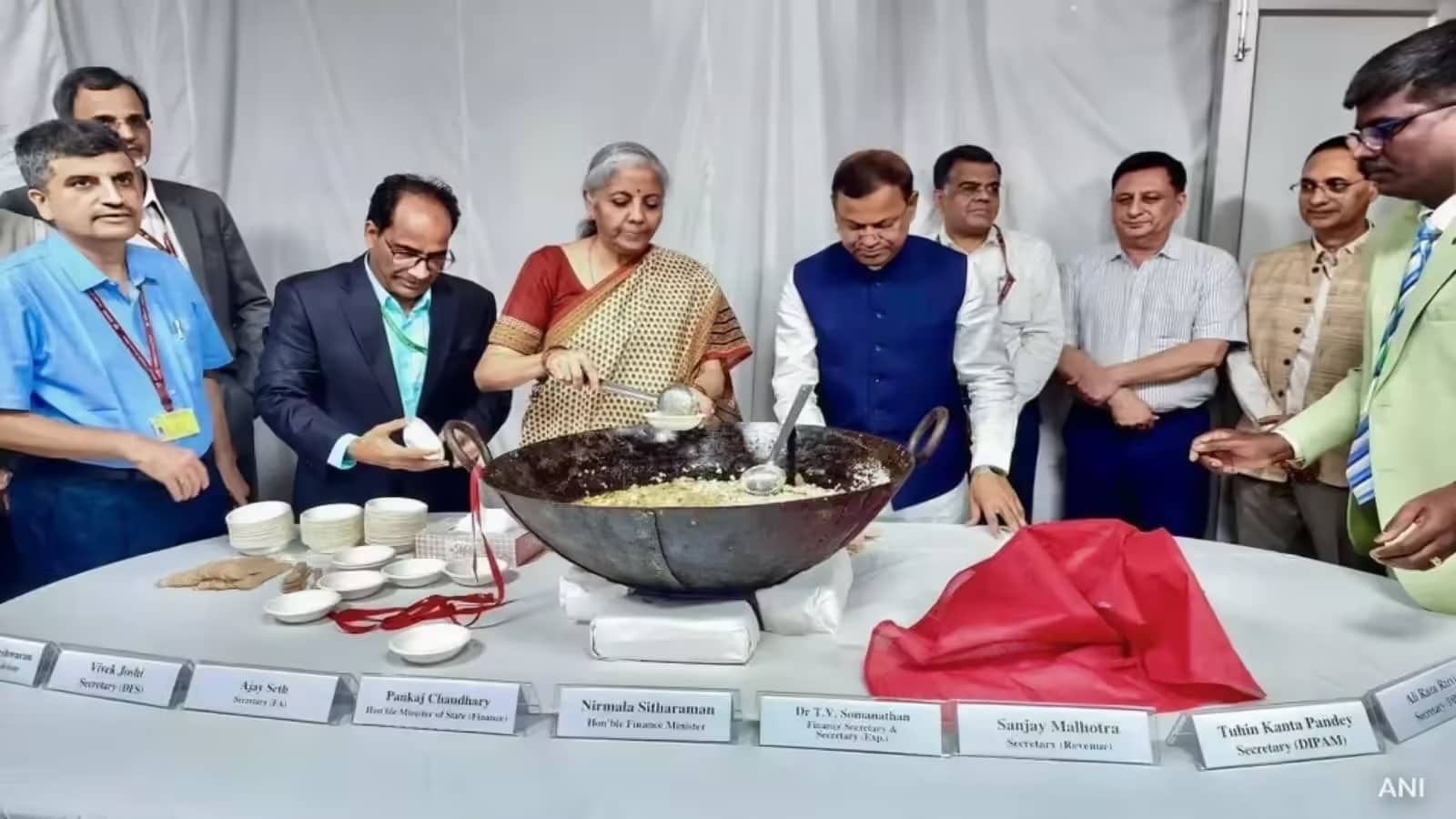
Finance Minister Nirmala Sitharaman on Tuesday participated in the traditional halwa ceremony, formally marking the final stage of preparation for the Union Budget 2026-27, which will be presented in the Lok Sabha on February 1. The ceremony, a long-standing pre-Budget ritual, signals the start of the ‘lock-in’ period for officials involved in drafting the government’s annual financial statement.

The event was held in the basement of North Block on Raisina Hill, the former headquarters of the Ministry of Finance. While the ministry shifted to Kartavya Bhawan in the Central Secretariat in September 2025, North Block continues to be used for the ceremony as the new complex does not have a printing press.

What the Halwa Ceremony Signifies

The halwa ceremony is regarded as a symbolic send-off for finance ministry officials and staff engaged in Budget preparation. During the ritual, the traditional Indian dessert is prepared and served by the finance minister to officials as a gesture of appreciation for their work. More significantly, it marks the beginning of the lock-in period, when officials remain physically isolated to ensure confidentiality of the final Budget documents.

Once the lock-in begins, officials stay in the basement of North Block and remain cut off from the outside world until the finance minister completes the Budget speech in Parliament. They are permitted to emerge only after the presentation is over, underscoring the emphasis placed on secrecy around fiscal proposals, tax changes and expenditure plans.

The ceremony on Tuesday was attended by Minister of State for Finance Pankaj Chaudhary, secretaries of all departments under the Ministry of Finance, and other senior officers associated with the Budget exercise. Sitharaman also toured the Budget Press and reviewed preparations, extending her best wishes to the team tasked with finalising the documents.

North Block and the Budget Printing Tradition

North Block has played a central role in Budget-making for decades, housing the dedicated government printing press used for printing Budget documents since 1980. Before this, Budget papers were printed at Rashtrapati Bhavan, a practice discontinued in 1950 after a leak, following which printing was moved to a press on Minto Road. The shift to North Block was intended to further tighten security around sensitive financial documents.

For years, printing hundreds of copies of voluminous Budget documents was an elaborate process. Printing staff were quarantined inside the press in the North Block basement for up to two weeks to prevent any information leak. The lock-in period for officials also stretched over similar durations, making the final days before Budget presentation intense and tightly controlled.

Although the ministry has now moved to a modern office at Kartavya Bhawan, the absence of a printing facility there has meant that the halwa ceremony and related processes continue to be held at the old North Block premises, preserving a link with tradition.

Budget 2026 Context and the Digital Shift

Sitharaman is set to present her ninth consecutive Budget, including interim budgets, against the backdrop of India’s economy expected to grow at 7.6 per cent in the current financial year, despite ongoing global geopolitical and economic uncertainties. The upcoming Budget is likely to be closely watched for signals on fiscal consolidation, capital expenditure and policy support amid external headwinds.

Like the previous five full Budgets and one interim Budget, the Union Budget 2026–27 will be presented in a paperless format. All Budget documents, including the Annual Financial Statement, Demand for Grants and the Finance Bill, will be made available digitally through the Union Budget Mobile App and the official website.

The mobile app, available in both English and Hindi on Android and iOS platforms, allows Members of Parliament and the public to access Budget documents immediately after the finance minister completes the Budget speech in Parliament. The move to digital dissemination, first adopted in 2021, has also reduced the duration of the lock-in period to around five days, compared with up to two weeks earlier.

Despite several changes introduced over the years, including the merger of the Rail Budget with the Union Budget and advancing the presentation date to February 1, the halwa ceremony remains one of the few Budget traditions that has endured, symbolising continuity in India’s annual fiscal exercise.

Long or Short, get news the way you like. No ads. No redirections. Download Newspin and Stay Alert, The CSR Journal Mobile app, for fast, crisp, clean updates!

App Store –  https://apps.apple.com/in/app/newspin/id6746449540 

Google Play Store – https://play.google.com/store/apps/details?id=com.inventifweb.newspin&pcampaignid=web_share

Latest News

Popular Videos
