


app-store-logo
play-store-logo
March 3, 2026

Understanding the Distinction: Iran and its Persian Identity
The CSR Journal Magazine

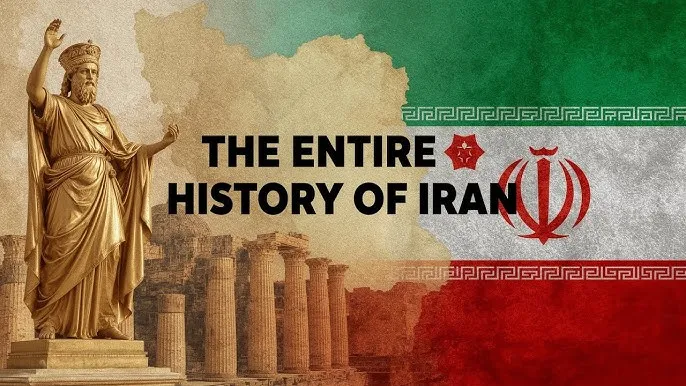
Many people mistakenly categorize Iran alongside nations such as Saudi Arabia and the UAE, often assuming they share a common Arab identity. While geographical proximity and a predominantly Islamic culture may lead to this assumption, it is essential to differentiate between these regions. Iran is distinctly not an Arab nation. The reasons for this misunderstanding involve a deep dive into history, tracing back to ancient empires long before contemporary politics, oil wealth, and recent conflicts. The concept of Persia predates Arab culture in the region.

The Achaemenid Empire, established by Cyrus the Great in the 6th century BCE, marked the emergence of Persia as a powerful civilization. This empire controlled vast territories from the Indus Valley to the Mediterranean Sea. The ceremonial capital, Persepolis, remains a symbol of its rich history. The name “Iran” is derived from an ancient term that signifies “Land of the Aryans,” indicative of its deep historical roots that are distinctly Persian.

The Emergence of Arab Identity

In contrast to Persian civilization, Arab identity evolved primarily on the Arabian Peninsula. Arab tribes existed primarily in regions now known as Saudi Arabia, Yemen, and Jordan. The exponential growth of the Arab world began in the 7th century, following the rise of Islam, leading to the rapid diffusion of the Arabic language and culture across North Africa and parts of West Asia. During this period, Persian territories fell under the control of Arab Muslim armies. However, Persian identity persisted, adapting through this transformation while retaining its unique characteristics.

The Linguistic Divide

The differences between Persian and Arabic languages highlight the cultural distinctions between the two groups. Arabic belongs to the Semitic language family, while Farsi, the language spoken in Iran, is part of the Indo-European language family, which also includes languages like English and Hindi. Although the modern Persian script is based on Arabic letters, its vocabulary and grammatical structures are markedly different. An Arabic speaker cannot easily comprehend Farsi, illustrating a significant cultural divide that underpins their respective identities.

Ethnic and Cultural Distinctions

It is crucial to note the separation between ethnicity and religion when discussing Iranian identity. While a majority of the Iranian population practices Islam, they are predominantly of Persian descent or belong to other ethnic groups within Iran, such as Kurds or Azeris. Only a minor percentage of Iran’s population identifies as Arab. Conversely, Arab identity is closely tied to the Arabic language and cultural heritage, which is why countries like Saudi Arabia and Egypt are classified as Arab nations due to their linguistic characteristics and cultural foundations.

Iran is geographically situated in the Middle East; however, its historical context, language, and cultural identity are fundamentally Persian. This distinction holds significant importance as it influences political dynamics, regional alliances, and the self-perception of its people. When someone refers to Iran as an Arab nation, it is worthwhile to consider the historical and cultural depth encapsulated within its identity, which has endured for over two millennia.

Long or Short, get news the way you like. No ads. No redirections. Download Newspin and Stay Alert, The CSR Journal Mobile app, for fast, crisp, clean updates!

App Store –  https://apps.apple.com/in/app/newspin/id6746449540 

Google Play Store – https://play.google.com/store/apps/details?id=com.inventifweb.newspin&pcampaignid=web_share

Latest News

Popular Videos
