


app-store-logo
play-store-logo
January 5, 2026

“Watch His A**”: Trump Warns Colombia as US Tightens Grip on Latin America After Maduro Arrest
The CSR Journal Magazine

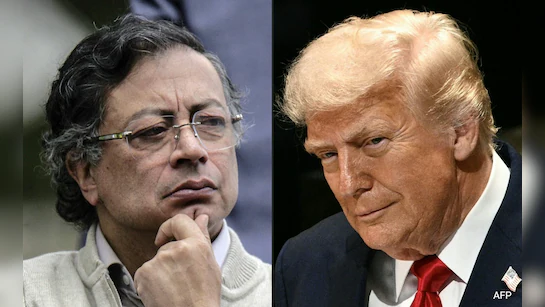
The arrest of Venezuelan President Nicolas Maduro has sent shockwaves across Latin America, triggering sharp reactions from regional leaders and aggressive messaging from the White House. As Maduro was transferred to a New York prison following a US military operation, President Donald Trump issued a stark warning to Colombian President Gustavo Petro, telling him to “watch his a**”.

Speaking to reporters, Trump accused Colombia of playing a role in drug trafficking into the United States. “He’s making cocaine and they’re sending it into the United States, so he does have to watch his a**,” Trump said, escalating tensions just hours after Washington confirmed Maduro’s detention.

Petro, one of the most vocal critics of the US operation in Venezuela, condemned the action as a direct violation of regional sovereignty. Without naming Maduro, the Colombian leader described the raid as an “assault on the sovereignty” of Latin America and warned that such military interventions could push the region into a humanitarian crisis.

Colombia has already moved to prepare for potential fallout. Petro said security forces were deployed along the Venezuela border amid fears of displacement and instability. “We just finished the national security council meeting that started at 3 a.m. Public forces are being deployed to the border, along with all available assistance resources in case of a mass influx of refugees,” he said.

Petro Urges UN Action

The Colombian president also called for international intervention, urging the United Nations to address what he described as unilateral use of force. “Colombia reaffirms its unwavering commitment to the principles enshrined in the Charter of the United Nations… the prohibition of the use or threat of force,” Petro stated, adding that civilians must not become collateral damage.

Trump, however, showed no signs of backing down. After Maduro and his wife Cilia Flores were captured in Caracas and flown out of the country, Trump announced that the United States would temporarily take charge of Venezuela. “We’re going to run the country until such time as we can do a safe, proper and judicious transition,” he said, warning that a larger follow-up operation was possible if US demands were not met.

Laying out Washington’s broader regional vision, Trump said the US intended to assert dominance across the Western Hemisphere. “We want to surround ourselves with good neighbors… We have tremendous energy in that country. It’s very important that we protect it. We need that for ourselves,” he said, referring to Venezuela’s oil reserves.

Trump also revealed plans to send American oil companies into Venezuela to repair its damaged infrastructure. “We’re going to have our very large United States oil companies… go in, spend billions of dollars, fix the badly broken infrastructure,” he said, while confirming that the embargo on Venezuelan oil remains intact and that US naval forces remain on standby.

Rubio Signals Cuba Could Be Next

Meanwhile, Secretary of State Marco Rubio hinted that US pressure could soon extend beyond Venezuela. “If I lived in Havana and I was in the government, I’d be concerned at least a little bit,” Rubio said, raising alarms in Cuba.

Trump also turned his attention to Mexico, claiming drug cartels had overtaken state authority. “We’re very friendly with her… But the cartels are running Mexico. She’s not running Mexico,” he said of Mexican President Claudia Sheinbaum, adding that she had repeatedly rejected US offers to dismantle the cartels directly.

The overnight operation that led to Maduro’s arrest — described by US officials as a decisive blow against narco-terrorism — marks Washington’s most aggressive intervention in Latin America since the Panama invasion of 1989. As Maduro remains in custody in New York, the region now faces an uncertain future shaped by rising militarisation, diplomatic strain, and fears of further escalation.

Latest News

Popular Videos
