


Trump Proposes 50 Per Cent Tariffs on Imports from Countries Supplying Iran with Weapons
The CSR Journal Magazine

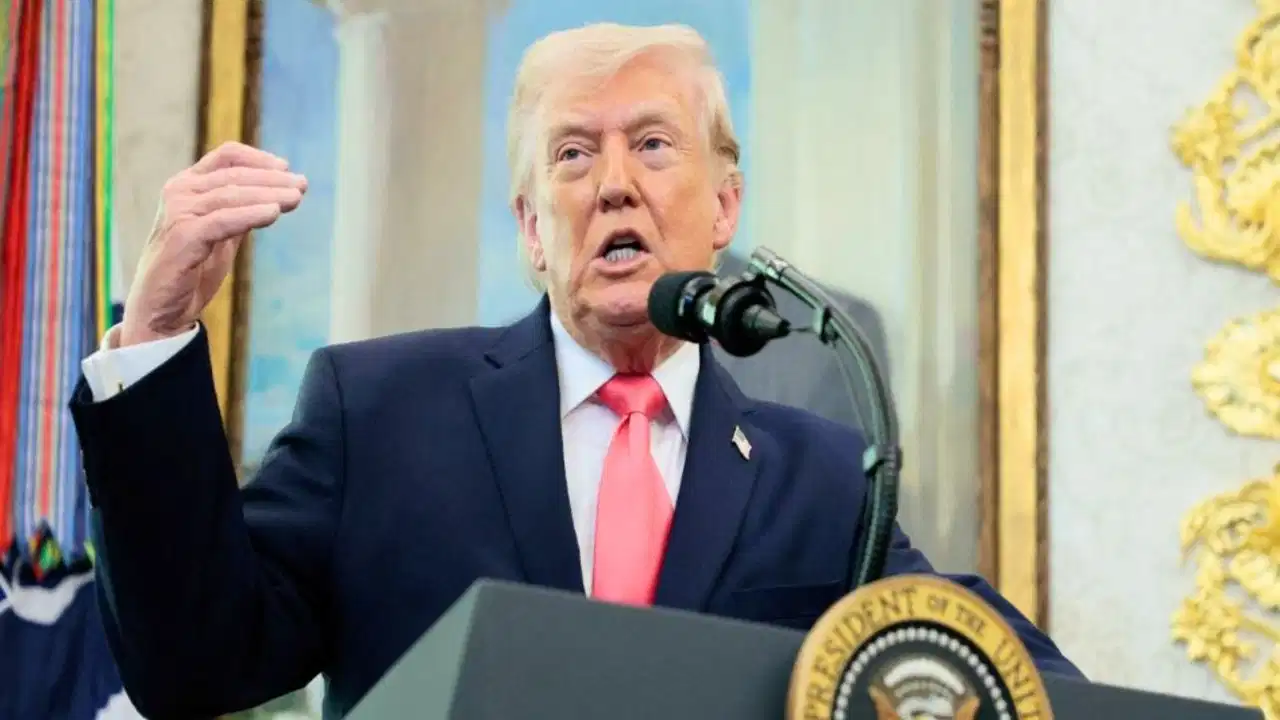
US President Donald Trump has announced a proposal for imposing 50 per cent tariffs on imports from nations that are allegedly supplying military weapons to Iran. This declaration came via a social media post shortly after the United States and Iran agreed to a two-week ceasefire. The move has raised questions regarding the legal framework that Trump intends to utilise for implementing such tariffs.

In his post, Trump stated, “A Country supplying Military Weapons to Iran will be immediately tariffed, on any and all goods sold to the United States of America, 50%, effective immediately. There will be no exclusions or exemptions!” However, Trump did not specify which countries might be affected by this potential tariff.

Analysts have expressed skepticism about the effectiveness and feasibility of this threat, suggesting it may lack the necessary legal backing. This uncertainty stems from a recent ruling by the Supreme Court that limited Trump’s authority to invoke the International Emergency Economic Powers Act (IEEPA) for imposing tariffs, having previously generated substantial revenue for the government.

Legal Challenges and Implications

The International Emergency Economic Powers Act, established in 1977, has historically enabled the imposition of financial sanctions against nations like Iran, Russia, and North Korea. However, recent judicial decisions have curtailed its application for tariffs. Rachel Ziemba, an adjunct senior fellow at the Center for a New American Security, highlighted the complexity involved in enacting such tariffs following the legal limitations imposed by the courts.

Ziemba stated, “It is much more complicated to do that after IEEPA was struck down. There’s no immediate policy leverage or authorisation currently available to the US.” This situation indicates that to levy tariffs, the government may need an act from Congress or an alternative mechanism for trade regulation, neither of which appear readily accessible.

Notably, while Trump’s announcement did not name specific states that could face repercussions, countries such as China and Russia have previously been involved in augmenting Iran’s military capabilities. These nations have been accused of providing various military technologies, including missiles and air defence systems, aimed at countering US influence in the region.

Despite these allegations, both countries have denied recent transactions concerning military supplies to Iran. Reports have suggested that Tehran is exploring the procurement of advanced weaponry from China, including supersonic cruise missiles, which adds complexity to the geopolitical ramifications of Trump’s tariff threat.

Broader Economic Context

The implications of a 50 per cent tariff could have significant economic repercussions, particularly with regard to trade relations with China. As tariffs on Chinese imports have previously been decreased, analysts suggest that implementing a new tariff might complicate ongoing diplomatic dialogues. Trump has an upcoming meeting scheduled with Chinese President Xi Jinping, which could influence the likelihood of immediate tariff action.

Josh Lipsky, vice president and chair of international economics at the Atlantic Council, remarked that Trump may hesitate to follow through on tariff threats due to potential economic fallout on US importers and consumers. Implementing such considerable tariffs could escalate costs, especially considering the context of an impending international meeting that could reshape trade dynamics.

While Trump maintains certain tariffs under the Section 301 unfair trade practices statute, introducing new duties would necessitate a public notice period, complicating rapid implementation. Additionally, Trump may consider other legislative measures that require extensive investigation and public comment, thereby lengthening the timeline for any tariff enforcement.

The landscape surrounding US imports from Russia has shifted dramatically since the onset of the Ukraine conflict in 2022, with sanctions severely impacting trade. The latest figures reveal a notable increase in imports of palladium and other key materials from Russia, highlighting the intricate balance between diplomacy and economic strategy in the current geopolitical climate.

Long or Short, get news the way you like. No ads. No redirections. Download Newspin and Stay Alert, The CSR Journal Mobile app, for fast, crisp, clean updates!

App Store –  https://apps.apple.com/in/app/newspin/id6746449540 

Google Play Store – https://play.google.com/store/apps/details?id=com.inventifweb.newspin&pcampaignid=web_share

Latest News

Popular Videos
