US President Donald Trump on Saturday congratulated the crew of Nasa’s Artemis II mission following their successful return to Earth, calling the mission “spectacular” and signalling that the next frontier for American space exploration would be Mars. His remarks came after the historic completion of a 10-day lunar flyby mission that has been widely seen as a major milestone in humanity’s return to deep space.
Trump Praises Crew And Signals Mars Ambition
In a post on Truth Social, Trump lauded the astronauts for their performance, highlighting both the execution and the safe landing of the mission. “Congratulations to the Great and Very Talented Crew of Artemis II. The entire trip was spectacular, the landing was perfect and, as President of the United States, I could not be more proud,” he wrote, adding that he looks forward to hosting the crew at the White House. He also emphasised future ambitions, stating, “We’ll be doing it again and then, next step, Mars.”
The comments underscore a renewed political push towards expanding US space exploration goals beyond the Moon, with Mars increasingly becoming a focal point. Trump’s statement places Artemis II not just as a standalone achievement but as a stepping stone towards more ambitious interplanetary missions.
Historic Mission Pushes Human Spaceflight Boundaries
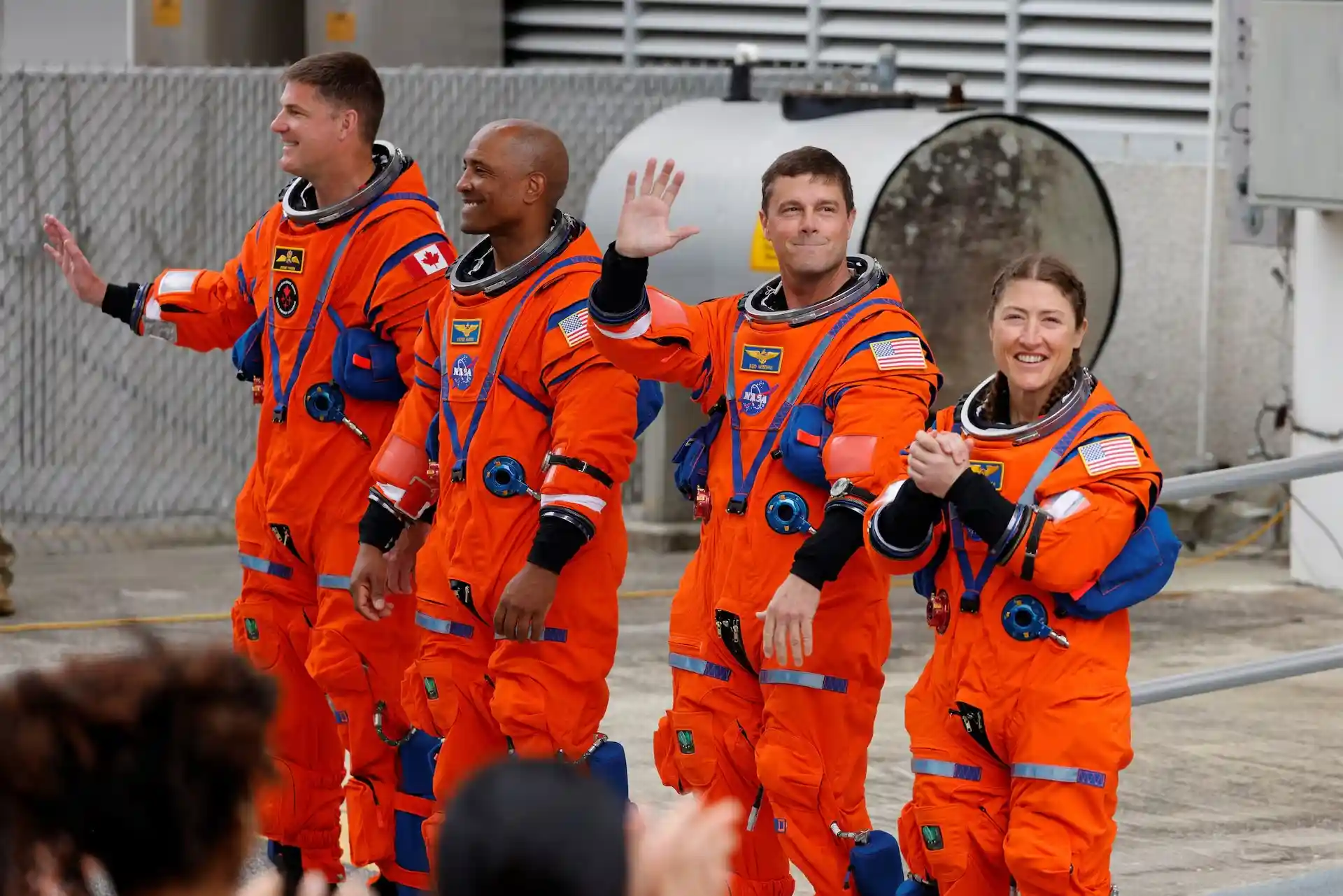
The Artemis II mission saw Nasa’s Orion spacecraft carry four astronauts on a journey around the Moon and back, marking the first crewed lunar mission in over five decades. Commander Reid Wiseman, pilot Victor Glover, mission specialist Christina Koch, and Canadian astronaut Jeremy Hansen formed the crew.
During the mission, the astronauts travelled farther from Earth than any humans in history, reaching a distance of 406,771 kilometres on the far side of the Moon. This surpassed the previous record set during the Apollo 13 mission in 1970, highlighting the technological advancements achieved under the Artemis programme.
The crew conducted a range of tests on critical deep-space systems, including life support, navigation, and propulsion. They also captured valuable imagery and observations during their lunar flyby, contributing to scientific understanding and mission preparedness.
Safe Return Marks Key Step In Lunar Programme
The Orion capsule, named Integrity, re-entered Earth’s atmosphere at speeds reaching Mach 33 before deploying parachutes and safely splashing down in the Pacific Ocean near San Diego, California. A joint recovery effort involving Nasa and the US military, supported by the USS John P Murtha, ensured the astronauts were promptly retrieved and underwent medical evaluations.
The successful return of Artemis II represents a crucial step in Nasa’s broader lunar ambitions, particularly its goal of landing astronauts on the Moon again by 2028. The mission has validated key systems required for sustained human presence in deep space.
With political backing and technological progress aligning, Artemis II has not only reignited global interest in lunar exploration but also set the stage for future missions that could take humans even farther, potentially making Mars the next giant leap.