



Trump Announces Five-Day Moratorium on Military Strikes Against Iran Amid Ongoing Negotiations

The CSR Journal Magazine

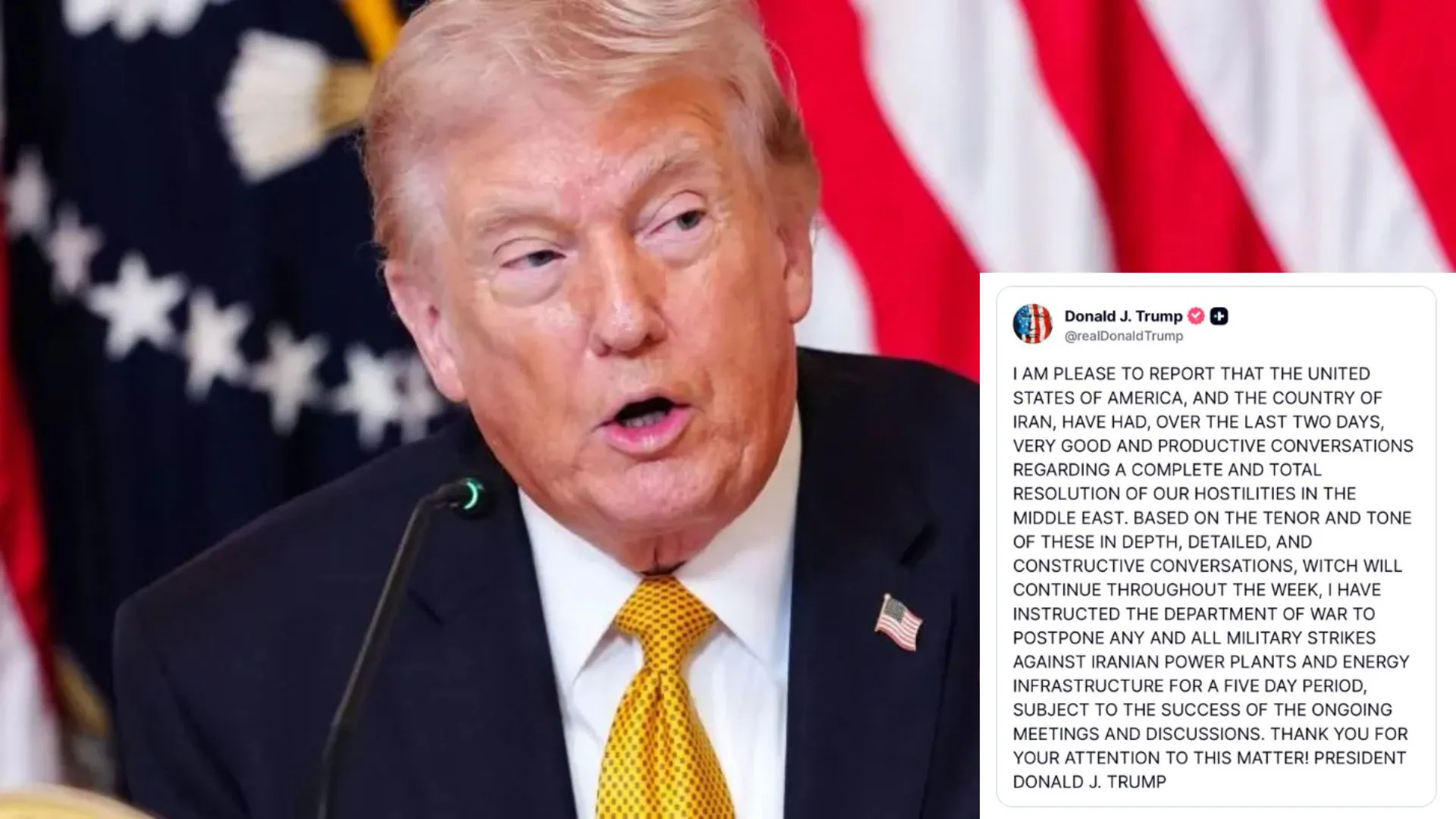
On March 23, 2026, US President Donald Trump declared that he has instructed the Department of War to temporarily suspend any military strikes targeting Iranian power plants and energy infrastructure for a period of five days. This decision is contingent upon the progress of ongoing discussions between the United States and Iran. Trump noted that the conversations have been “very good and productive” and aim for a comprehensive resolution of hostilities in the Middle East. This announcement coincides with the escalating tensions in the region, now entering its fourth week.

Trump, in a post on Truth Social, emphasized the importance of these negotiations, stating, “I am pleased to report that the United States of America and the country of Iran have had, over the last two days, very good and productive conversations regarding a complete and total resolution of our hostilities in the Middle East.” He highlighted that the discussions will continue throughout the week, resulting in his instruction to postpone military actions against Iranian energy facilities.

The backdrop of this decision includes significant global concerns about potential disruptions to energy supply chains caused by the ongoing conflict that erupted on February 28, 2026. Trump had previously issued a stark warning to Iran regarding the Strait of Hormuz, a critical global energy transit pathway. He asserted that if Iran did not “fully open” the Strait within 48 hours, the United States would proceed to target and “obliterate” Iranian power plants. An earlier post underscored the urgency, stating, “If Iran doesn’t FULLY OPEN, WITHOUT THREAT, the Strait of Hormuz, within 48 HOURS from this exact point in time, the United States of America will hit and obliterate their various POWER PLANTS, STARTING WITH THE BIGGEST ONE FIRST!”

In response, Iran’s leadership issued a firm warning, threatening to target vital energy infrastructure across the region should any military actions be undertaken against its power plants. The speaker of Iran’s Parliament, Mohammad Bagher Ghalibaf, conveyed that any strike on Iranian infrastructure would lead to retaliatory actions against regional energy facilities. Ghalibaf stated, “Immediately after the power plants and infrastructure in our country are targeted, the critical infrastructure, energy infrastructure, and oil facilities throughout the region will be considered legitimate targets and will be destroyed in an irreversible manner, and the price of oil will remain high for a long time.”

This escalating conflict was initiated by a joint military operation by the US and Israel that resulted in the death of Iran’s Supreme Leader, Ayatollah Ali Khamenei, who was 86 years old at the time. Following this event, Iran retaliated by targeting US and Israeli assets in various Gulf nations, leading to significant disruptions in waterways and creating volatility in international energy markets as well as global economic stability.

As tensions rise, Iran has effectively shut down access to the Strait of Hormuz, intensifying worries about the stability of global energy supplies amidst this ongoing unrest.

Long or Short, get news the way you like. No ads. No redirections. Download Newspin and Stay Alert, The CSR Journal Mobile app, for fast, crisp, clean updates!

App Store –  https://apps.apple.com/in/app/newspin/id6746449540 

Google Play Store – https://play.google.com/store/apps/details?id=com.inventifweb.newspin&pcampaignid=web_share

Latest News

Popular Videos