


app-store-logo
play-store-logo
February 1, 2026

Top 10 Key Takeaways Of Budget 2026: Growth With Discipline, Jobs With Inclusion
The CSR Journal Magazine

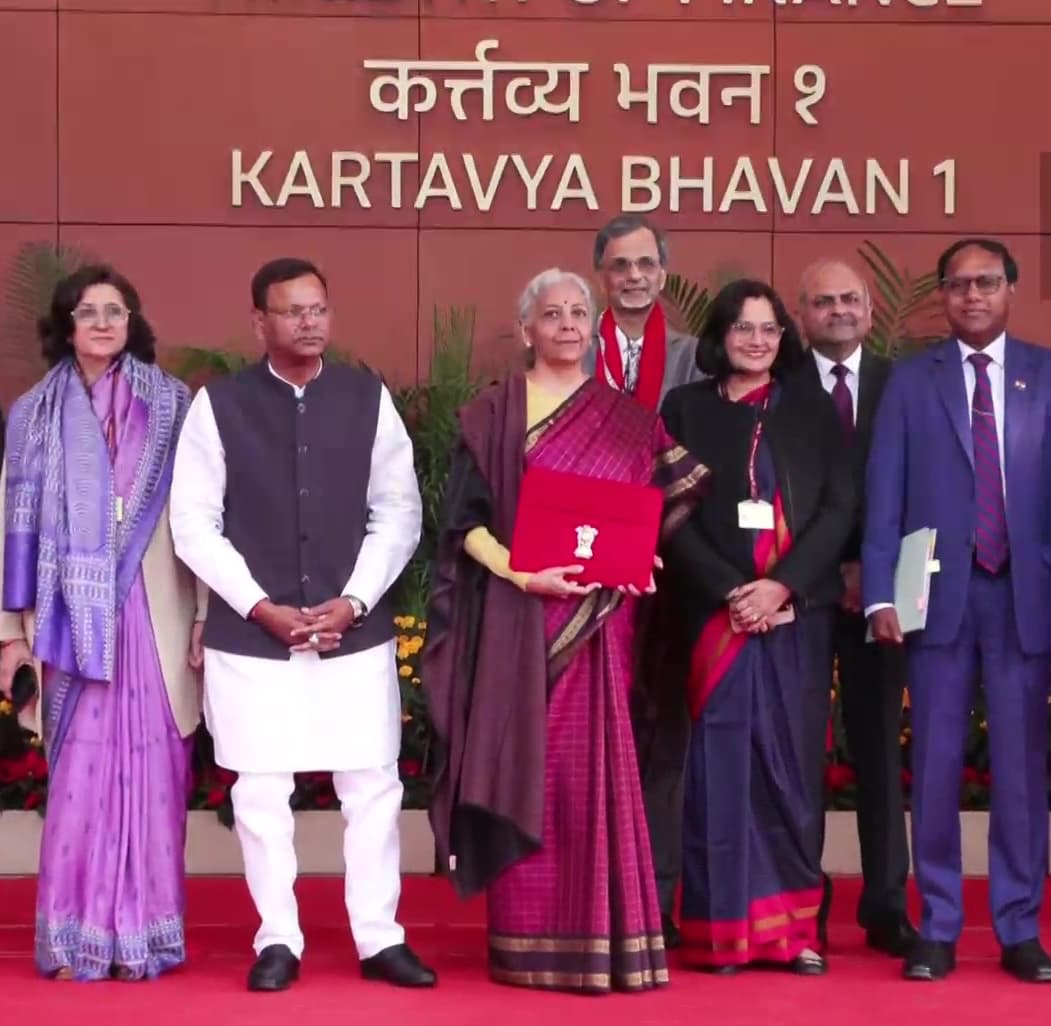
Finance Minister Nirmala Sitharaman presented the Union Budget for 2026–27 on Thursday, striking a balance between ambitious growth targets and fiscal discipline at a time of global economic uncertainty and market volatility. Framed around three Kartavyas or duties, the Budget prioritises enhancing productivity, fulfilling citizen aspirations, and ensuring inclusive development under the vision of Sabka Saath, Sabka Vikas.

Unveiled after the Economic Survey 2025-26 projected India as the fastest-growing major economy for the fourth consecutive year, Budget 2026 places strong emphasis on jobs, manufacturing resilience, services-led growth, and ease of living, while staying firmly on the fiscal consolidation path. Here are the top 10 strategic takeaways from this year’s Budget.

1. Fiscal Discipline Maintained Despite Global Headwinds

The government reaffirmed its commitment to fiscal consolidation even as geopolitical tensions and global economic uncertainty persist. The fiscal deficit is targeted at 4.3 per cent of GDP for FY27, down from 4.4 per cent in the revised estimates for the previous year. Over the medium term, the Centre aims to bring the debt-to-GDP ratio to 50 per cent, with a tolerance band of ±1 per cent, reflecting a calibrated approach to debt management.

2. Capital Expenditure Push Continues To Anchor Growth

Public capital expenditure remains a key growth driver. The Budget raised capex to Rs 12.2 lakh crore, reinforcing the government’s strategy of crowding in private investment through sustained spending on infrastructure such as roads, railways, ports, urban transport, and logistics. This capex push is central to the government’s goal of sustaining medium-term growth at around 7 per cent.

3. Manufacturing And Strategic Self-Reliance Get A Boost

Manufacturing featured prominently among the government’s top “sankalps”. The launch of India Semiconductor Mission 2.0 aims to deepen domestic capabilities in semiconductor equipment, materials, and supply chains. Alongside this, Biopharma SHAKTI was announced to reduce import dependence in critical pharmaceuticals and biologics, strengthening India’s position in global value chains.

4. MSMEs Get A Three-Pronged Growth Strategy

Recognising MSMEs as engines of employment and entrepreneurship, the Budget unveiled a three-part strategy focused on equity support, liquidity access, and professional hand-holding. A dedicated Rs 10,000 crore SME Growth Fund, expanded receivables financing, and compliance support through trained professionals are intended to help small firms scale up as future industrial champions.

5. Big Bet On Services, Yuva Shakti And The Orange Economy

The services sector was positioned as a core driver of jobs and exports. The Budget placed a major bet on Yuva Shaktiand the Orange Economy, with investments in animation, gaming, digital content creation, and creative skills. A new high-powered committee on Education to Employment will focus on aligning skilling with industry needs, while large-scale caregiver training is expected to create new employment pathways.

6. Energy Transition And Climate Action Backed By Funding

Energy security and climate transition received strong financial backing. The government announced a Rs 20,000 crore outlay over five years for Carbon Capture, Utilisation and Storage (CCUS) technologies. In a significant move for long-term energy planning, tax exemptions for nuclear power projects were extended by 10 years, underscoring the role of nuclear energy in India’s clean energy mix.

7. Railways, Waterways And Freight Corridors In Focus

Connectivity emerged as a major growth lever. The Budget proposed seven new high-speed rail corridors, including Mumbai–Pune and Delhi–Varanasi, alongside the operationalisation of 20 new National Waterways. New Dedicated Freight Corridors, including a key corridor connecting Dankuni to Surat, are expected to reduce logistics costs and improve freight efficiency.

8. Agriculture Strategy Shifts To Income And High-Value Crops

The focus in agriculture moved decisively towards income enhancement. High-value horticulture crops such as cashew and cocoa received targeted support, alongside a renewed push for farmer producer organisations. The launch of Bharat VISTAAR, an AI-integrated digital platform, aims to provide customised advisory support by integrating AgriStack data and research inputs, improving farm productivity and risk management.

9. Urbanisation Beyond Metros Through City Economic Regions

To unlock growth beyond India’s largest cities, the Budget introduced the City Economic Regions initiative. The focus will be on Tier-II, Tier-III, and temple towns, using region-specific planning, infrastructure investment, and results-based financing to drive agglomeration-led growth and job creation.

10. Ease Of Living And Trust-Based Governance Strengthened

Several measures were announced to simplify taxation and reduce compliance friction. Key changes include:

– TCS on overseas education and medical treatment under LRS cut from 5 per cent to 2 per cent

– TCS on overseas tour packages reduced to 2 per cent without a threshold

– Income tax exemption for interest awarded by motor accident claims tribunals

– Basic customs duty exemption on 17 cancer drugs

– A one-time six-month foreign asset disclosure scheme for small taxpayers

– Decriminalisation of select TDS-related offences

– Higher STT on futures and options, alongside broader rationalisation

On the trade side, the government signalled a move towards trust-based customs governance, including a warehouse operator-centric system and a Customs Integrated System (CIS) to be rolled out over two years.

Economic Backdrop And What Lies Ahead

The Budget follows the Economic Survey 2025–26, which projected real GDP growth of 7.4 per cent for FY26 and highlighted low average inflation of 1.7 per cent between April and December 2025, aided by softer food prices. The Survey underscored the government’s push for manufacturing resilience and domestic capacity, urging Indians to “buy Indian without thinking”.

The Budget session of Parliament will run for 65 days, with a recess on February 13 and resumption on March 9, when ministry-wise spending plans will come under detailed scrutiny.

Taken together, Budget 2026 signals a calibrated strategy: pushing hard on growth, jobs, and self-reliance, while keeping a firm hand on fiscal discipline amid an uncertain global environment.

Long or Short, get news the way you like. No ads. No redirections. Download Newspin and Stay Alert, The CSR Journal Mobile app, for fast, crisp, clean updates!

App Store –  https://apps.apple.com/in/app/newspin/id6746449540 

Google Play Store – https://play.google.com/store/apps/details?id=com.inventifweb.newspin&pcampaignid=web_share

Latest News

Popular Videos
