


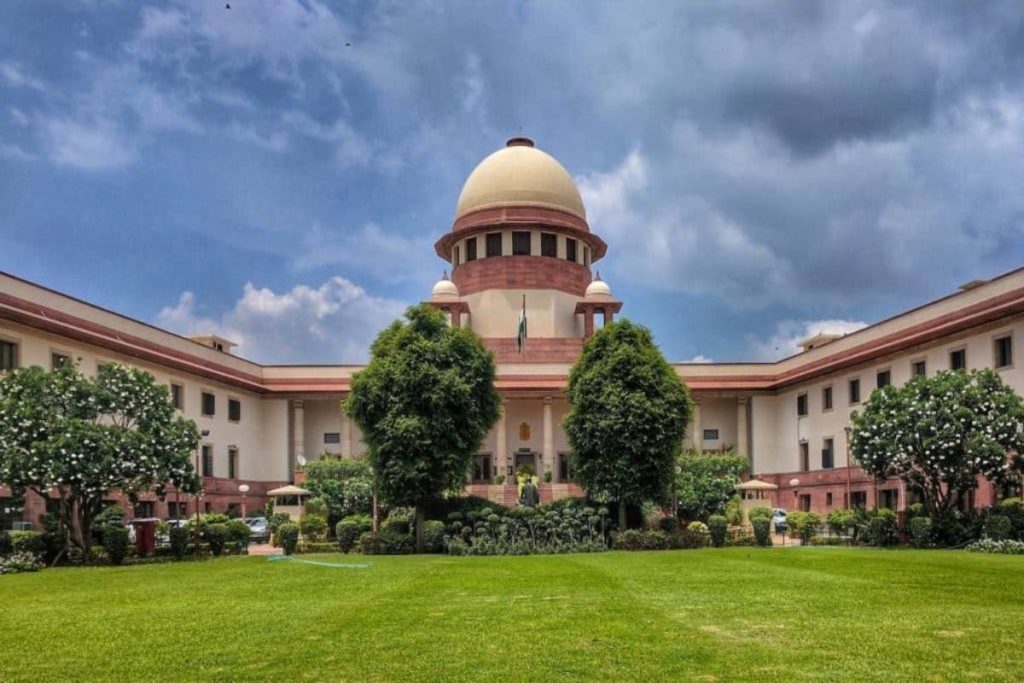

The Supreme Court of India has reprimanded the makers of Manoj Bajpayee starrer upcoming film “Ghooskhor Pandat.” The apex court emphasized that insulting any particular community is inappropriate and cautioned that such actions could exacerbate existing social divisions. This assertion marks a notable intervention by the judiciary in matters concerning artistic expression and its potential societal impact.
A bench of Justice BV Nagarathna and Justice Ujjal Bhuyan issued notice to the respondents (Union of India, Central Board of Film Certification and director Neeraj Pandey) in a PIL filed by one Atul Mishra, who objected to the title of the series as defaming the entire Brahmin community.
The Court observed that while it respects the right to freedom of speech and expression under Article 19(1)(a) of the Constitution, that right is subject to restrictions. The Court questioned the film title, remarking, “Why should you denigrate a section of society by this kind of title?” Today, counsel for the makers informed the Supreme Court that steps are already being taken to change the title. The Court directed them to make the statement by way of an affidavit and posted the matter for further hearing on February 19.
In its remarks, the Supreme Court underscored the responsibility held by filmmakers to consider the broader implications of their work. The court articulated its concern regarding content that could be seen as derogatory towards specific groups. It pointed out that the entertainment industry should strive to promote unity rather than contribute to discord within society. The court’s position reflects a growing awareness of the role that media plays in shaping public perceptions and social norms.
Implications for the Film Industry
This judgment has far-reaching implications for creative professionals in the Indian film industry. It signals a need for greater scrutiny of the narrative elements within movies, particularly when they touch upon sensitive topics related to community identities and social issues. Filmmakers are now urged to adopt a more mindful approach in crafting their stories to avoid legal pitfalls and public backlash.
Response from the Film’s Makers
Following the court’s decision, the filmmakers of “Ghooskhor Pandat” expressed their concerns regarding the ruling. They maintained that their artistic intent was not to demean any particular group but to address critical social themes through satire. Nevertheless, the ruling serves as a reminder of the delicate balance that creatives must maintain between freedom of expression and social responsibility.
What does ‘Ghooskhor Pandat’ talk about?
‘Ghooskhor Pandat’, featuring prominent actor Manoj Bajpayee, was produced against a backdrop that reflects contemporary societal issues. The film reportedly aims to blend humor with serious commentary, a genre that often tests the boundaries of societal norms. The Supreme Court’s recent action emphasizes that while creative liberty is essential, it must be exercised with caution to promote constructive dialogue rather than division.
Future Direction for Content Creation
This ruling is expected to impact not only the current landscape of filmmaking in India but also set standards for future projects. As filmmakers navigate this complex environment, there may be increased consultations with legal and social experts to ensure their work aligns with societal sensitivities. Overall, the court’s directive serves as a critical juncture for the industry to reevaluate its approach towards controversial themes.
Legal Framework Surrounding Artistic Expression
The Supreme Court’s remarks bring attention to the delicate legal framework surrounding artistic expression in India. It reinforces the idea that creators are accountable for the narratives they choose to portray and the potential ramifications those narratives may have on real-life communities. This judicial insight calls for a thoughtful examination of how stories are told, ultimately aiming to foster societal harmony.
Broader Cultural Impact
As the discourse around “Ghooskhor Pandit” unfolds, it invites a broader conversation on the cultural responsibilities of filmmakers in India. Artists are now called to ensure that their work resonates positively across different societal groups while maintaining the essence of their storytelling. This situation illustrates the ongoing dialogue between creative freedom and the societal implications of art, highlighting the necessity for sensitivity in narrative construction.
Long or Short, get news the way you like. No ads. No redirections. Download Newspin and Stay Alert, The CSR Journal Mobile app, for fast, crisp, clean updates!
App Store – https://apps.apple.com/in/app/newspin/id6746449540
Google Play Store – https://play.google.com/store/apps/details?id=com.inventifweb.newspin&pcampaignid=web_share