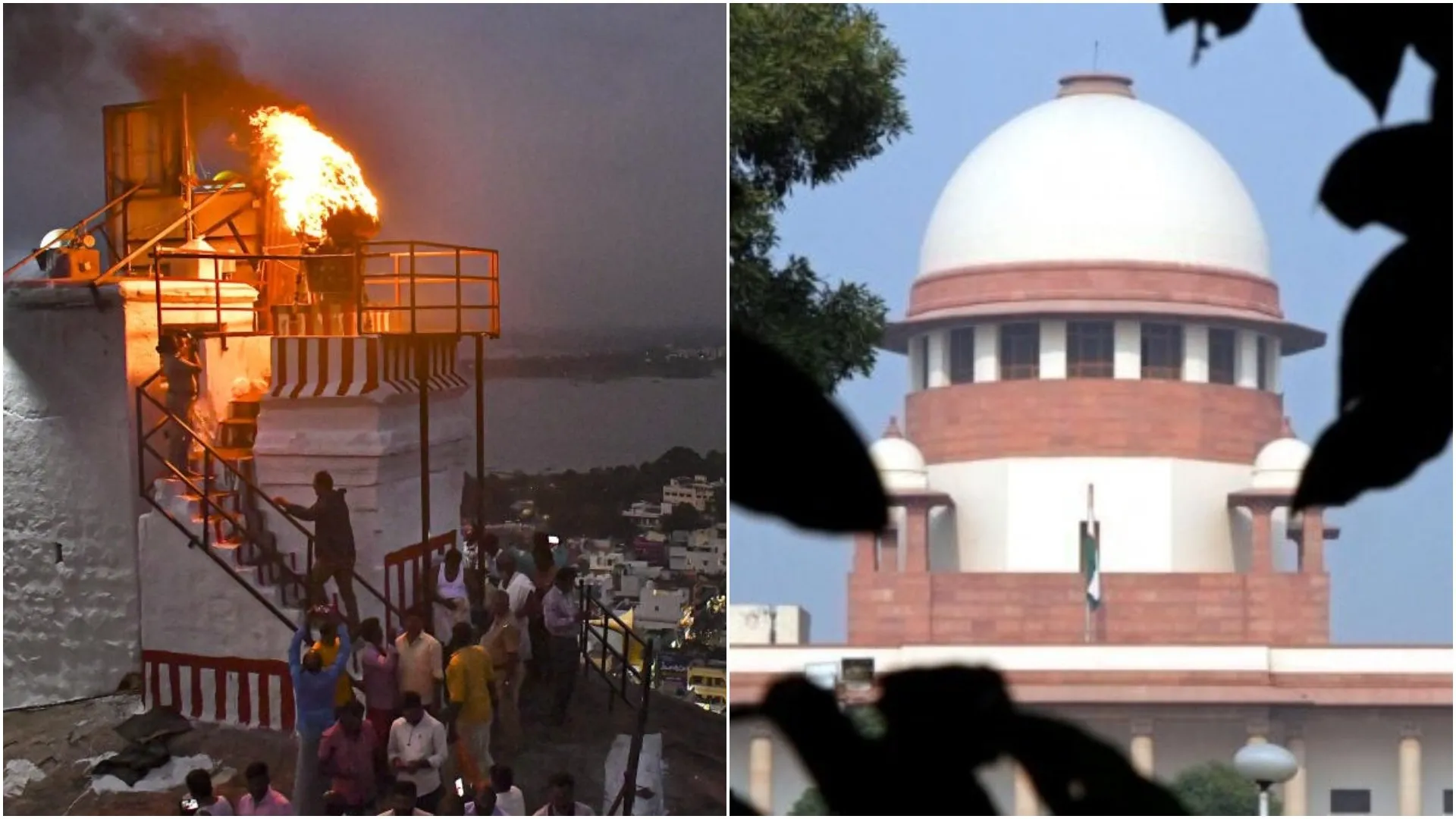
The Supreme Court of India has chosen not to intervene in the Madras High Court’s ruling that prohibits animal sacrifice on the Thiruparankundram hills located in Madurai, Tamil Nadu. The decision, made by a bench comprising Justices Aravind Kumar and P B Varale, upholds the high court’s order issued on October 10. The justices characterized the ruling as balanced and declined to hear any appeal challenging it.
Court’s Rationale on Customary Practices
The high court’s verdict stated that animal sacrifice, along with the preparation, transport, or distribution of non-vegetarian food, is not allowed in the Nellithoppu area until a competent civil court evaluates the traditional practice of animal sacrifice in the Thiruparankundram hillock. The high court emphasized that the temple Devasthanam is recognized as the absolute owner of the traditional path leading to Nellithoppu. According to the ruling, the rights of the Muslim devotees pertain only to the use of this pathway for access to the Nellithoppu area.
Legal Implications for Worshippers
In its observation, the high court noted that the Muslims cannot utilize this pathway for purposes beyond reaching the designated area. The Supreme Court, while upholding the lower court’s order, remarked on the well-considered nature of the ruling, indicating that it would not interfere with the high court’s findings. The justices clarified that their decision does not intend to express any views regarding the rights of the involved parties.
Context of the Controversy
The ruling comes amidst ongoing debates about customary practices and religious rights in the region. This judgment is significant as it addresses the intersection of religious traditions between different communities, highlighting the need for a careful balancing of rights in multi-religious contexts. The decision reflects the judiciary’s approach to handling sensitive issues surrounding religious practices and community rights in India.
Future Considerations
As the case progresses, it may set a precedent for similar disputes involving religious practices and community rights across various regions in India. Stakeholders in the religious and legal communities are likely to monitor any subsequent developments, particularly regarding any appeals or further legal challenges related to this issue.
The judgment reinstates the high court’s earlier position while leaving open the possibility of further judicial scrutiny depending on the outcomes of community discussions and legal interpretations in future court dealings.