


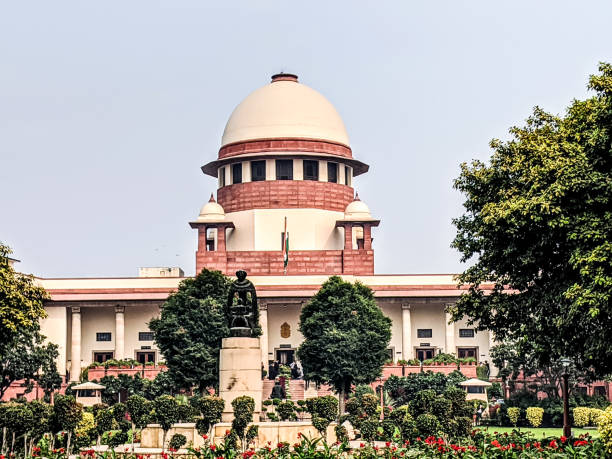

The Supreme Court of India has scheduled the final hearings concerning the legal challenges to the Citizenship (Amendment) Act, 2019 (CAA), to commence on May 5, 2026. The hearing will take place over several days, starting with the petitioners’ arguments on the 5th and an additional half day on May 6. Following this, the Union Government will present its defense on the remaining half of May 6 and continue on May 7. The CAA has faced multiple petitions questioning its constitutionality since its enactment.
Specifics of the Challenge
The petitions focus on the CAA’s provision that enables citizenship for people from six religious minority groups—Hindus, Sikhs, Buddhists, Jains, Parsis, and Christians—who fled from Afghanistan, Bangladesh, and Pakistan before December 31, 2014, asserting that they were victims of religious persecution. The challengers argue that the Act discriminates by excluding other religiously persecuted groups, such as the Rohingyas from Bangladesh and Ahmadiyyas from Pakistan.
Proceedings on Regional Concerns
The court has indicated that after concluding the main arguments concerning the CAA, it will address additional hearings related to specific issues pertinent to the northeastern states of Assam and Tripura. This is expected to follow the arguments presented in the main set of petitions, suggesting a focused approach to regional concerns associated with the Act.
Document Submission and Hearing Protocol
The Supreme Court has permitted both parties to submit supporting documents and materials relevant to their written arguments over the next four weeks. However, the court has stipulated that no new writ petitions regarding submissions already recorded will be accepted, aiming to streamline the process. This approach reflects the court’s intent to expedite the hearing and maintain an organized schedule amid the complexities of legal arguments surrounding the CAA.
Background of the Legislation
The Citizenship (Amendment) Act was notified on December 12, 2019, and became effective on January 10, 2020. It was introduced as a measure to simplify the citizenship process for certain minority communities facing religious persecution. The law has elicited widespread debate and protests across India, with various groups and individuals voicing their concerns about its implications for secularism and equality under the law.
Long or Short, get news the way you like. No ads. No redirections. Download Newspin and Stay Alert, The CSR Journal Mobile app, for fast, crisp, clean updates!
App Store – https://apps.apple.com/in/app/newspin/id6746449540
Google Play Store – https://play.google.com/store/apps/details?id=com.inventifweb.newspin&pcampaignid=web_share