


app-store-logo
play-store-logo
March 11, 2026

Supreme Court Highlights UCC as Solution to Gender Inequality in Laws
The CSR Journal Magazine

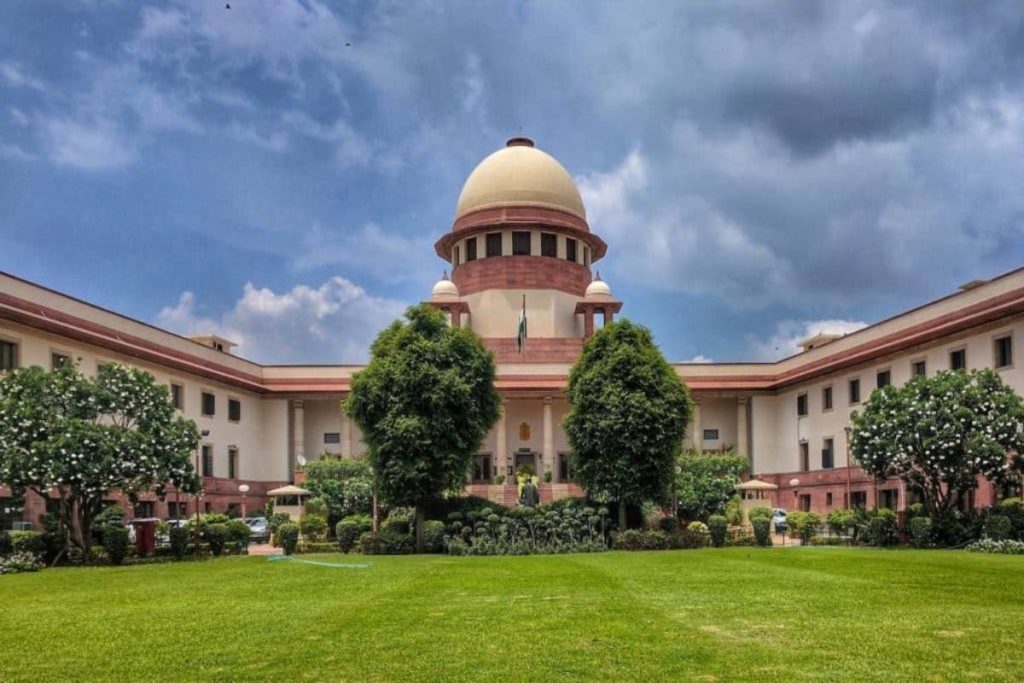
The Supreme Court reinforced its support for the concept of “one nation one law” on Tuesday, asserting that the implementation of the Uniform Civil Code (UCC) is crucial for eradicating gender discrimination in various legal aspects such as marriage, succession, inheritance, and property rights, particularly under Muslim personal law and other customary laws.

The statement followed remarks by advocate Prashant Bhushan, who presented a case on behalf of PIL petitioner Poulomi P. Shukla, highlighting that the inferior inheritance rights assigned to women under the Muslim Personal Law (Shariat) Application Act of 1937 violate their rights to equality and non-discrimination.

Legal Inequities in Inheritance Rights

During the proceedings, Bhushan pointed out that in Uttarakhand, where a UCC has been enacted, Muslim women enjoy equal inheritance rights alongside their male counterparts. In contrast, women in Delhi and other regions are denied similar rights, reinforcing a legal disparity across states.

The bench, composed of Chief Justice Surya Kant and Justices R. Mahadevan and Joymalya Bagchi, acknowledged the existing inequalities in inheritance laws that affect women, even extending to Hindu Undivided Families and various tribal societies.

Concerns Regarding Personal Laws

The bench indicated that while Bhushan has made a compelling argument regarding discrimination against Muslim women, merely striking down one provision may not eliminate the inherent discrimination within the larger framework of Muslim personal law.

Justice Bagchi pointed out that while triple talaq has been declared unconstitutional and banned through legislative actions, the grounds for divorce for Muslim women remain considerably limited compared to those available to men under the 1937 Act. Justice Bagchi emphasized that the asymmetry in the rights pertaining to marriage dissolution requires attention.

Broader Implications of UCC on Society

The chief justice reaffirmed the call for UCC as a viable solution to address these inequalities. Bhushan argued that until the UCC is realized, Muslim women should not endure violations of their rights to inheritance, rights that, he contended, are civil in nature rather than essential religious practices.

Justice Bagchi raised additional concerns, pointing out the existing rights discrepancies in marriage and inheritance among scheduled tribes, highlighting the broader societal discriminations that need to be addressed.

Debate on Polygamy and Legislative Responsibility

Justice Bagchi referred to the legality of polygamy for Muslim men as per the 1937 Act, questioning whether the principle of monogamous marriage is a reality throughout the country. She asked if all polygamous or bigamous marriages under personal laws could be declared unconstitutional for infringing upon the right to equality as enshrined in Article 14.

The Supreme Court noted that the legislature must therefore be called upon to align with the objectives of Article 44 in the Directive Principles of State Policy within the Constitution.

Future Legal Challenges and Considerations

In response to the bench’s remarks regarding the absence of petitions from Muslim women or their representative bodies, Bhushan indicated his willingness to involve numerous Muslim women as petitioners to contest the discriminatory inheritance provisions of the 1937 law. He underscored a widespread grievance among Muslim women regarding these unfair practices.

The bench cautioned that invalidating the inheritance provisions might lead to a legal vacuum, potentially stripping Muslim women of the limited rights they currently possess. Bhushan proposed that the court could direct that inheritance matters among Muslims be governed by the secular Indian Succession Act. The Supreme Court encouraged the contemplation of all possible ramifications while advising Bhushan to submit an amended petition in due course.

Long or Short, get news the way you like. No ads. No redirections. Download Newspin and Stay Alert, The CSR Journal Mobile app, for fast, crisp, clean updates!

App Store –  https://apps.apple.com/in/app/newspin/id6746449540 

Google Play Store – https://play.google.com/store/apps/details?id=com.inventifweb.newspin&pcampaignid=web_share

Latest News

Popular Videos
