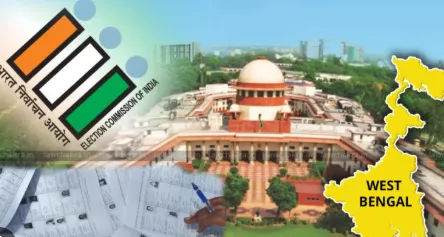
The Supreme Court of India conveyed on Monday that it will not permit any obstacles to the ongoing special intensive revision (SIR) of electoral rolls across various states. This declaration was made during proceedings concerning multiple petitions related to the SIR in West Bengal. The court addressed a plea from West Bengal Chief Minister Mamata Banerjee, which challenges the classification of voters as listed in what has been termed a “logical discrepancy” list.
Concerns Regarding Electoral Roll Administration
During the session, the bench also considered a public interest litigation submitted by the Sanatani Sangsad. This petition sought to subject state police officials to the oversight of the Election Commission of India until the final electoral roll is officially published. The Election Commission (ECI) presented its concerns regarding reported incidents of violence, intimidation, and interference pertaining to the SIR process in West Bengal.
Background of the Issue
The electoral roll revision process is vital for ensuring accurate voter representation in elections. The Supreme Court’s involvement underscores the significance of maintaining transparency and order during this critical period. With the elections approaching, the integrity of the electoral rolls becomes increasingly important to all stakeholders.
Next Steps in the Legal Proceedings
As the legal discussions continue, the court’s stance will likely shape the framework within which the electoral roll revision occurs. The involvement of high-profile political figures and the allegations brought forth by the Election Commission indicate a complex landscape surrounding the administration of electoral processes in West Bengal.
Implications for State Politics
The outcome of these petitions and the Supreme Court’s directives may have substantial implications for the political climate in West Bengal. The legal proceedings reflect broader concerns about election integrity and the role of state authorities in managing electoral processes.
Judicial Oversight in Electoral Matters
The Supreme Court’s commitment to overseeing the SIR operations further emphasizes the judiciary’s active role in electoral governance. By demanding accountability and preventing disruptions, the court aims to uphold democratic principles during this crucial phase of the electoral process.
A Call for Compliance from State Authorities
As the Apex Court lays down its expectations, state authorities are urged to comply with the judicial directives to ensure a smooth electoral roll revision process. Adhering to these guidelines is essential for fostering trust among the electorate and ensuring a fair electoral process moving forward.