


app-store-logo
play-store-logo
February 12, 2026

Supreme Court Cracks Down on Delayed Judgments in High-Profile Cases
The CSR Journal Magazine

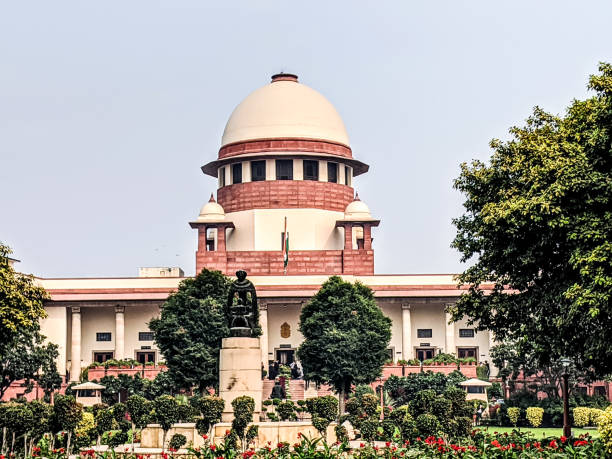
The Supreme Court of India has taken steps to tackle the growing concern of delayed verdicts, emphasizing the need for timely justice. A recent development involves a two-judge bench preparing to deliver a judgment in a case that has been pending for over a year. This move highlights increasing scrutiny of judicial efficiency across both the Supreme Court and High Courts.

Case Details: B Prashanth Hegde vs State Bank of India

On December 3, 2024, Justices P.S. Narasimha and Manoj Misra heard the case “B Prashanth Hegde vs State Bank of India and Another,” involving allegations of non-repayment of bank dues amounting to ₹300 crore and counterclaims under the Insolvency and Bankruptcy Code (IBC). The long reservation of this case drew criticism from the Chief Justice of India, Surya Kant, who has emphasized that such delays undermine the credibility of the judicial system.

Chief Justice Surya Kant Stresses Prompt Deliveries

CJI Surya Kant recently spoke out about the negative impact of prolonged judgment reservations, describing them as a “challenge” to the justice delivery system. He stressed that delays should not be allowed to “infect” the judiciary and announced consultations with other judges to formulate guidelines to ensure judgments are delivered promptly.

Supreme Court Practices and Drafting Process

Justice Manoj Misra has been assigned to draft the ruling in the Hegde case. While Supreme Court judges generally take longer than High Court judges due to the nationwide implications of their decisions, CJI Kant emphasized that rulings should ideally follow closely after hearings. The Chief Justice highlighted that administrative responsibilities often extend working hours, but real-time dictation of judgments remains a best practice to reduce delays.

Strategies to Expedite Verdicts

To address systemic delays, the Supreme Court encourages immediate rulings wherever possible. CJI Kant noted that judges should aim to deliver verdicts soon after hearing both parties. Administrative burdens are acknowledged as a key factor slowing the process, and he indicated that benches are working extended hours to balance caseloads with timely decision-making.

Historical Context: Delays in Indian Judiciary

Delayed judgments are a long-standing concern. In 2001, the Supreme Court’s ruling in the Anil Rai case established that parties could petition the Chief Justice if a verdict remained reserved for over six months. While this measure applies primarily to High Courts, delays in Supreme Court cases have received less systematic attention, underscoring the need for procedural reforms.

Recent Developments Highlight Need for Reform

Recently, Justice A.S. Oka delivered a significant ruling on a long-standing ISKCON dispute after keeping his judgment reserved for nearly a year. Such cases reinforce the urgency of implementing measures to improve judicial efficiency, ensuring timely justice while maintaining the integrity of the legal system.

Long or Short, get news the way you like. No ads. No redirections. Download Newspin and Stay Alert, The CSR Journal Mobile app, for fast, crisp, clean updates!

App Store –  https://apps.apple.com/in/app/newspin/id6746449540 

Google Play Store – https://play.google.com/store/apps/details?id=com.inventifweb.newspin&pcampaignid=web_share

Latest News

Popular Videos
