


Student’s Protest at IIT Delhi Following Recent Deaths and Demands
The CSR Journal Magazine

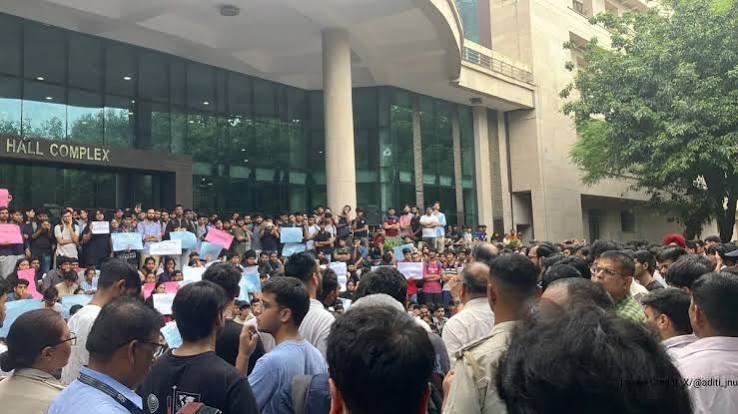
Protests erupted at IIT Delhi on August 24, 2026, as students boycotted classes in response to the death of a 31-year-old MSc Physics student on campus. This tragic event has sparked calls for an independent investigation, accountability, and significant changes to the approaches taken in addressing mental health and student welfare issues. In the wake of the fatality, the institution has initiated an external enquiry and constituted a five-member committee to delve into the circumstances surrounding these alarming incidents.

This incident marks the second reported student death at IIT Delhi since March 2026. Earlier this year, a 19-year-old first-year BTech student was discovered deceased in an on-campus apartment. Concurrently, another notable academic institution in India, IISc Bengaluru, faced two student deaths within a span of 15 days earlier this month. Investigations indicate that personal or relationship issues were implicated in these deaths, rather than solely attributing them to academic pressures.

Wider Patterns Across Premier Institutions

The troubling trend extends beyond IIT Delhi and IISc Bengaluru. A review of incidents over the past year reveals a significant number of similar cases across various IIT campuses. For instance, IIT Kanpur reported the death of a final-year BTech student in December 2025, followed by the tragic passing of a PhD candidate about a month later, which incited protests among students concerning the effectiveness of mental health services.

At IIT Bombay, another student death occurred in February 2026, with a second fatality reported in July. Police have been investigating the individual circumstances surrounding these cases in each respective instance. Similarly, IIT Kharagpur recorded two student deaths within ten days in April 2026, leading to intensified scrutiny of the existing support infrastructures for students.

While these incidents do not pinpoint a singular cause, they underscore a critical issue regarding campus preparedness to address underlying factors contributing to student distress. Various circumstances have been identified through police investigations, including personal troubles, mental health issues, and academic pressures.

The National Context of Student Suicides

The extent of this phenomenon extends beyond elite institutions, as demonstrated by the National Crime Records Bureau (NCRB) data. In 2024, India recorded 14,488 student suicides, a rise of 4.3 per cent compared to the previous year. Students represented 8.5 per cent of the 1,70,746 total suicide deaths documented in that year. Over the decade from 2014 to 2024, the rate of student suicides surged by nearly 80 per cent. Among individuals under 18, a total of 1,071 deaths were reported as due to “failure in examination,” signifying the complexity of the issue.

Inquiries into these alarming figures reveal that familial issues accounted for 3,101 student deaths, while problems relating to romantic relationships also featured prominently. Although examination-related stress is part of the broader context, it does not constitute the entire narrative.

Government Initiatives and Responses

The government has made several attempts to address student mental health and wellbeing in educational institutions. In March 2025, the Supreme Court established a National Task Force led by Justice S Ravindra Bhat to investigate student mental health concerns. The task force has engaged in a nationwide survey across 16,732 institutions, reaching over 12.8 lakh students. The final report is scheduled to be submitted by October 31, 2026.

In addition, the University Grants Commission issued advisories outlining mental health and wellbeing guidelines in early 2023. While these guidelines are now present in many higher education institutions, variations in implementation have been observed, impacting the efficacy of support provided to students.

Efforts are in place for mental health frameworks and faculty training initiatives, yet the challenges remain significant. IIT Kanpur’s introduction of safety measures in response to student deaths illustrates the limitations of merely addressing physical hazards without considering the underlying emotional and systemic issues that contribute to student distress.

Long or Short, get news the way you like. No ads. No redirections. Download Newspin and Stay Alert, The CSR Journal Mobile app, for fast, crisp, clean updates!

App Store –  https://apps.apple.com/in/app/newspin/id6746449540 

Google Play Store – https://play.google.com/store/apps/details?id=com.inventifweb.newspin&pcampaignid=web_share

Latest News

Popular Videos
