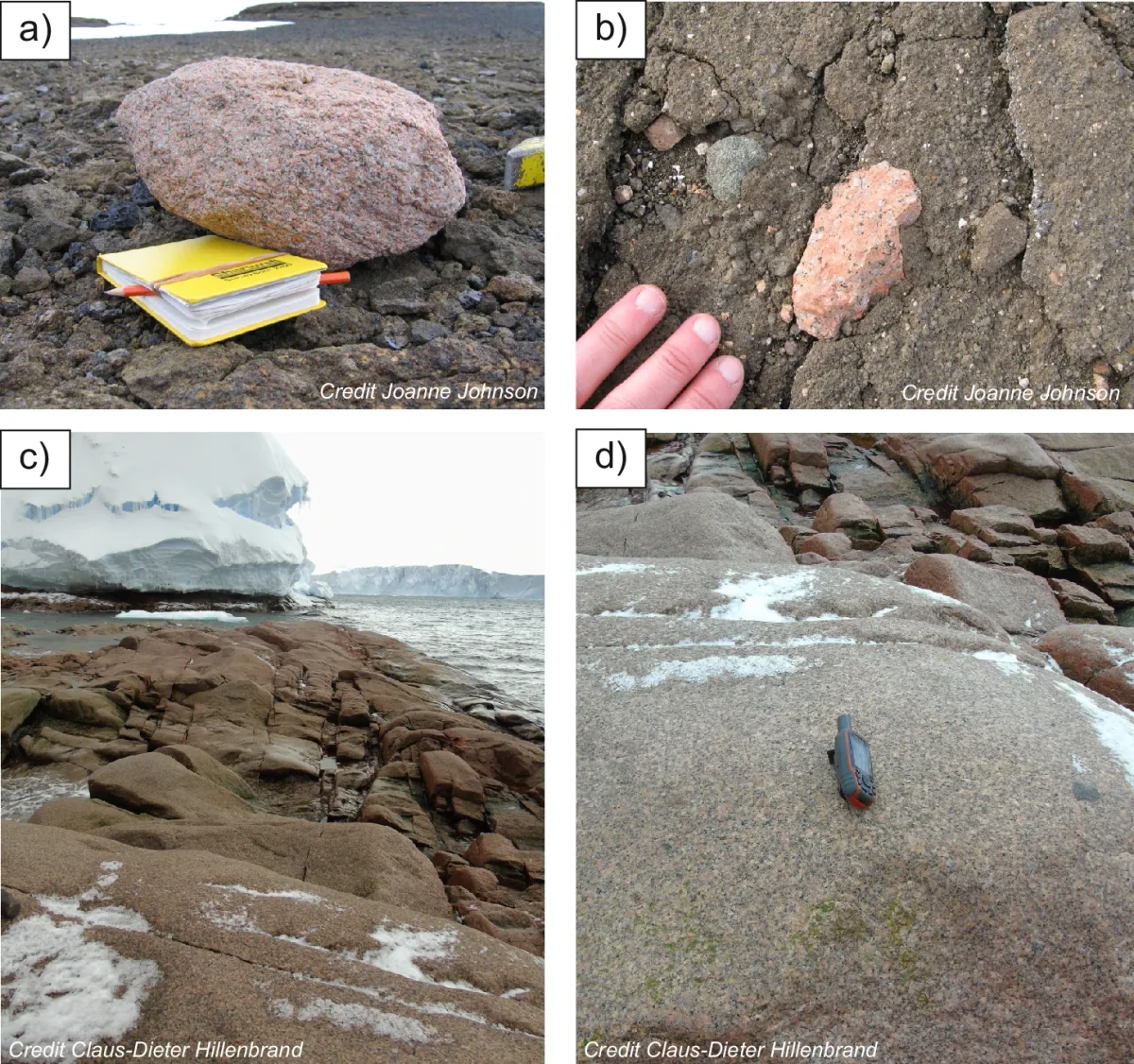

Researchers from the British Antarctic Survey have made a significant advancement in understanding a long-standing geographical enigma by identifying a vast granite body buried beneath the West Antarctic Ice Sheet. The investigation began when the team observed unusual pink boulders resting atop dark volcanic rocks in the Hudson Mountains. This prompted them to conduct sophisticated airborne gravity surveys and advanced radiometric dating techniques to explore the association between these unusual boulders and a large magmatic granite formation dubbed the ‘hidden giant.’
Characteristics of the Granite Body
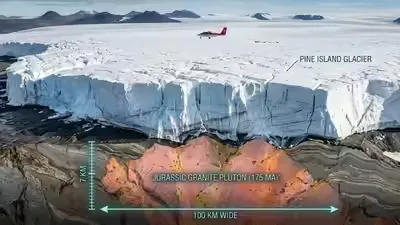
This granite body spans approximately 100 kilometres in width and reaches a depth of 7 kilometres beneath the Pine Island Glacier. To put its size into perspective, it covers an area roughly equivalent to half the size of Wales. The granite’s unique hardness is expected to influence ice flow rates into the ocean, which will enhance the understanding of global sea level rise linked to ice melt.
Origins of the Exotic Rocks
The research originated from a geological anomaly observed in the Hudson Mountains, where noteworthy pink granite boulders were found on volcanic peaks. These boulders, known as ‘erratics,’ differ significantly from the surrounding volcanic material. Following extensive examination, researchers deduced that these boulders had been removed from the valley floor by a much thicker ancient ice sheet. As the ice receded, the boulders were left on the volcanic summits. Analysis using U-Pb zircon geochronology, a method of radioactive dating, revealed that these rocks are roughly 175 million years old, dating back to the Jurassic Period, coinciding with the fragmentation of the supercontinent Gondwana.