


app-store-logo
play-store-logo
March 13, 2026

Rising Gas Prices May Affect Quick Commerce Costs in India
The CSR Journal Magazine

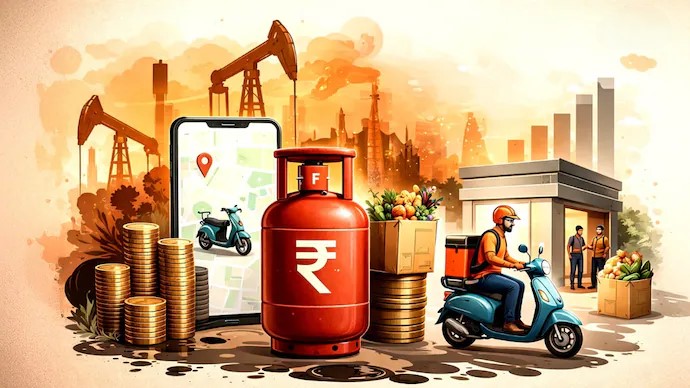
Concerns about the availability and rising costs of Liquefied Petroleum Gas (LPG) are beginning to cast a shadow over India’s burgeoning quick commerce sector. The industry, which thrives on speed and convenience, relies heavily on a vast network of food vendors and cloud kitchens that depend on LPG for cooking. Rising gas prices may not have an immediate effect on delivery services, but sustained increases could alter vendor operations, impacting menu offerings and pricing strategies for consumers.

The Central Role of Gas in Quick Commerce

Although consumers primarily associate quick commerce with delivery motorcycles and user-friendly mobile applications, the role of LPG in this ecosystem is crucial. A significant number of restaurants and cloud kitchens collaborate with delivery platforms, using LPG to prepare meals for quick delivery. Rising gas prices could initiate challenges throughout this network. With India’s cloud kitchen market projected to expand from $1.2 billion in 2025 to $3.7 billion by 2034, dependence on LPG for cooking becomes increasingly vital. Rising costs or supply restrictions could compel smaller eateries, often operating on slim margins, to either hike prices or narrow their menu choices, potentially impacting consumer order frequency.

Cloud Kitchens at Risk of Price Increases

Cloud kitchens, which primarily exist for online food delivery, could face the steepest repercussions from increased LPG prices. Unlike larger restaurant chains that can negotiate favorable energy contracts, many smaller cloud kitchens rely solely on LPG cylinders. A price increase would immediately escalate the cost of food preparation. For operators already running on thin margins, this might lead to higher prices on delivery platforms, or additional service fees. The situation could worsen as a price hike for LPG cylinders could significantly affect operations, given that oil marketing companies are already operating at a loss from below-cost pricing.

The Supply Chain Reaction

The rise in gas prices could create a ripple effect throughout the supply chain. An increase in cooking expenses may result in vendors raising their menu prices, which could subsequently impact consumer spending, particularly among middle-income households that represent a substantial portion of quick commerce customers. The cascading pressure might culminate in higher prices for goods and diminished order frequency, as more cost-conscious consumers reevaluate their spending behaviors. The entire quick commerce model could encounter stress from various angles, making it essential for platforms to remain attentive to evolving market conditions.

Broader Economic Implications

The challenges posed by rising gas prices extend to sectors beyond food delivery. Fertilizer manufacturers, predominantly reliant on natural gas, are currently operating under capacity. This situation could escalate agricultural input costs, ultimately affecting food prices. Already lean operational metrics in the fertilizer sector could exacerbate costs across the food supply chain if gas prices continue to surge.

Strategic Adaptations by Quick Commerce Platforms

Quick commerce companies have built their operational models around speed and cost-effectiveness; however, rising expenses could force them to reassess their strategies. As vendors feel the pinch from increasing costs, platforms might be compelled to renegotiate contracts or adjust their pricing structures accordingly. Some companies are considering alternative cooking methods, such as induction, to minimize reliance on LPG. Companies hesitant to implement necessary adjustments may encounter greater obstacles as conditions evolve.

Potential Changes for Consumers

Consumers could witness gradual changes in the form of increased menu prices or a reduction in discounts offered through delivery applications. Over time, shifts in ordering behavior may develop as the market adjusts. While quick deliveries currently remain unaffected, industry experts caution that ongoing pressures in supply chains could soon reflect on consumer pricing. As the gas crisis unfolds, the potential for transformative effects on quick commerce pricing and consumer habits looms on the horizon.

Long or Short, get news the way you like. No ads. No redirections. Download Newspin and Stay Alert, The CSR Journal Mobile app, for fast, crisp, clean updates!

App Store –  https://apps.apple.com/in/app/newspin/id6746449540 

Google Play Store – https://play.google.com/store/apps/details?id=com.inventifweb.newspin&pcampaignid=web_share

Latest News

Popular Videos
