


Revised NCERT Class IX Book Explores Historical Foundations of India’s Governance
The CSR Journal Magazine

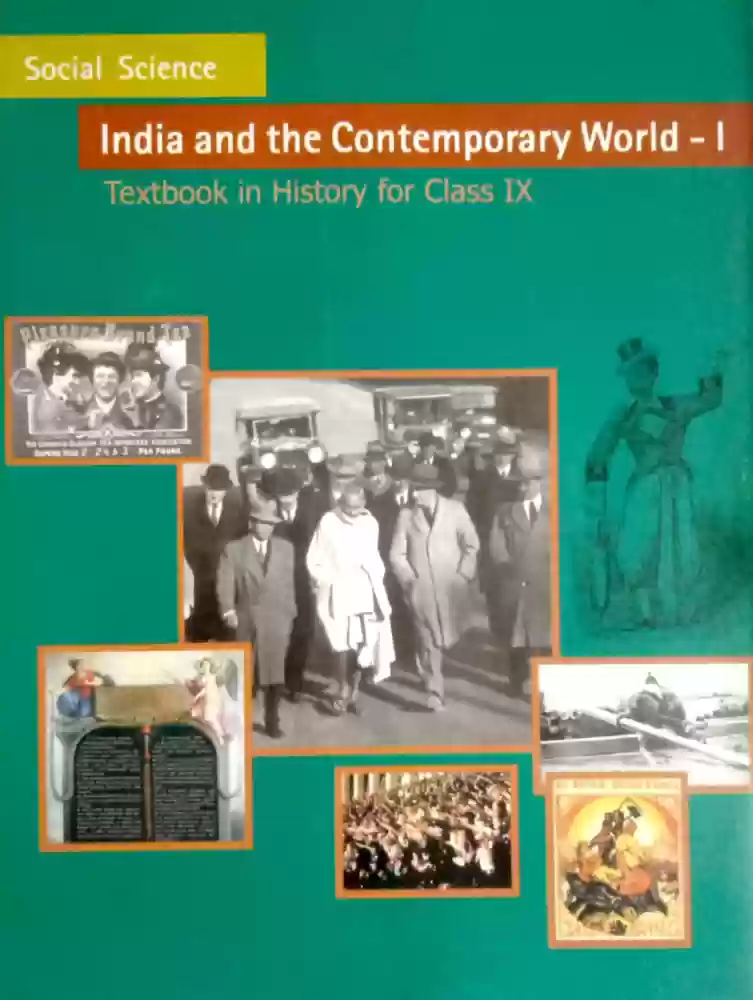
The revised NCERT Class IX social science textbook, titled “Understanding Society India and the Beyond,” delves into various historical frameworks that have shaped India’s governance. Released on September 30, the book references significant concepts from ancient texts, including the ‘Ram Rajya’ from the Ramayana and ‘Rajdharma’, alongside the Chola empire’s ‘Sengol’. These elements illustrate how India has preserved its governance traditions even in the face of colonial rule.

Chapter 4, titled ‘Governance and Public Policy’, highlights the evolution of governance in India. It underscores that while colonial influence is present, the country has managed to retain knowledge of its pre-colonial governance systems through both texts and practices. The book posits that India’s leaders established the Constitution reflecting India’s core values and ideals, reinforcing a deep connection to its historical roots.

Furthermore, the text references Mahatma Gandhi’s interpretation of ‘Ram Rajya,’ noting it as a representation of the ideal governance model, characterised by objectives such as compassion, transparency, and community welfare. According to the chapter, these principles resonate with the aspirations of the Indian populace, affirming Ram Rajya as a strong example of effective governance.

Influence of Ancient Epics on Modern Governance

The NCERT textbook also examines the impact of the Mahabharata on contemporary governance in India. It indicates that from the Vedic period through to the narratives of the Ramayana and Mahabharata, Indian traditions have always viewed governance as a moral obligation rather than just a means to wield power. This perspective suggests that good governance should be evaluated based on societal well-being, justice, and overall prosperity.

Moreover, the book highlights notable phrases sourced from these ancient texts, such as the national motto ‘Satyameva Jayate’ derived from the Mundaka Upanishad, and the Supreme Court’s motto ‘Yato Dharmas Tato Jayah’ from the Mahabharata. These mottos reflect enduring values that underpin the legal and ethical framework of contemporary Indian institutions.

Since gaining independence, Indian institutions have endeavoured to integrate these traditional principles into their modern structures. They have adapted significant elements from historical ideologies to suit the needs of a democracy, showing a commitment to the foundational ethos that has guided governance in the country through centuries.

Legacy of Sengol and Its Modern Significance

The book also discusses the legacy of the Sengol, a historical cultural artefact, which was prominently placed by Prime Minister Narendra Modi in the newly inaugurated Parliament building in 2023. The Sengol serves as a symbol of righteous governance, a tradition established during the Chola dynasty over a millennium ago.

The narrative states that the significance of the Sengol was underscored during India’s independence, when it was ceremoniously handed to Jawaharlal Nehru by Adheenam Saints from Tamil Nadu at the moment the nation gained freedom on August 15, 1947. This act embeds historical customs deeply within India’s contemporary governance narrative.

By placing the Sengol in the Parliament, the government seeks to honour a rich legacy of governance that resonates with the cultural and historical context of the nation. This gesture illustrates the continuous thread of good governance principles that trace back through India’s vast history, emphasising both ancient wisdom and modern democratic values.

Long or Short, get news the way you like. No ads. No redirections. Download Newspin and Stay Alert, The CSR Journal Mobile app, for fast, crisp, clean updates!

App Store –  https://apps.apple.com/in/app/newspin/id6746449540 

Google Play Store – https://play.google.com/store/apps/details?id=com.inventifweb.newspin&pcampaignid=web_share

Latest News

Popular Videos
