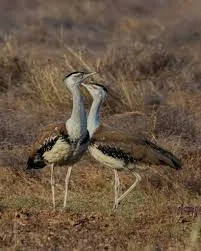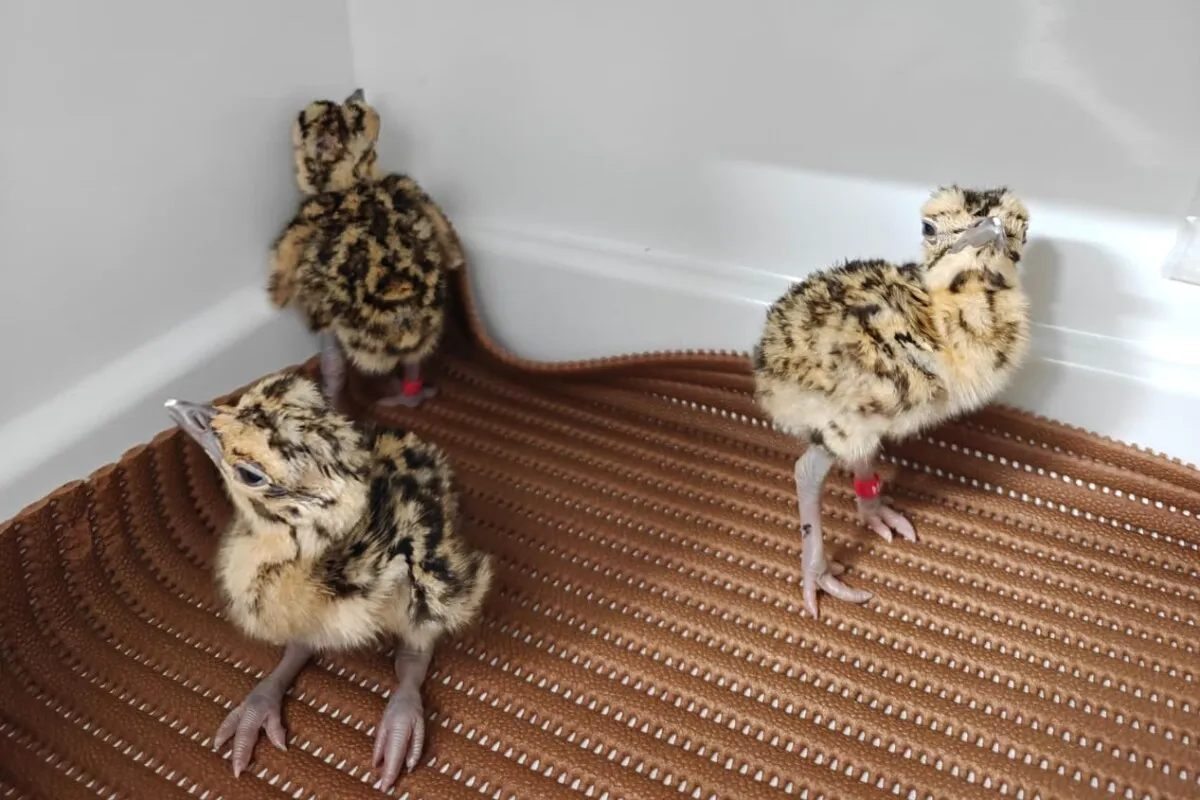

There is a boost in the conservation effort for The Great Indian Bustard (GIB) as chicks have been born in the Desert National Park, Rajasthan through natural mating. Conservationists see this as a great shift as earlier efforts were made to conduct the breeding. International Union for Conservation of Nature has classified GIB as Critically Endangered and for a long time, their numbers were dropping, which was a matter of concern. But this new development is seen as a sign of reduced stress levels among the birds in captivity, they are now adopting the environment.
Natural Breeding Signals Behavioural Shift
This season 11 chicks have been born; out of the 11, three were born naturally—a great sign of behavioural shift. Earlier efforts were made to collect eggs and incubate them in controlled conditions for fertilization. As per foresters, birds in Ramdevra and Sudasari are now pairing and reproducing naturally.
The Bustard Recovery Programme was launched in 2016 as a collaborative effort by the Government of Rajasthan, the Ministry of Environment, Forest and Climate Change, and the International Fund for Houbara Conservation. Official records state that under the programme 46 GIBs have been born; the initial population was just 33 birds. One forest official said, “This is a major milestone—scientists are now mostly caretakers, as the birds themselves are taking on parenting roles.” He noted that if this process continues, their population would stabilise in just 5 years.
Authorities Plan Release of 79 Bustards into Wild
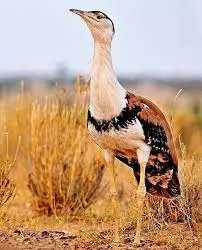
Looking at the current situation, where the birds have started adapting to the captive environment, authorities are planning to release at least 79 bustards into the grassland habitats. To increase their survival rate, different efforts have been taken: predator-proof enclosures have been made, and bird diverters have been installed in locations with high-tension power lines. GIB is popularly known as ‘Godawan’ in Rajasthan and has the highest level of legal protection under India’s Wildlife Protection Act, as well as international safeguards under CITES. A few decades ago, Godawan was widespread across the Indian subcontinent, but now their numbers are limited to 200, with the maximum population in Rajasthan and Gujarat.
The fourth phase of conservation efforts has started, which will continue until 2029. Alongside captive breeding, there is a huge focus on artificial insemination techniques. When the conservation effort started, the milestones were the successful artificial incubation and safe chick birth. But the birth of three chicks has now renewed hope for stabilizing the GIB population.