


Palestinians in West Bank Protest and Strike Against New Israeli Death Penalty Law
The CSR Journal Magazine

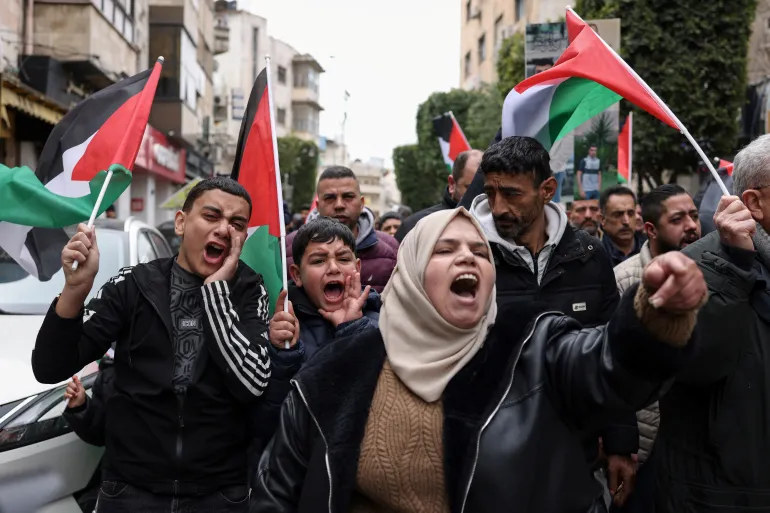
Palestinians in the occupied West Bank and East Jerusalem participated in a general strike on April 1, 2026, following a call from the Fatah party led by Palestinian Authority President Mahmoud Abbas. Public institutions, including universities, and shops closed their doors in a display of opposition against a recently passed Israeli law that mandates the death penalty for Palestinians convicted of fatal attacks. Demonstrations occurred primarily in cities like Ramallah and Nablus, where protesters marched openly in the streets.

Protests Erupt in Major Cities

On Wednesday, hundreds gathered in Ramallah to voice their dissent against the law, which has received backing from Israel’s National Security Minister, Itamar Ben-Gvir. Demonstrators chanted slogans urging the international community to intervene and prevent the law’s enforcement. In Nablus, participants held signs warning of the time-sensitive nature of the situation, with messages emphasizing the urgency to act before irreversible consequences ensue.

Closure of Shops and International Condemnation

Many shops in prominent cities such as Hebron and Nablus remained shuttered during midday hours, as reported by journalists. In the town of Anata, located northeast of Jerusalem’s Old City, Israeli soldiers compelled some Palestinian shopkeepers to resume their business activities despite the strike. The United Nations High Commissioner for Human Rights, Volker Turk, has publicly criticized the new law, asserting that its application to Palestinians in the occupied territories could potentially amount to a war crime.

Personal Accounts from Protesters

During the protests in Ramallah, attendees expressed deep personal connections to the issue. One demonstrator, Riman, a psychologist from the city, remarked on the pervasive impact of imprisonment within Palestinian families, highlighting that nearly every family has a relative either imprisoned or detained. Reports indicate that over 9,500 Palestinians are currently held in Israeli prisons, which includes approximately 350 minors and 73 women. Human rights organizations have raised concerns regarding the treatment of these detainees, citing instances of torture and medical neglect.

Details of the New Law and Its Judicial Implications

The contentious legislation, approved by the Israeli parliament, stipulates that Palestinians convicted by military courts for lethal attacks classified as “terrorism” will face the death penalty as the standard punishment. Given that Palestinians in the West Bank are subject to Israeli military jurisdiction, this legislation is seen as establishing an unequal legal framework. Israeli civilian courts have the option to impose either a death sentence or life imprisonment for similar offenses against the state; however, the new law notably does not apply retroactively, raising concerns about disparities in justice.

Reactions to Protests and International Attention

Visual accounts of the protests spread quickly on social media, depicting acts of civil disobedience such as tyre burns at the Qalandia checkpoint, which serves as a vital transit point between the West Bank and Jerusalem. Eyewitnesses reported that Israeli soldiers responded with rubber-coated bullets and tear gas during the demonstrations; nonetheless, there were no immediate reports of injuries. The ongoing Israeli occupation of the West Bank, which has persisted since 1967, has seen a marked increase in violence, particularly since the onset of the conflict in Gaza in October 2023, which has significantly escalated tensions in the region.

Long or Short, get news the way you like. No ads. No redirections. Download Newspin and Stay Alert, The CSR Journal Mobile app, for fast, crisp, clean updates!

App Store –  https://apps.apple.com/in/app/newspin/id6746449540 

Google Play Store – https://play.google.com/store/apps/details?id=com.inventifweb.newspin&pcampaignid=web_share

Latest News

Popular Videos
