


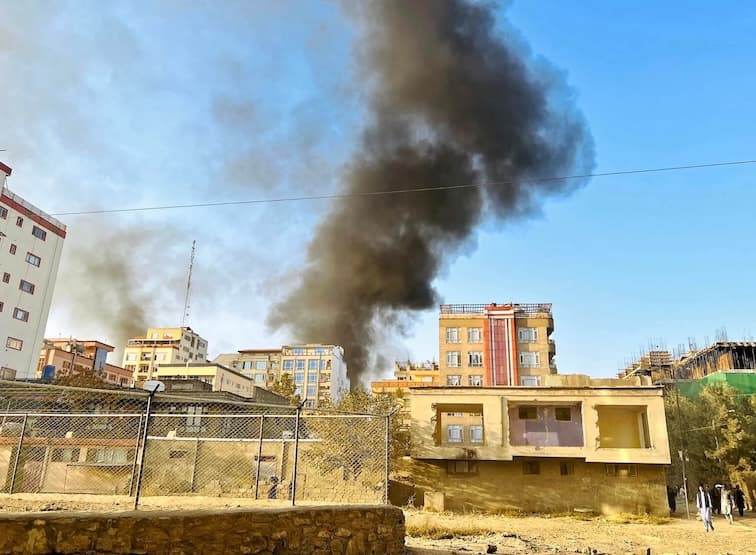

More than 80 individuals lost their lives in recent airstrikes conducted by Pakistan across seven locations in Afghanistan’s Nangarhar, Paktika, and Khost provinces. This information was provided by security sources from Islamabad. The airstrikes were part of a series of military operations responding to recent suicide attacks that the Pakistani government attributes to groups operating from Afghanistan.
Targeted Locations and Response
The locations targeted included New Centre No. 1 and New Centre No. 2 in Nangarhar, the Khwariji Maulvi Abbas Centre in Khost, the Khwariji Islam Centre and Khwariji Ibrahim Centre in Nangarhar, and the Khwariji Mullah Rahbar and Khwariji Mukhlis Yar sites in Paktika. Pakistan’s State Minister for Interior, Talal Chaudhry, stated that approximately 70 militants were “neutralised” during this operation. The Pakistani government indicated that these strikes were directed against camps associated with the Fitna al-Khawarij, a term used for the banned Tehreek-e-Taliban Pakistan along with its affiliates and the Islamic State’s Khorasan Province, also known as Daesh-Khorasan.
Government Statements
In an appearance on the Geo News program “Geo Pakistan,” Minister Chaudhry claimed that Afghanistan has emerged as a hub for cross-border militancy, prompting Pakistan to take essential measures to protect its citizens. He highlighted that nearly 70,000 intelligence-based operations have been carried out within Pakistan, leading to numerous arrests. The country’s Ministry of Information and Broadcasting characterized the airstrikes as “precise and accurate,” asserting they were a retaliatory action in response to a series of suicide bombings occurring in Islamabad, Bajaur, and Bannu. Islamabad has accused individuals based in Afghanistan of orchestrating these attacks with ties to TTP and Daesh elements.
Locations of Strikes
According to reports, the airstrikes aimed at various hideouts situated in the Barmal area of Paktika Province, Khogyani district of Nangarhar, as well as the Ghani Khel, Behsud, and Argoon regions. Chaudhry also referenced the 2020 Doha Agreement, which included a commitment from the Afghan Taliban to prevent Afghan territory from being utilized for terrorist activities. He criticized Kabul’s interim administration for not adequately addressing the issue of rising militant activity.
Escalating Tensions and Diplomatic Efforts
Pakistan’s diplomatic and military efforts to tackle security concerns have included calls for political unity against terrorism. The recent strikes come amidst a rise in violence in the Khyber Pakhtunkhwa and Balochistan provinces of Pakistan. The relationship between Islamabad and Kabul has become increasingly strained since the Taliban regained control of Afghanistan in 2021. In October 2025, border skirmishes between Pakistani forces and Afghan Taliban fighters reportedly resulted in significant casualties for both sides, despite several rounds of negotiations aimed at de-escalation.
Kabul’s Rejection of Allegations
Kabul has consistently refuted Islamabad’s claims that militant groups operate from Afghan territory, maintaining that Pakistan’s security issues are fundamentally internal. The situation along the Pakistan-Afghanistan border continues to be fraught, characterised by ongoing accusations and counter-accusations from both nations.
India Condemns Pakistan for the Airstrikes
India has condemned Pakistan’s actions stating that it is another attempt of Pakistan trying to externalise its internal problems.
Our response to media queries about Pakistan’s airstrikes on Afghanistan ⬇️
🔗 https://t.co/gUXTbNQjVg pic.twitter.com/A6W4wxXBpV
— Randhir Jaiswal (@MEAIndia) February 22, 2026