Only 7 in 100 Unemployed Graduates Find Stable Work Within a Year in India
The CSR Journal Magazine

There’s a peculiar ritual that plays out every summer across India. Families gather. Relatives who haven’t spoken in years suddenly have opinions. Mithai is distributed. A child has passed their exams and earned a degree. The parents beam. The neighbours applaud. A photograph is taken with the certificate.

And then the graduate goes home, opens LinkedIn, and begins a journey that, statistically speaking, has about a 40% chance of ending in unemployment.

Welcome to Indian higher education…where the admission is everything, the learning is optional, and the degree is a very expensive piece of paper that an alarming number of employers have started using as a dartboard.

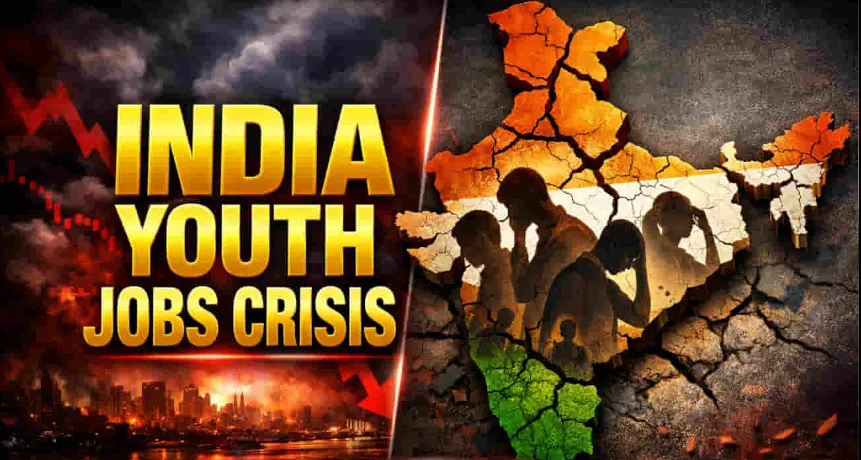
Azim Premji University’s State of Working India 2026 report dropped earlier this month and it is, to put it gently, a gut punch dressed in academic language. Here’s what it found: unemployment among graduates aged 15–25 is close to 40%. For those aged 25–29, it’s still around 20%. That’s not a blip. That’s a generation.

The numbers get more absurd when you look at the trend. In 2004, roughly 32% of India’s unemployed youth aged 20–29 were graduates. By 2023, that figure had shot up to 67%. In absolute terms, nearly 1.1 crore unemployed young people now hold degrees. We’ve managed to do something genuinely impressive: we’ve made education a reliable path to unemployment.

Between 2004 and 2023, India was adding roughly 50 lakh graduates every year. During the same period, only about 28 lakh found employment, and even fewer entered anything resembling stable salaried work. So every year, we’re generating roughly 22 lakh educated young people who are, by the labour market’s reckoning, essentially surplus to requirements.

And here’s the truly humbling detail from the report: only 7% of graduates manage to find permanent salaried employment within a year of reporting themselves as unemployed. Seven. Percent. The conversion rate of a particularly bad sales team is better than this.

Meanwhile, the Mercer-Mettl India Graduate Skill Index confirms that just 42.6% of Indian graduates were considered employable in 2024. That’s less than half. Think about that. If you walked into a room of 100 Indian graduates, statistically speaking, only 42 of them would have the skills to actually do a job.

If you want a symbol — a perfect, crystalline, almost artistic representation of what Indian higher education has become — look no further than what happened at the India AI Impact Summit in February 2026.

Galgotias University, a private institution in Greater Noida that has enjoyed what analysts diplomatically describe as “considerable government patronage,” set up a stall at this prestigious national event. They showcased what they called “Orion” — a robotic dog created at their Centre of Excellence. A faculty member enthusiastically told Doordarshan cameras about this marvel of homegrown innovation.

The internet looked at Orion and recognised it immediately: a commercially available Unitree Go2, made in China. The robot wasn’t a breakthrough. It was a purchase. The university, caught in the glare of viral memes, eventually apologised and blamed the faculty member’s “enthusiasm on camera” — which is a rather elegant way of saying the institution that trains future professionals could not distinguish between “we built this” and “we bought this.”

The government, to its credit, asked Galgotias to vacate its stall — which, reportedly, was larger than the combined stall space given to four IITs. Let that settle.

This wasn’t Galgotias’s first rodeo with creative interpretation of reality. The same institution had previously seen faculty publish a paper suggesting that the vibrations from thali-banging during the COVID-19 pandemic could kill the coronavirus. Industrialist Harsh Goenka, watching the robot debacle unfold on social media, posted: “My heart goes to the students of this university who will feel ashamed to say where they are studying.”

But Galgotias is not the anomaly. Galgotias is the metaphor. It is the logical endpoint of a system that rewards performance over substance, optics over outcomes, and hoardings over honesty. As one analysis put it sharply: “Galgotias is not the disease; it is a symptom.”

So,

Here is a genuine and underreported scandal: Indian higher education has largely stopped being about education. It’s about compliance.

Thousands of colleges across the country wake up every morning not thinking about what their students will learn, but about what their NAAC grade looks like, what their NIRF rank says, and whether the UGC has issued any new circulars that need to be addressed. There is an entire cottage industry — NAAC consultants, NIRF ranking advisors, accreditation coaches — built purely around helping institutions look like they’re doing the right things without necessarily doing the right things.

NAAC assessments, which were designed to promote quality, have in practice become, as one education analyst described it, “a paperwork-heavy exercise with little real-world impact.” Universities create glossy evidence folders. Peer review teams visit campuses. Impressive but superficial demonstrations are staged. Grades are awarded. In early 2025, a NAAC corruption scandal came to light and the agency reportedly fired 900 of its 5,000 assessors — yet the tainted grades already awarded to institutions were never withdrawn.

NIRF has its own problems. The Madras High Court in March 2025 stayed the publication of NIRF rankings following a PIL that alleged institutions were submitting false data to boost their positions — and that NIRF was accepting these submissions without any verification. One college in Karnataka reportedly soared in the 2024 rankings despite glaring inconsistencies between its NIRF data and NAAC audit figures. Nobody checked.

The UGC, meanwhile, identified 32 fake universities operating across 12 states as recently as 2026 — up from 20 just two years prior. That trajectory isn’t encouraging.

The result of this entire circus? Institutions spend enormous time, money, and administrative energy on compliance theatre and correspondingly less time on the actual business of preparing young people for the world.

Let’s talk about the people teaching India’s graduates.

In the better-resourced institutions — the IITs, JNU, central universities — faculty are genuinely accomplished. But these serve a tiny fraction of India’s 1,213 universities and 58,000+ colleges. The vast majority of Indian higher education faculty are teaching from syllabi they inherited, in subjects they haven’t updated in years, about industries they’ve never worked in.

This is not an accusation. It is a structural inevitability.

Why would a talented engineer with strong industry experience choose to teach at a private college for ₹40,000–₹60,000 a month when they can earn 3 to 5 times that in the private sector? The incentive structure is completely inverted. The people with the most relevant, current, real-world knowledge have the least financial reason to share it in classrooms.

Private university professor salaries in India, for the majority of institutions, range between ₹56,000 and ₹1.7 lakh per year at the 25th and 75th percentile respectively — figures that are not typos, they are annual numbers that make a mockery of the expectation that these educators will inspire the next generation of industry leaders.

Compare this with what a faculty member earns in the UK (around ₹50 lakh annually at the entry level), Canada (up to ₹1 crore), or even Singapore and South Korea, where academic salaries are deliberately set high to attract people with genuine industry expertise back into classrooms.

The consequence is a teaching workforce that is heavily tilted toward people who have spent their entire careers inside academia — who went from being students to being teachers without ever actually doing the things they teach. An MBA professor who has never run a P&L. A computer science lecturer who has never shipped production code. An engineering faculty member whose industry experience ended with their own graduation.

This isn’t a personal failing. It’s a systemic one. When you underpay teachers, you get teachers who couldn’t get better-paying jobs.

Here is a revealing data point from the 2026 placement survey: students at campuses visited by more than 150 companies annually are 2.9 times more likely to secure jobs than those at institutions with limited recruiter exposure.

The gap isn’t primarily about what students know. It’s about who they’ve met, what they’ve done, and whether they’ve ever encountered the actual working world before graduating into it.

India’s education system, at its core, remains deeply allergic to experiential learning. The dominant model is: sit in class, listen to lectures, memorise content, appear for exams, receive marks, graduate. Internships are often an afterthought — tick-box requirements where students spend months getting chai for someone senior or completing assignments that have no bearing on actual business problems.

Industry interaction is minimal. Guest lectures are occasional and treated as events rather than integrated learning. Live projects are rare. Incubators in most institutions exist primarily as NAAC documentation items rather than functioning entrepreneurial ecosystems.

The result is graduates who are technically qualified but professionally unprepared. They know what a SWOT analysis is. They may not know how to run a meeting, handle a difficult client, read a financial statement, debug under pressure, or communicate a complex idea simply.

Meanwhile, Germany’s dual education system — where students split time between classroom instruction and structured industry apprenticeships — produces graduates with genuine, verified work competencies. South Korea’s universities have deep, institutional partnerships with companies like Samsung and Hyundai that shape curricula from the inside out. Singapore has built entire frameworks around industry-integrated education.

India, by contrast, has the AICTE mandatory internship circular — which spawned an entire market of fake internship certificates for a fee.

The Demographic Dividend Ticking Clock

The Azim Premji report contains a warning that should be read by every policymaker, institution head, and education regulator in the country: India’s working-age population share will begin declining after 2030.

The demographic dividend — the supposed superpower of being a young nation — has an expiry date. We are now four years away from that window beginning to close. The youth bulge that was supposed to power India’s economic ascent is, in substantial numbers, sitting at home with a degree they spent years and lakhs earning, unable to find work that matches their qualifications or their expectations.

India’s youth population aged 15–29 stands at about 36.7 crore, roughly a third of the working-age population. Of these, 26.3 crore are no longer in education. They are the potential workforce. They are also the reality check: the number of graduates added annually has significantly outpaced the number finding employment.

Entry-level salaries for young male graduates have largely stagnated since 2011. The premium of being a graduate over a non-graduate, while still real, is narrowing. A degree is becoming less economically distinct not because education isn’t valuable, but because so many degrees aren’t delivering actual education.

The Uncomfortable Behavioral Gap

To be fair — and fairness demands this — the crisis isn’t entirely the system’s fault.

The Azim Premji report also notes a growing phenomenon: improved household conditions have enabled more young graduates to delay entering the workforce. Which sounds positive until you look at the data on what “delay” actually means in practice.

From the placement survey: of every 100 learners going through training programs, only about 50 actively apply for jobs. Of those who get offers, nearly 40% decline them. Of those who accept offers, one in three doesn’t join. The effective conversion from learner to employed worker is somewhere between 10 and 15 people out of every 100.

This behavioral gap is real. A generation that has been told a degree is a passport to a specific kind of job — white-collar, well-branded, well-located, well-paying — is now colliding with a labour market that doesn’t have enough of those jobs. The first job gets filtered out because it doesn’t feel worthy of the degree. And so the wait begins.

There’s nothing uniquely Indian about young people having expectations. But when the system has spent 4 years telling them their degree is valuable without equipping them with demonstrable skills, the mismatch between expectation and offer is going to be wide.

The Way Forward Nobody Wants to Pay For

The solutions aren’t mysterious. Better integration of industry and curriculum. Faculty with actual industry experience, paid enough to make academia a real career choice. Internships that are substantive and verified. Accreditation frameworks that measure outcomes rather than inputs. Honest placement data.

None of this is happening at the speed the problem requires.

Instead, we are running more NAAC peer review sessions, filing more UGC compliance reports, arguing about NIRF methodology in high courts, and watching private universities rename their courses with “AI” in the title while the underlying curriculum remains unchanged.

Somewhere in Greater Noida, a Chinese robot dog is probably still sitting in a storeroom, labelled “Orion.”

The demographic dividend doesn’t care about our administrative processes. It has a clock. And as the Azim Premji report quietly but clearly says: after 2030, the clock runs out.

Views of the author are personal and do not necessarily represent the website’s views.

Dr. Jaimine Vaishnav is a faculty of geopolitics and world economy and other liberal arts subjects, a researcher with publications in SCI and ABDC journals, and an author of 6 books specializing in informal economies, mass media, and street entrepreneurship. With over a decade of experience as an academic and options trader, he is keen on bridging the grassroots business practices with global economic thought. His work emphasizes resilience, innovation, and human action in everyday human life. He can be contacted on jaiminism@hotmail.co.in for further communication.

Long or Short, get news the way you like. No ads. No redirections. Download Newspin and Stay Alert, The CSR Journal Mobile app, for fast, crisp, clean updates!

App Store – https://apps.apple.com/in/app/newspin/id6746449540

Google Play Store – https://play.google.com/store/apps/details?id=com.inventifweb.newspin&pcampaignid=web_share

Latest News

Popular Videos