app-store-logo
play-store-logo
March 10, 2026

The Oil India Can’t Afford Not to Buy, From a Country It Can’t Afford to Defend
The CSR Journal Magazine

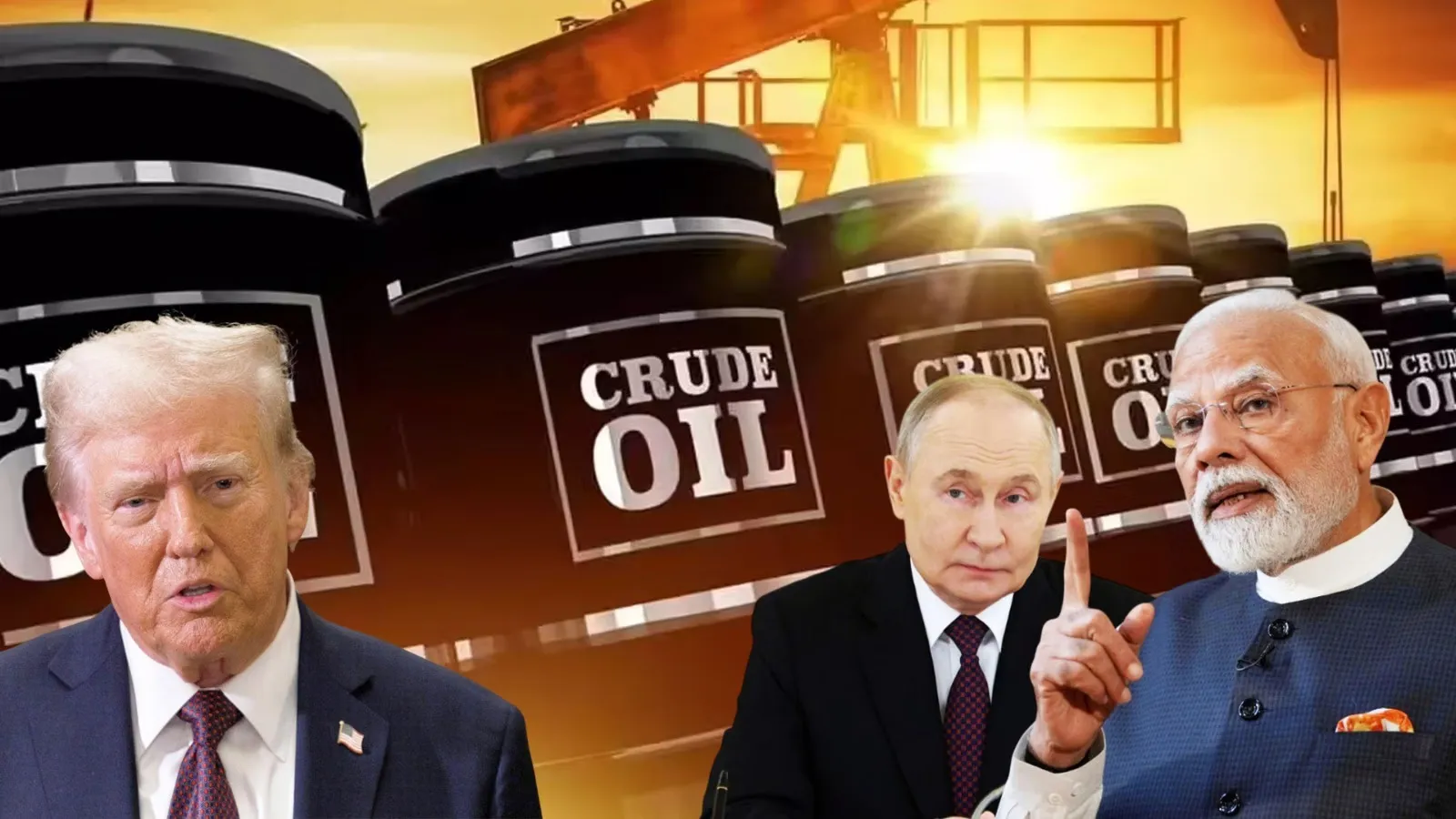
There is something almost Kafkaesque about the scene that played out on March 5, 2026. The United States Treasury Secretary, Scott Bessent, posted on X — formerly Twitter, now apparently the venue for issuing geopolitical edicts to inform the world’s fifth-largest economy, a nation of 1.4 billion people, a self-declared Vishwaguru (world teacher) and the loudest champion of the Global South, that it had Washington’s permission to buy oil. From Russia. For thirty days. After which, presumably, it would need to apply again.

India, the country that invented the Non-Aligned Movement, that lectured the Cold War blocs with Nehruvian moral hauteur, that has spent the better part of a decade describing its foreign policy as “strategic autonomy” needed a waiver from the Office of Foreign Assets Control (OFAC) to purchase crude oil from a sovereign trading partner. Not a loan. Not a military clearance. A permission slip, valid until April 4, 2026, to conduct a commercial energy transaction.

Congress president Mallikarjun Kharge, not a man known for rhetorical restraint, called it making India a “virtual vassal state.” He was, for once, not entirely wrong.

OFAC General License 133, issued on March 5, 2026, permits Indian refiners to purchase Russian-origin crude oil loaded onto vessels before 12:01 a.m. EST on that date. It expires on April 4, 2026. It does not apply to new shipments. It is not a broad sanctions relaxation. As Bessent helpfully clarified, it “will not provide significant financial benefit to the Russian government.”

So India has not been granted the right to trade freely with Russia. It has been granted the right to receive oil that is already floating in the Indian Ocean, in tankers that were loaded before the bureaucrats in Washington drew their line in the water. The sovereign nation of India, to be clear, was told which barrels it may purchase and which it may not with a ticking clock attached.

The immediate trigger is the ongoing conflict in the Middle East, specifically the US-Israel strikes on Iran and the near-complete closure of the Strait of Hormuz, through which approximately 20 million barrels per day of crude and petroleum products normally flow. Around 15 million barrels per day of crude and 5 million barrels per day of products passed through the Strait in 2025, according to S&P Global Commodities at Sea data. West Texas Intermediate surged 8.51% on March 6, its biggest single-day gain since May 2020. Brent was last trading above $84 per barrel. The world needed oil. Washington needed someone to help absorb displaced Russian barrels before prices went truly parabolic. India was, once again, convenient.

And here is the cruellest twist: Russia is not offering a discount this time.

For the past 3 years, India’s defence of its Russian oil purchases rested on a straightforward, if uncomfortable, economic logic. When Western sanctions isolated Russia after the February 2022 invasion of Ukraine, Moscow needed buyers. India obliged. Urals crude, Russia’s primary export blend, traded at discounts of $15 to $30 per barrel below international Brent benchmarks. Indian refiners — IOC, BPCL, HPCL, Reliance — gorged on cheap feedstock,
refined it, and exported petroleum products at handsome margins. India became the world’s largest buyer of Russian seaborne crude. The country’s import bill was cushioned. Domestic fuel prices were kept politically manageable. The economics, whatever its moral ambiguity, were at least defensible.

As of March 2026, that arithmetic no longer holds.

Traders are selling Russian Urals to Indian buyers at a premium of $4 to $5 per barrel over Brent on a delivered basis, for arrivals at Indian ports in March and early April. This is in contrast to the $13 per barrel discount at which HPCL purchased two cargoes on February 28, the day before the war started.

Brent has approached $87 per barrel. Some reports indicate Urals is being supplied to India above $90 per barrel. India is no longer getting a deal. It is getting gouged. Russia, calculating correctly that a Middle East supply shock makes its oil indispensable, has quietly flipped from distressed seller to price-setter.

India needed a US waiver to buy Russian oil. And Russia is not giving India a discount on that oil. The strategic humiliation is thus layered: India is subordinate to Washington’s permission and simultaneously a captive customer for Moscow’s premium? This is not strategic autonomy. This is strategic dependency dressed in the rhetoric of independence?

On the other hand,

In the vocabulary of International Relations theory, non-alignment refers to a state’s deliberate refusal to enter into formal military or political alliances with any great power bloc, preserving its freedom of manoeuvre in the anarchic international system. It was Nehru’s contribution to post-colonial statecraft, operationalised at Bandung in 1955 and institutionalised through the Non-Aligned Movement (NAM). The theory was never that India had no interests — it was that India would not subordinate those interests to a patron.

Modern India rebranded this as strategic autonomy and later, under Jaishankar’s diplomatic articulation, as multi-alignment, the idea that India could simultaneously participate in QUAD with the United States, BRICS with China and Russia, the SCO, and bilateral frameworks with the EU, without being captured by any of them. External Affairs Minister S. Jaishankar has described this as India’s coming-of-age: a confident civilisational power that refuses to be told what to do.

The last 18 months have comprehensively destroyed that narrative.

Consider the timeline of India’s structural subordination to Washington’s energy policy: In November 2025, the Trump administration sanctioned Rosneft and Lukoil — the two Russian producers that accounted for approximately 60% of Moscow’s crude supplies to India. Indian refiners immediately stopped purchasing from both. Not because New Delhi issued a directive. Not because Indian law required it. But because extraterritorial US sanctions functionally govern who India can and cannot trade with.

Then came the tariff pressure campaign. Washington imposed 50% tariffs on Indian goods in August 2025, explicitly linking the measure to India’s Russian oil purchases. New Delhi — which had lectured the world about sovereign commercial decisions — quietly reduced its Russian crude intake.

By January 2026, India had cut purchases sufficiently that the US rolled tariffs back to 18% as part of an interim trade deal. The Trump administration publicly claimed India had “committed” to stopping Russian oil purchases as part of that deal. India neither confirmed nor denied this claim, a diplomatic non-answer that speaks volumes about the asymmetry of the relationship.

So: India did reduce Russian oil purchases. Under American tariff pressure. And the price of that concession was partial tariff relief. That is not multi-alignment. That is tribute-paying dressed in the language of trade negotiation.

Why does Washington have the structural power to “allow” or “disallow” Indian energy purchases at all? India and Russia are sovereign states. Their bilateral energy trade does not fall under US jurisdiction, as the South China Morning Post correctly noted. Yet here we are, with American extraterritorial sanctions — the secondary sanctions mechanism under OFAC — effectively governing the terms of Indian commercial life.

The answer lies in the dollar’s hegemony and the architecture of the global financial system. Secondary sanctions work because global oil trade is overwhelmingly denominated in US dollars, cleared through American correspondent banks, financed by Western institutions, and insured by Western underwriters.

Any entity that wishes to participate in the global economy must comply with OFAC’s edicts, regardless of its own government’s preferences. This is the coercive infrastructure of American financial power — what political scientists have called the weaponisation of interdependence (Farrell and Newman, 2019).

India, despite its loud proclamations of strategic autonomy, remains deeply embedded in this dollar-denominated system. Its refiners use dollar-cleared instruments. Its shadow fleet workarounds require non-Western insurance that is itself constrained by secondary sanctions risks. Its rupee-rouble payment experiments have been plagued by Russia’s limited use for accumulated rupee balances. The de-dollarisation agenda, despite BRICS communiqués and Modi’s occasional references to it, has produced precisely nothing of operational significance.

This is the structural trap that India’s foreign policy establishment refuses to honestly confront. You cannot claim strategic autonomy while being financially integrated into a system where Washington holds the circuit breaker.

India’s foreign policy over the past three years exhibits what IR scholars would call structural inconsistency — positions that cannot all be simultaneously maintained without one collapsing under the weight of another.

QUAD membership vs. Russia partnership: India participates in the Quadrilateral Security Dialogue with the United States, Japan, and Australia — an arrangement explicitly oriented around Indo-Pacific security and implicitly around constraining Chinese and Russian influence. Yet India simultaneously deepened energy and trade ties with Russia, hosted Putin in December 2025, and participated in joint military exercises. European partners, who had been willing to excuse Indian behaviour as practical necessity, have grown increasingly impatient. As one analysis noted, India’s “bear hug” with Putin is no longer read as neutrality; it signals a need for energy security and defense spares regardless of reputational cost.

Global South leadership vs. self-serving bilateralism: India claims the mantle of the
Global South — it used the G20 presidency in 2023 to articulate this ambition explicitly. But as analysts have observed, the Global South expects solidarity, not equivocation. India’s abstentions on Ukraine votes at the UN General Assembly, its refusal to condemn Russian aggression outright, and its tilt toward Israel over Gaza have put it at odds with the Arab and African nations it claims to represent. The credibility gap is widening.

Neighbourhood First policy: India’s supposed priority of stabilising its immediate
neighbourhood has produced, in recent years, a deterioration of relations with Bangladesh after Sheikh Hasina’s removal and that country’s pivot toward China, erosion of influence in Nepal, Sri Lanka, and the Maldives, and continued friction with Pakistan. Strategic analysts from the Chatham House have noted that the “cracks in India’s longstanding commitment to strategic autonomy are becoming increasingly difficult to ignore.”

The Ukraine position: neither useful to Russia nor trusted by the West: India’s studied abstentionism on Russia-Ukraine votes has managed the remarkable feat of leaving it trusted by neither side. Moscow knows New Delhi reduced oil purchases under American pressure. Brussels notes that India has not condemned Russian aggression. Washington is increasingly transactional. The “honest broker” role that strategic autonomy was supposed to enable has not materialised because honest brokerage requires moral clarity that India has systematically avoided.

India’s per capita GDP remains around $2,600. Its military modernisation is heavily
dependent on Russian platforms for which spare parts became a diplomatic vulnerability the moment sanctions complicated Moscow’s supply chains. Its technology ecosystem is tied to American semiconductors and platforms. Its export economy — software services, pharmaceuticals, textiles — is deeply integrated with the US, EU, and Western financial architecture. Its aspiration to be a $5 trillion economy requires Western capital markets.

Strategic autonomy, as currently practised, is the foreign policy of a country that wants the freedoms of a great power while still depending on the infrastructure of others. It is the equivalent of demanding independence while living rent-free in someone else’s house.

The 30-day waiver makes this visible in a way that even the most carefully managed diplomatic language cannot obscure. Bessent’s statement did not merely announce a technical sanctions adjustment. It announced something far more humiliating: Washington expects India to “ramp up purchases of U.S. oil.” The waiver is explicitly framed as a stop-gap measure pending India’s transition to American energy dependency. In the long run, the US is
not offering India an exemption from discipline. It is offering India a different master.

The Opportunity Cost of Ambiguity

There is a case — made thoughtfully by scholars and analysts — that India's non-alignment served genuine interests during the Cold War, preserving policy space in a bipolar world. That case was always contingent on India having the economic and military heft to give its autonomy real content. Nehru’s India was poor and principled. Modi’s India is richer but has chosen to be unprincipled without being powerful enough to get away with it.

The opportunity cost is significant. Had India used the post-2022 window to aggressively hedge — accelerating renewable energy transition, deepening rupee internationalisation, seriously investing in ASEAN and African energy corridors, and building genuine alternative financial infrastructure with other emerging economies — the structural leverage that Washington exercises today would be diminished. Instead, India doubled down on Russian crude dependency precisely when that dependency was becoming a liability, only to be forced to reduce it under tariff pressure, and then to need a waiver to resume it at crisis prices.

India reduced Russian oil to please Washington, lost the discount it had relied on, and is now buying that same Russian oil at a premium, with Washington's permission, while Washington signals it expects India to eventually buy American oil instead. Russia gets full price. America gets strategic leverage. India gets a 30-day temporary relief.

What Credible Strategic Autonomy Would Actually Look Like

To be constructive, genuine strategic autonomy in the twenty-first century requires material foundations that India does not yet have but could build. It requires an internationalised currency capable of denominating energy trade, which requires deeper capital account liberalisation. It requires domestic energy security through accelerated renewable capacity — India has made progress on solar but remains structurally dependent on imported hydrocarbons for 90% of its crude needs. It requires a diversified defence industrial base that reduces dependence on Russian platforms. It requires consistent principled positions on international law — not because morality is naive, but because consistency builds the reputational capital that enables real influence.

Multi-alignment, as currently practised, is not a doctrine. It is an excuse for not having a doctrine. It is the foreign policy equivalent of telling every suitor you “keeping your options open” charming for a while, increasingly unconvincing, and ultimately leaving you dependent on whoever shows up in a crisis with something you need.

The 30-day waiver is a moment that should produce genuine reflection — not the defensive reflexes of the Press Information Bureau, which issued a statement insisting “India has never depended on permission from any country to buy Russian oil,” a claim that is simultaneously technically contestable and practically absurd given the events of the preceding week.

India is a great civilisation. It has legitimate aspirations to great power status. Its people are extraordinary. Its democratic institutions, however imperfect, are its most underestimated strategic asset. None of this is in question.

What is in question is whether its foreign policy establishment has the intellectual honesty to distinguish between aspiring to strategic autonomy and possessing it. Between calling yourself non-aligned and actually having the structural independence that non-alignment requires. Between announcing that you are a Vishwaguru and behaving in a manner that warrants the title.

The permission slip expires on April 4, 2026. What expires with it — or should — is the comfortable fiction that India is conducting an independent foreign policy. The world is watching. And increasingly, it is not impressed.

Views of the author are personal and do not necessarily represent the website’s views.

Dr. Jaimine Vaishnav is a faculty of geopolitics and world economy and other liberal arts subjects, a researcher with publications in SCI and ABDC journals, and an author of 6 books specializing in informal economies, mass media, and street entrepreneurship. With over a decade of experience as an academic and options trader, he is keen on bridging the grassroots business practices with global economic thought. His work emphasizes resilience, innovation, and human action in everyday human life. He can be contacted on jaiminism@hotmail.co.in for further communication.

Long or Short, get news the way you like. No ads. No redirections. Download Newspin and Stay Alert, The CSR Journal Mobile app, for fast, crisp, clean updates!

App Store – https://apps.apple.com/in/app/newspin/id6746449540

Google Play Store – https://play.google.com/store/apps/details?id=com.inventifweb.newspin&pcampaignid=web_share

Latest News

Popular Videos