


app-store-logo
play-store-logo
February 17, 2026

New Comet C2026 A1 (MAPS) May be Visible in India in Early April
The CSR Journal Magazine

A newly discovered comet racing toward the Sun may soon put on a dramatic celestial display, potentially becoming visible to the naked eye in early April. Named C/2026 A1 (MAPS), the comet was spotted only last month by amateur astronomers in Chile and has quickly captured the attention of skywatchers worldwide.

If the icy visitor survives its close encounter with the Sun, astronomers say it could shine brightly in the evening sky and, for a brief period, may even be visible in daylight. The best viewing conditions will require a clear western horizon just after sunset.

What Makes This Comet Special

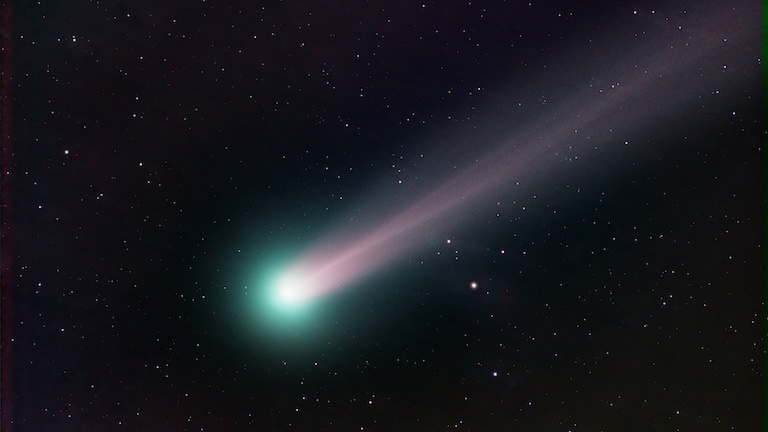
Comets are often described as “dirty snowballs” composed of ice, dust and rock left over from the formation of the solar system. As they approach the Sun, heat vaporises their icy surfaces, creating a glowing coma and a long tail that streams away from the Sun.

C/2026 A1 belongs to the rare Kreutz sungrazer family, a group of comets that pass extremely close to the Sun’s surface. Such encounters can cause them to flare dramatically in brightness. Historic sungrazers, including the Great Comet of 1965, became so luminous they were visible during the daytime.

The comet will reach its closest point to the Sun around April 4–5. Until then, it remains too faint for casual observation. By mid March, it may appear as a dim, fuzzy object through medium sized telescopes low in the southwestern sky after sunset.

How Bright Could It Become

Predicting a comet’s brightness is notoriously difficult. Scientists say that if C/2026 A1 holds together, it could rival the brilliance of Venus or even surpass it briefly. Some estimates suggest it might reach negative magnitude levels, making daylight visibility possible for a short window.

Even if it falls short of those predictions, the comet could still produce a striking tail visible during twilight. Observers have already noted a turquoise glow, caused by gases released as solar radiation interacts with the comet’s material.

Will It Be Visible From India

Skywatchers in India are likely to get a chance to see the comet, though viewing conditions will not be ideal. From the Northern Hemisphere, the object will remain low in the western sky and close to the Sun’s glare.

The best time to look will be about 30 to 45 minutes after sunset during the first half of April. A clear, unobstructed view of the western horizon will be essential, and binoculars or a small telescope could significantly improve the chances of spotting it. Observers in southern India and near equatorial regions may have slightly better visibility than those further north.

Astronomy apps can help locate the comet’s exact position in the sky on a given evening.

Despite the excitement, experts caution that many sungrazer comets disintegrate under intense solar heat and gravitational forces. If C/2026 A1 breaks apart, it could either flare dramatically for a short time or fade from view altogether.

For now, astronomers are closely tracking its journey, hoping the ancient traveller survives long enough to deliver one of the most memorable sky shows of the year.

Long or Short, get news the way you like. No ads. No redirections. Download Newspin and Stay Alert, The CSR Journal Mobile app, for fast, crisp, clean updates!

App Store –  https://apps.apple.com/in/app/newspin/id6746449540 

Google Play Store – https://play.google.com/store/apps/details?id=com.inventifweb.newspin&pcampaignid=web_share

Latest News

Popular Videos
